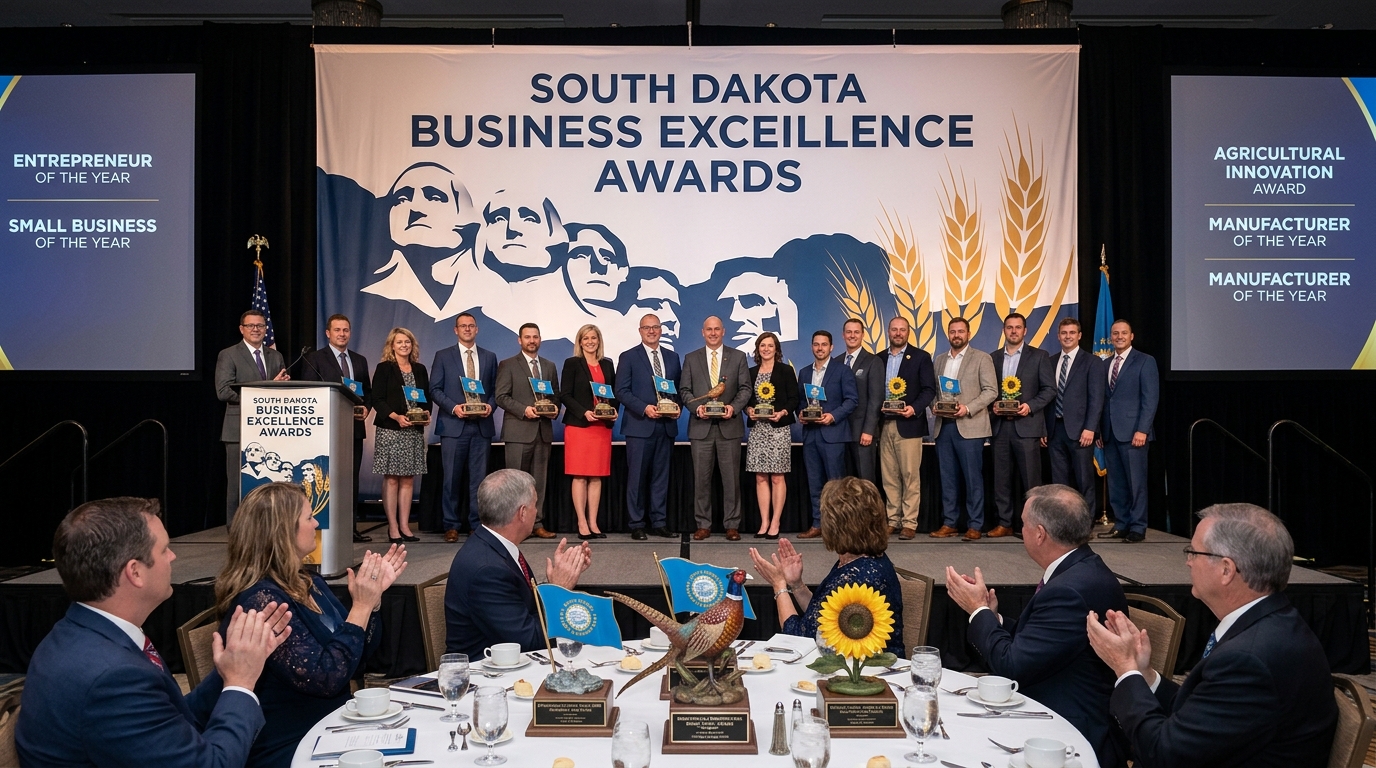

Businesses across Alaska operate in one of the most distinctive commercial environments in the United States. From Anchorage and Fairbanks to Juneau, Kodiak, Nome, Bethel, Sitka, Wasilla, Kenai, Ketchikan, Utqiagvik and hundreds of smaller communities, Alaska businesses often compete in markets where reputation, reliability, community involvement and demonstrated performance matter enormously.
That makes Alaska business awards more than a collection of trophies and certificates. For many companies, business recognition can become another way to communicate credibility to customers, prospective employees, vendors, investors, government agencies and other businesses.
The opportunity is particularly interesting in Alaska because the state’s economy is unusually diverse. Alaska’s commercial landscape includes oil and gas, fisheries, tourism, transportation, construction, mining, healthcare, professional services, technology, retail, hospitality, aviation, logistics, manufacturing, Native-owned enterprises and countless local service businesses. The Alaska Department of Commerce’s business classification system recognizes industries ranging from agriculture, forestry and fishing to mining, construction, manufacturing, transportation, information, finance, professional services, healthcare, tourism and other services.
At the same time, Alaska’s business geography is unlike that of most states. Alaska does not use counties as its primary county-equivalent geography. Instead, it has boroughs, municipalities, census areas and other local-government structures. The Alaska Department of Health identifies 19 boroughs and 11 census areas that together form 30 county-equivalent geographic units.
This statewide guide explains how businesses can approach Alaska business awards, Alaska small business awards, Alaska business recognition and industry-specific recognition programs strategically.
It also examines an important question:
Does winning an award actually help a business?
Research suggests that credible recognition can provide meaningful signaling value, and studies of quality awards have found relationships between recognition, market reactions and business performance. But the research also contains an important warning: successful businesses frequently demonstrate stronger performance before they win awards. An award may therefore be both a recognition of existing excellence and a tool for communicating that excellence—not a magic mechanism that creates it.
What Are Alaska Business Awards?
Alaska business awards are formal recognition programs that identify companies, entrepreneurs, executives, projects, products or organizations for notable performance.
Depending on the program, recognition may be based on:
- Business growth
- Leadership
- Customer service
- Innovation
- Community involvement
- Ethics and integrity
- Industry achievement
- Safety
- Sustainability
- Product quality
- Project execution
- Entrepreneurship
- Workforce development
- Economic contribution
- Longevity
- Company culture
- Professional excellence
- Regional impact
Some awards are statewide. Others are local, regional or industry-specific.
Some are judged by independent panels. Others are based on nominations, voting, membership participation or a combination of criteria.
Some programs recognize businesses generally, while others are specifically designed for contractors, manufacturers, tourism companies, mining businesses, family-owned companies, small businesses or entrepreneurs.
That distinction matters.
A company searching for “business awards in Alaska” should not assume every award program has the same eligibility requirements, judging standards or marketing value.
The right award is the one whose criteria align with what the company can credibly demonstrate.
Why Business Recognition Matters in Alaska
Alaska businesses often operate with a geographic disadvantage that creates an unusual premium on reputation.
A company in Anchorage may compete statewide. A contractor in Fairbanks may pursue projects hundreds of miles away. A tourism company in Southeast Alaska may need to establish credibility with visitors who have never interacted with the company before. A professional-services firm in a smaller community may compete with businesses in larger population centers.
In those circumstances, third-party recognition can become part of a company’s credibility architecture.
An award does not replace reviews, references, certifications, licensing, financial strength, customer service or proven results.
But it can add another independent signal.
For example, consider a prospective commercial client comparing two contractors.
Both companies have websites.
Both have experienced employees.
Both have completed projects.
One company has also received an independently judged industry award for a project demonstrating innovation, project management, environmental sensitivity and client service.
That award does not automatically mean the company is better.
But it gives the prospective buyer another piece of information.
That is the fundamental economic idea behind recognition:
Awards can reduce uncertainty by communicating that an outside organization has evaluated some aspect of a company’s performance.
The value of that signal depends heavily on who issued the award, how the organization evaluates applicants, how transparent the criteria are, and whether the recognition is genuinely selective.
Alaska’s Small-Business Economy
The small-business story in Alaska is especially important when discussing business awards.
The U.S. Small Business Administration’s Office of Advocacy reports approximately 77,814 small businesses in Alaska, representing 99.1% of Alaska businesses. Those businesses employ approximately 139,534 people, or 54.2% of Alaska employees.
The same SBA profile reports that, between March 2023 and March 2024, Alaska establishments added more jobs than they lost, with small businesses contributing a net increase of approximately 4,814 jobs.
Those figures help explain why Alaska small business awards can be particularly relevant.
A small company does not have the advertising budget of a major corporation.
It may not have a recognizable national brand.
It may not have a large public-relations department.
Recognition can provide a relatively compact credibility asset that can be used across a website, proposals, social media, email signatures, presentations and recruiting materials.
The important word is credible.
A selective award judged by qualified people can communicate something different from an award that can effectively be purchased by every applicant.
Alaska’s Business Economy Is Much More Than Oil and Gas
Alaska is frequently associated with oil and gas, and those industries remain economically important.
However, Alaska’s statewide economic strategy identifies multiple economic engines, including oil and gas, federal activity, seafood, tourism, mining, air cargo and forestry.
The state’s business licensing structure likewise recognizes a broad range of commercial sectors, including:
- Agriculture
- Forestry
- Fishing
- Mining
- Oil and gas
- Utilities
- Construction
- Manufacturing
- Wholesale
- Retail
- Transportation
- Warehousing
- Information
- Finance
- Insurance
- Real estate
- Professional services
- Management
- Administrative services
- Education
- Healthcare
- Arts
- Entertainment
- Recreation
- Accommodation
- Food services
- Other services
That breadth is important for businesses looking for recognition.
There is no single definition of an “excellent Alaska business.”
A successful seafood processor demonstrates different capabilities from a software company.
A successful remote construction company faces different challenges from a downtown retailer.
A successful tourism operator has a different business model from a professional-services firm.
Therefore, businesses should look for recognition programs that understand the context in which they operate.
The Alaska Business Awards Landscape
Alaska has a mixture of statewide, industry and local recognition programs.
One of the most prominent statewide examples is the Alaska Chamber’s Premier Business Awards. The program has existed since 1964 and recognizes accomplishments and contributions to Alaska’s statewide economy.
The Alaska Chamber currently includes recognition for both small and large businesses.
Its Bill Bivin Small Business of the Year award, for example, is designed for independently operated Alaska businesses with one to 99 employees. The published criteria include being headquartered in Alaska, operating for at least three years, demonstrating community involvement, maintaining an excellent reputation and showing leadership in the business’s field.
The Alaska Chamber also has a Rita Sholton Large Business of the Year award for companies with more than 100 employees in Alaska, along with other statewide recognition categories.
This illustrates an important principle:
There is no single “best” Alaska business award for every company.
A 15-person family business should not necessarily pursue the same recognition as a 2,000-person corporation.
A construction company should not necessarily prioritize the same awards as a tourism company.
A technology startup may benefit more from innovation recognition than from a traditional longevity award.
Industry-Specific Business Awards in Alaska
Industry-specific awards can sometimes be more persuasive than generic business awards because the judges and audience understand the challenges of the field.
Construction Awards
Construction provides one of the clearest examples.
The Associated General Contractors of Alaska offers Excellence in Construction Awards recognizing exceptional projects completed by contractors.
According to the program, projects are judged by independent industry professionals and evaluated on factors including difficult-job challenges, project management, innovation, advancement of construction techniques or materials, environmental sensitivity, client service and community contribution.
This type of award can be particularly useful for contractors because the recognition is attached to an actual project.
That gives the business a story.
Instead of simply saying:
“We are an excellent contractor.”
The company can say:
“Our project was independently recognized for excellence in project management, innovation and execution.”
That distinction matters in competitive proposals.
AGC of Alaska’s award categories have also included specialty contracting, sustainability, transportation, marine, heavy and earthmoving work, and vertical construction.
Alaska’s construction environment makes these awards especially relevant because companies routinely deal with logistics, weather, remote sites, transportation constraints and infrastructure challenges.
Mining and Resource Businesses
Mining is another industry where specialized recognition can carry substantial meaning.
The Alaska Miners Association maintains an awards program recognizing outstanding contributions and accomplishments within Alaska’s mining industry. Its awards have included recognition of individuals, companies and projects.
For mining companies, suppliers and service providers, industry-specific recognition can communicate something different from a generic business award.
The audience already understands the operational complexity.
That makes the award potentially more meaningful in proposals, recruiting, investor communications and stakeholder relations.
Tourism and Hospitality
Tourism is one of Alaska’s most visible industries.
The Alaska Travel Industry Association reports that more than 3 million visitors came to Alaska during the May 2024-April 2025 period. It also reports $3.9 billion in direct tourism spending during the 2022-23 period, $5.6 billion in total economic impact and approximately 48,000 tourism-supported jobs in 2023.
That means tourism businesses compete not only on price but also on trust, experience and reputation.
Hotels, tour operators, cruise-related businesses, restaurants, transportation providers, attractions, guides and destination businesses can all benefit from recognition when it accurately reflects customer experience or operational excellence.
For a visitor who has never been to Alaska, a credible award can serve as an additional trust signal.
But the same principle applies:
The award should support—not replace—reviews, testimonials, photographs, safety records, licensing information and transparent service descriptions.
Seafood and Fisheries Businesses
Alaska’s seafood industry is another natural area for recognition.
Businesses may include:
- Commercial fishing operations
- Seafood processors
- Seafood distributors
- Cold-storage companies
- Marine service companies
- Equipment suppliers
- Transportation providers
- Seafood restaurants
- Exporters
- Packaging companies
- Technology providers
For these businesses, recognition can emphasize product quality, sustainability, innovation, workforce development, community involvement or operational excellence.
A seafood company that wins a business award can use the recognition in buyer presentations, wholesale communications, website content and industry networking.
Technology and Alaska Startups
Technology companies in Alaska face a different challenge.
They may serve customers far beyond the state.
A software company in Anchorage can compete with firms in Seattle, Austin, Boston or San Francisco.
In that environment, local recognition can help establish the company’s Alaska identity while broader recognition can reinforce national credibility.
Technology companies should consider awards focused on:
- Innovation
- Software
- Entrepreneurship
- Customer experience
- Technology implementation
- Cybersecurity
- Artificial intelligence
- Sustainability
- Economic impact
- Workplace culture
However, technology companies should be especially careful about awards that rely heavily on marketing claims.
A strong application should quantify results.
Instead of saying:
“Our platform is revolutionary.”
Explain:
- How many customers use it
- What problem it solves
- How much time it saves
- How much money customers save
- What adoption has looked like
- What retention looks like
- What measurable outcomes customers experience
Evidence is more persuasive than adjectives.
Professional Services
Alaska’s professional-services economy includes attorneys, accountants, consultants, engineers, architects, marketing firms, financial professionals, real-estate professionals, IT providers and many other businesses.
These companies can benefit from recognition because professional services are inherently trust-based.
A buyer may have difficulty evaluating technical quality before hiring a provider.
Awards can therefore function as a secondary signal.
For a consulting company, recognition for leadership or innovation might strengthen a proposal.
For an engineering firm, project-specific recognition could be more useful.
For an accounting firm, recognition for client service or community involvement may be appropriate.
For an agency, awards for measurable campaign performance may be more compelling than generic “best company” recognition.
Healthcare Businesses
Healthcare organizations operate under a particularly high trust requirement.
Recognition may be relevant for:
- Medical practices
- Dental practices
- Home healthcare companies
- Medical technology businesses
- Healthcare consultants
- Senior-care providers
- Rehabilitation organizations
- Healthcare contractors
- Healthcare-support businesses
Awards should never be used to imply medical superiority without appropriate evidence.
Instead, recognition can complement information about qualifications, licensing, services, patient experience, operational practices and professional standards.
Retail and E-Commerce Businesses
Retailers have an especially interesting relationship with third-party recognition.
Online customers cannot physically inspect a business before purchasing.
That creates information asymmetry.
A retailer may therefore use credible third-party recognition as one component of its trust architecture.
But more is not always better.
A randomized field study involving 288,169 transactions across 493 online retailers found that third-party trust seals could improve outcomes in certain circumstances, particularly for smaller online retailers and newer shoppers. However, the study also found that displaying more than two seals could reduce the likelihood of purchase completion.
The lesson for Alaska e-commerce companies is straightforward:
Use recognition strategically.
Do not cover the homepage with 15 badges.
Choose the few signals that matter most.
Family-Owned Alaska Businesses
Family businesses have another compelling recognition story.
Longevity can be meaningful because it demonstrates that a company has survived changing markets, generations, competitors and economic conditions.
A family-owned company can build an award application around:
- Years in operation
- Generational transition
- Employee retention
- Customer relationships
- Community involvement
- Economic contribution
- Adaptation
- Innovation
- Family succession
- Local employment
Longevity alone does not prove excellence.
But when combined with measurable accomplishments, it becomes powerful evidence of resilience.
Native-Owned and Alaska Native Businesses
Alaska’s business ecosystem includes Native-owned enterprises and businesses operating in or serving Alaska Native communities.
Recognition programs should be evaluated carefully for eligibility, cultural context and judging criteria.
For a Native-owned business, an application may appropriately discuss:
- Economic development
- Employment
- Community investment
- Cultural preservation
- Innovation
- Entrepreneurship
- Tourism
- Local supply chains
- Workforce development
- Products and services
- Regional economic impact
The business should tell its story authentically rather than treating community identity as a marketing slogan.
Rural Alaska Business Recognition
One of the biggest mistakes in statewide business-award content is assuming that business excellence only happens in large cities.
Alaska makes that mistake particularly easy to avoid.
The state contains communities where businesses operate with extraordinary logistical constraints.
A company in a remote community may deal with:
- Limited transportation
- Seasonal access
- Higher freight costs
- Smaller customer populations
- Workforce constraints
- Extreme weather
- Limited infrastructure
- Supply-chain challenges
- Geographic isolation
Those challenges can become part of a compelling award application.
The key is not to ask judges for sympathy.
Instead, explain the challenge and demonstrate the result.
For example:
Challenge: A remote company needed to provide reliable service despite limited transportation options.
Action: The company redesigned inventory, scheduling and logistics.
Result: Delivery reliability improved, customer complaints declined and service coverage expanded.
That is a much stronger story than simply saying the company operates in a difficult location.
The Research: Do Business Awards Actually Help Companies?
This is where the subject becomes more interesting.
There is legitimate academic research examining the relationship between quality awards and company performance.
One of the most frequently cited studies is Kevin Hendricks and Vinod Singhal’s research published in Management Science.
Their study examined the market reaction to public announcements that companies had won quality awards.
They found statistically significant mean abnormal returns ranging from 0.59% to 0.67% around award announcements. The reaction was stronger among smaller firms, where abnormal returns ranged from approximately 1.16% to 1.26%, and among firms receiving awards from independent organizations, where the reported range was approximately 1.31% to 1.65%.
That is significant evidence that markets can treat certain forms of third-party recognition as meaningful information.
But it does not prove that every business award produces those results.
The study concerned quality awards and publicly traded companies.
A local Alaska small-business award is not equivalent to a major quality-management award.
That distinction is essential.
Operating Performance Research
Another Hendricks and Singhal study compared firms that had won quality awards with control firms.
Over a ten-year period—from six years before through three years after the first quality award—the award-winning firms experienced substantially stronger changes in several operating measures.
The reported mean and median change in operating income was 107% and 48% higher, respectively, than the control sample.
The reported mean and median change in sales was 64% and 24% higher, respectively.
Award-winning firms also showed stronger growth in employment and total assets.
At first glance, this looks like powerful evidence that awards pay.
But there is an important methodological issue.
The award was being used as a proxy for effective total quality management.
In other words, the research was not simply saying:
“Winning a trophy caused revenue to rise.”
Instead, it was investigating businesses that demonstrated effective quality-management practices and were subsequently recognized.
That is a very different proposition.
Long-Term Stock Performance
Additional research by Hendricks and Singhal examined long-run stock-price performance of firms with effective total quality-management programs.
The study reported that during the post-implementation period, award-winning firms significantly outperformed matched control groups, with mean outperformance ranging from approximately 38% to 46%, depending on the control group.
Again, however, the important concept is quality management.
The award served as a signal or proxy for an underlying management system.
The practical lesson for an Alaska business is therefore:
Do not build the business around winning an award. Build an excellent business that deserves recognition.
That reverses the usual thinking.
Research Also Shows Why Causation Must Be Treated Carefully
A later replication study by Guoqiang Peter Zhang and Yusen Xia examined data from more than 500 firms.
The researchers found that award-winning firms performed significantly better than control groups across the relevant period.
But they also found that award-winning firms already had superior performance records before receiving the awards.
That finding is crucial.
It means that awards may identify companies that are already doing something right.
This is known as selection or pre-existing-performance bias.
If the strongest companies are more likely to win awards, then simply comparing winners with non-winners can exaggerate the apparent effect of the award itself.
Therefore, a responsible article about Alaska business recognition should not claim:
“Winning an award will increase your revenue.”
The evidence does not support such a universal promise.
A more defensible statement is:
Credible recognition can strengthen a company’s reputation and communicate information about capabilities that may otherwise be difficult for outsiders to evaluate.
Independent Recognition May Be More Valuable
The Hendricks and Singhal research also found stronger market reactions for awards from independent organizations than for certain supplier-based awards.
That supports a broader business principle:
Independence matters.
If an award organization has a transparent process and qualified judges who are not simply rewarding every applicant, the recognition may carry more information.
That does not mean every independent award is valuable.
It means buyers should investigate:
- Who judges?
- What are the criteria?
- How many winners are there?
- Are winners selected competitively?
- Is the judging process described?
- Are previous winners publicly listed?
- Does the organization have a legitimate history?
- Is the award connected to a real industry or professional community?
- Does the recognition have an audience that matters to the business?
Awards Are Signals, Not Guarantees
Business recognition should be treated as one signal among many.
Consider a potential customer evaluating an Alaska company.
They may look at:
- Google reviews
- Website
- References
- Licenses
- Certifications
- Portfolio
- Years in business
- Pricing
- Customer service
- Social proof
- Awards
- Media coverage
An award can strengthen that collection of evidence.
It rarely replaces it.
The strongest businesses build a reputation portfolio rather than relying on a single credential.
The Difference Between Awards, Certifications and Memberships
Businesses frequently confuse these categories.
Award
An award generally recognizes achievement.
Example:
“Business of the Year.”
Certification
A certification generally verifies compliance with defined standards or qualifications.
Example:
A professional certification or formal management-system certification.
Membership
Membership indicates affiliation with an organization.
Example:
Chamber of Commerce membership.
Review
A review represents a customer’s experience.
Accreditation
Accreditation generally indicates that an organization has been evaluated against defined requirements.
These are different signals.
A company should never describe an award as a certification if it is not one.
That distinction protects credibility.
How to Evaluate an Alaska Business Award
Before applying, ask these questions.
1. Who Runs It?
Research the organization.
Does it have a real website, history, leadership, contact information and identifiable purpose?
2. Who Judges?
Independent industry professionals can provide stronger credibility than anonymous or purely popularity-based voting.
3. What Are the Criteria?
A credible program should provide enough information for applicants to understand what is being evaluated.
4. How Many Winners Are There?
If virtually every applicant wins, the award may provide limited differentiation.
5. What Does It Cost?
Understand application fees, finalist fees, winner fees, tickets, promotional packages and optional publicity.
6. Is the Audience Relevant?
An award nobody in your market recognizes may have limited commercial value.
7. Can You Verify Past Winners?
A transparent history helps.
8. Can You Explain Why You Won?
If your marketing team cannot explain the actual accomplishment behind the award, the recognition may not be useful.
How to Build a Strong Award Application
A good award application is not a sales brochure.
It is an evidence-based argument.
A useful structure is:
The Challenge
What problem did the business face?
The Action
What did the company do?
The Innovation
What did it do differently?
The Evidence
What measurable results occurred?
The Impact
Who benefited?
The Broader Contribution
How did the work affect employees, customers, the community or the industry?
The Verification
What documentation can support the claims?
Use Numbers Whenever Possible
Compare these two statements.
Weak:
“We dramatically improved customer service.”
Stronger:
“Customer complaints declined 28% after the company implemented a new service-response system.”
The second statement gives judges something measurable.
Useful metrics include:
- Revenue growth
- Customer growth
- Retention
- Repeat purchases
- Customer satisfaction
- Review scores
- Response time
- Employee retention
- Safety performance
- Project completion
- Cost reduction
- Productivity
- Waste reduction
- Market expansion
- New jobs
- Training hours
- Community investment
Not every business needs every metric.
Use the numbers that actually demonstrate the accomplishment.
Alaska Business Awards and SEO
Awards can also support digital marketing.
A business that wins recognition can create:
- An awards page
- A press release
- A blog post
- A case study
- Social posts
- Proposal language
- Email-signature recognition
- Website badges
- Customer newsletters
- Recruiting content
For local SEO, an award can create another piece of relevant content connecting the company with Alaska, its community and its industry.
For example, an Anchorage contractor could create content about receiving recognition for an Anchorage project.
A Fairbanks professional-services company could publish a case study explaining the accomplishment.
A Juneau tourism company could connect recognition to customer experience.
The goal should be useful content—not keyword stuffing.
Do Not Overdo Award Badges
Recognition should enhance a website, not overwhelm it.
The third-party trust-seal research is useful here.
The 493-retailer study found that more than two trust seals could reduce purchase completion in some circumstances.
The lesson translates reasonably well to award badges:
A few meaningful recognition signals are usually better than a wall of logos.
Choose the awards most relevant to your customer.
Put the strongest recognition where customers actually make decisions.
Alaska Business Recognition for Small Companies
A small business does not need a massive marketing department to create a strong award strategy.
Start with one or two categories that genuinely fit.
For example:
- Small Business of the Year
- Customer Service
- Innovation
- Community Impact
- Entrepreneur of the Year
- Industry Excellence
- Family Business
- Project Excellence
- Sustainability
- Product Innovation
Then build an evidence file throughout the year.
Save:
- Customer testimonials
- Before-and-after results
- Revenue milestones
- Employee accomplishments
- Project photographs
- Press mentions
- Community contributions
- New contracts
- Certifications
- Safety achievements
- Customer metrics
When an application opens, much of the work is already done.
Local Versus Statewide Recognition
There is a common misconception that statewide recognition is automatically better.
Not necessarily.
A local award may be extremely valuable when the company’s customers are local.
A restaurant in Ketchikan may get more practical value from a respected local recognition program than from an obscure national award.
A statewide contractor, however, may benefit from Alaska-wide industry recognition.
A software company selling nationally may benefit from a broader technology award.
The correct question is:
Which audience do we need to influence?
Alaska’s Unique Geographic Business Landscape
Alaska’s government structure makes statewide SEO especially interesting.
The state has 30 borough/census-area county equivalents: 19 boroughs and 11 census areas.
Those are:
- Aleutians East Borough
- Aleutians West Census Area
- Anchorage Municipality
- Bethel Census Area
- Bristol Bay Borough
- Chugach Census Area
- Copper River Census Area
- Denali Borough
- Dillingham Census Area
- Fairbanks North Star Borough
- Haines Borough
- Hoonah-Angoon Census Area
- Juneau City and Borough
- Kenai Peninsula Borough
- Ketchikan Gateway Borough
- Kodiak Island Borough
- Kusilvak Census Area
- Lake and Peninsula Borough
- Matanuska-Susitna Borough
- North Slope Borough
- Northwest Arctic Borough
- Nome Census Area
- North Slope Borough
- Petersburg Borough
- Prince of Wales-Hyder Census Area
- Sitka City and Borough
- Southeast Fairbanks Census Area
- Valdez-Cordova Census Area
- Wrangell City and Borough
- Yakutat City and Borough
Because Alaska’s geography and boundary structures have changed over time, businesses should use current state and Census geographic definitions when targeting local markets. The Alaska Department of Commerce and Alaska Department of Health provide current boundary information and municipal resources.
Major Alaska Cities and Communities for Business Recognition
Alaska business-award searches naturally extend beyond Anchorage.
Major business communities include:
- Anchorage
- Fairbanks
- Juneau
- Wasilla
- Sitka
- Ketchikan
- Kenai
- Kodiak
- Palmer
- Soldotna
- Homer
- Bethel
- Barrow/Utqiagvik
- Delta Junction
- Valdez
- Seward
- Nome
- Dillingham
- Cordova
- Petersburg
- Wrangell
- Haines
- Skagway
- Unalaska
- North Pole
- Kotzebue
- Craig
- Galena
- Wasilla
- Palmer
- Soldotna
- Kenai
- Fairbanks
- Anchorage
Alaska’s official municipal records also identify numerous smaller incorporated communities.
Alaska’s Incorporated Cities
The state recognizes different classifications of cities.
Home-rule cities include:
- Cordova
- Fairbanks
- Kenai
- Ketchikan
- Kodiak
- Nenana
- North Pole
- Palmer
- Seward
- Soldotna
- Valdez
First-class cities include:
- Craig
- Dillingham
- Galena
- Homer
- Hoonah
- Hydaburg
- Kake
- King Cove
- Klawock
- Nome
- Pelican
- Saint Mary’s
- Sand Point
- Seldovia
- Unalaska
- Wasilla
- Utqiagvik
Second-class cities include communities such as:
- Adak
- Akhiok
- Akiak
- Akutan
- Alakanuk
- Aleknagik
- Allakaket
- Ambler
- Anaktuvuk Pass
- Anderson
- Angoon
- Aniak
- Anvik
- Atka
- Atqasuk
- Bethel
- Bettles
- Brevig Mission
- Buckland
- Chefornak
- Chevak
- Chignik
- Chuathbaluk
- Clark’s Point
- Coffman Cove
- Cold Bay
- Deering
- Delta Junction
- Diomede
- Eagle
- Edna Bay
- Eek
- Egegik
- Ekwok
- Elim
- Emmonak
- False Pass
- Fort Yukon
- Gambell
- Golovin
- Goodnews Bay
- Grayling
- Gustavus
- Holy Cross
- Hooper Bay
- Houston
- Hughes
- Huslia
- Kachemak
- Kaktovik
- Kaltag
- Kasaan
- Kiana
- Kivalina
- Kobuk
- Kotlik
- Kotzebue
- Koyuk
- Koyukuk
- Kupreanof
- Kwethluk
- Larsen Bay
- Lower Kalskag
- Manokotak
- Marshall
- McGrath
- Mekoryuk
- Mountain Village
- Napakiak
- Napaskiak
- New Stuyahok
- Newhalen
- Nightmute
- Nikolai
- Nondalton
- Noorvik
- Nuiqsut
- Nulato
- Nunam Iqua
- Nunapitchuk
- Old Harbor
- Ouzinkie
- Pilot Point
- Pilot Station
- Platinum
- Point Hope
- Port Alexander
- Port Heiden
- Port Lions
- Quinhagak
- Ruby
- Russian Mission
- Saint George
- Saint Michael
- Saint Paul
- Savoonga
- Saxman
- Scammon Bay
- Selawik
- Shageluk
- Shaktoolik
- Shishmaref
- Shungnak
- Stebbins
- Tanana
- Teller
- Tenakee Springs
- Thorne Bay
- Togiak
- Toksook Bay
- Unalakleet
- Upper Kalskag
- Wainwright
- Wales
- Whale Pass
- White Mountain
- Whittier
Metlakatla is organized under federal law rather than being classified through Alaska’s municipal system in the same manner as these cities.
This broad municipal geography demonstrates why a statewide Alaska business awards guide should not focus exclusively on Anchorage, Fairbanks and Juneau.
Business Recognition Across Alaska’s Regions
Southcentral Alaska
Anchorage, Wasilla, Palmer, Kenai, Soldotna, Homer, Seward, Kodiak, Valdez, Cordova and surrounding communities represent a major concentration of business activity.
Companies here can pursue statewide awards while also considering local chamber, industry and regional recognition.
Interior Alaska
Fairbanks, North Pole, Delta Junction, Nenana, Healy, Denali-area businesses and other Interior communities have opportunities to tell stories around logistics, tourism, construction, energy, government contracting, professional services and rural entrepreneurship.
Southeast Alaska
Juneau, Sitka, Ketchikan, Petersburg, Wrangell, Haines, Skagway, Craig, Hoonah, Kake, Klawock and other Southeast communities have particularly strong connections to tourism, marine industries, government, fishing, retail, hospitality and professional services.
Southwest Alaska
Bethel, Dillingham, Kodiak and numerous smaller communities support businesses connected to fishing, healthcare, transportation, retail, government services, tourism and regional commerce.
Western Alaska
Nome, Kotzebue, Unalakleet, Saint Michael, Gambell, Savoonga, Teller, Wales and surrounding communities operate in markets where geography itself can become a major part of a business story.
Northern Alaska
Utqiagvik, North Slope communities and other northern businesses face extreme geographic and operational challenges.
Recognition applications from these businesses can emphasize logistics, workforce development, safety, engineering, energy services, technology and community impact.
What About Other Alaska Business Award Programs?
Businesses should investigate multiple sources rather than assuming one award program is the only option.
Alaska Chamber Premier Business Awards
The Alaska Chamber’s Premier Business Awards are among the state’s most established business-recognition programs. The program includes small-business and large-business recognition and other statewide honors.
Alaska Chamber Premier Business Awards
AGC of Alaska Excellence in Construction Awards
These awards recognize exceptional construction projects and use independent industry professionals as judges.
Associated General Contractors of Alaska Excellence in Construction Awards
Alaska Miners Association Awards
The Alaska Miners Association recognizes outstanding contributions within the state’s mining industry.
Alaska Miners Association Awards
Local Chambers
Businesses should also investigate chambers of commerce serving their local market.
Potentially relevant communities include Anchorage, Fairbanks, Juneau, Kenai, Soldotna, Homer, Kodiak, Wasilla, Palmer, Sitka, Ketchikan, Haines, Skagway, Nome, Bethel, Valdez, Cordova and others.
Award offerings change, so businesses should verify current eligibility, deadlines and judging procedures directly with each organization.
Business Awards Versus Business Grants
This distinction is extremely important.
A business award recognizes achievement.
A grant provides funding.
They are not interchangeable.
Alaska’s Department of Commerce provides business assistance and directs companies toward resources involving business competitions, industries, funding and small-business assistance.
A company looking for funding should investigate:
- Grants
- Loans
- Tax incentives
- Economic-development programs
- Procurement opportunities
- Investment
- Business competitions
A company looking for reputation should investigate:
- Awards
- Certifications
- Accreditations
- Industry recognition
- Customer reviews
- Media coverage
- Professional credentials
The two strategies can complement one another, but they serve different purposes.
The Role of the International Association for Business Excellence
For companies specifically searching for a broader business-recognition opportunity, the International Association for Business Excellence is another organization worth researching.
Businesses should review the organization’s official information about its program, eligibility, application process and current requirements before applying.
International Association for Business Excellence
The organization’s official application information is available here:
International Association for Business Excellence application page
Businesses interested in understanding the organization and its approach can also review:
International Association for Business Excellence About page
The important point is that Alaska businesses do not necessarily have to limit their recognition strategy to programs physically headquartered in Alaska.
A company may pursue local recognition for local credibility, statewide recognition for statewide visibility, industry recognition for professional authority and broader recognition for audiences outside Alaska.
The right combination depends on the company’s goals.
Should an Alaska Business Pursue Multiple Awards?
Potentially—but strategically.
An awards strategy should not become a contest to accumulate trophies.
Instead, think in layers.
Layer One: Local
Build recognition within the community where the company operates.
Layer Two: Statewide
Pursue Alaska-wide recognition when the business has a story with broader relevance.
Layer Three: Industry
Seek recognition from organizations that understand the company’s technical field.
Layer Four: Broader Recognition
Consider national or international programs when the company competes beyond Alaska.
This approach produces a more coherent reputation strategy.
The ROI of Business Awards
Calculating award ROI is difficult because the benefits can be indirect.
A company might win an award and subsequently experience:
- More website conversions
- Higher proposal win rates
- More referrals
- Better recruiting
- More media attention
- Greater customer trust
- More speaking opportunities
- Increased employee pride
- More partnership opportunities
But those outcomes need to be measured.
A company can create a simple tracking system.
Before the award, measure:
- Website leads
- Proposal volume
- Conversion rate
- Average customer value
- Recruiting applications
- Referral volume
After the award, monitor those same metrics.
Do not automatically attribute every improvement to the award.
Marketing campaigns, economic conditions, pricing, seasonality and other factors can change at the same time.
How to Leverage an Award After Winning
Winning is only the beginning.
Website
Create an awards or recognition page.
Homepage
Display the most meaningful recognition.
Proposals
Include the award where relevant.
Use a restrained award mention in signatures or campaigns.
Social Media
Announce the accomplishment.
Press Release
Explain why the company received the recognition.
Recruiting
Explain what the award says about the organization’s culture.
Sales
Use the recognition as supporting evidence—not as the entire pitch.
What Makes an Award Credible?
Credibility generally increases when the program has:
- Clear criteria
- Qualified judges
- Independent evaluation
- Transparent eligibility
- Documented history
- Verifiable winners
- Relevant categories
- A meaningful audience
- Reasonable selectivity
Credibility may decrease when:
- Everyone wins
- Criteria are unclear
- Judging is secretive
- The award is primarily a pay-to-win promotion
- The organization lacks an identifiable history
- The award has little relationship to the recipient’s industry
- Winners cannot be independently verified
Businesses should investigate before spending money.
Can Awards Hurt a Business?
Potentially.
The biggest risk is not usually the award itself.
It is overclaiming.
A company that turns a minor recognition into “Alaska’s No. 1 company” without evidence can damage trust.
Likewise, displaying 20 different obscure badges can make a website look less credible rather than more credible.
Research on third-party trust seals reinforces the broader point: additional signals do not necessarily create additional trust, and too many can sometimes have negative effects.
Use recognition precisely.
Say what the award actually means.
Do not inflate it.
A Practical Alaska Awards Strategy
For most businesses, a simple process works well.
Step 1: Define the Goal
Do you want:
- Local credibility?
- Statewide recognition?
- Industry authority?
- Recruiting visibility?
- Public relations?
- B2B credibility?
- Customer trust?
Step 2: Build a List
Find 5-10 potentially relevant programs.
Step 3: Score Them
Evaluate:
- Credibility
- Cost
- Audience
- Selectivity
- Judging
- Application difficulty
- Marketing value
Step 4: Pick Two or Three
Do not apply everywhere.
Step 5: Build Evidence
Gather numbers and supporting material.
Step 6: Apply
Write specifically to the judging criteria.
Step 7: Leverage the Outcome
If you win, build content around the achievement.
Step 8: Measure
Track whether the recognition affects meaningful business metrics.
Why Alaska Businesses Should Tell Their Own Story
One of the most powerful parts of an award application is context.
A business may be small.
That does not mean its story is small.
A 12-person Alaska company that created 15 new jobs may have made a substantial local economic contribution.
A family business that survived multiple generations may have an extraordinary story.
A contractor that successfully completed a technically difficult remote project may have accomplished something that a larger company could not.
A tourism company that built a customer experience generating exceptional reviews may have a compelling case.
Awards create an opportunity to organize these accomplishments into a coherent narrative.
The Most Valuable Award May Be the One That Explains Your Advantage
Businesses sometimes chase the biggest-sounding award.
A better strategy is to pursue the recognition that reinforces the company’s actual competitive advantage.
If your strength is:
Innovation: pursue innovation recognition.
Customer service: pursue customer-experience recognition.
Construction: pursue project excellence.
Community impact: pursue community-oriented recognition.
Growth: pursue entrepreneurship or growth awards.
Family ownership: pursue family-business recognition.
Tourism: pursue hospitality or tourism recognition.
Manufacturing: pursue manufacturing excellence.
Mining: pursue mining-industry recognition.
Small-business leadership: pursue small-business awards.
The closer the award is to the reason customers choose you, the more useful the recognition can become.
Final Takeaway: Alaska Business Awards Are About More Than Trophies
Alaska has an unusually diverse and geographically dispersed business economy.
The state has tens of thousands of small businesses, hundreds of communities, major resource industries, large tourism activity, specialized construction and engineering firms, professional-services organizations, technology businesses and countless local companies.
The SBA reports that small businesses account for 99.1% of Alaska businesses and 54.2% of Alaska employment.
That makes recognition particularly relevant.
But the goal should not be to collect awards.
The goal should be to build a business that has accomplishments worth recognizing.
Academic research provides evidence that quality recognition can communicate meaningful information to markets and that award-winning companies can demonstrate strong performance.
At the same time, research also shows that award-winning companies may already be outperforming their peers before receiving recognition.
That distinction gives businesses a better strategy.
Build the excellence first. Document it. Pursue credible recognition. Then use that recognition to communicate what the company has already accomplished.
For an Alaska business, that can mean combining local reputation, customer reviews, professional credentials, industry recognition and statewide or broader business awards into one coherent credibility strategy.
Whether the company operates in Anchorage, Fairbanks, Juneau, Wasilla, Kenai, Kodiak, Bethel, Nome, Sitka, Ketchikan, Utqiagvik or a much smaller community, the fundamental principle remains the same:
Recognition is most valuable when it gives other people credible evidence of something the business has actually achieved.
Frequently Asked Questions About Alaska Business Awards
1. What are Alaska business awards?
Alaska business awards are recognition programs that honor companies, entrepreneurs, projects, executives or organizations for accomplishments such as leadership, innovation, customer service, community impact, growth or industry excellence.
2. Who can apply for Alaska business awards?
Eligibility depends on the program. Some awards are open to businesses of any size, while others are limited to small businesses, large companies, members of an association, specific industries or businesses located within a particular community.
3. Do small businesses qualify for Alaska business awards?
Yes. Small businesses are specifically recognized by programs such as the Alaska Chamber’s Bill Bivin Small Business of the Year award.
4. Are startups eligible for business awards in Alaska?
Some are. Startup eligibility varies considerably. New companies should look for entrepreneurship, innovation, startup or emerging-business categories.
5. Do I have to belong to a chamber to win an Alaska business award?
Not necessarily. Some programs have membership requirements or nomination requirements, while others accept applications independently.
6. How much do Alaska business awards cost?
Costs vary. Some programs are free to enter, while others charge application, submission, gala or promotional fees. Always review the complete fee structure before applying.
7. Are there free business awards in Alaska?
Some recognition programs may not charge applicants, while others may be nomination-based. Businesses should research individual programs rather than assuming all awards have the same cost structure.
8. How are business awards judged?
Judging may involve independent professionals, committees, industry experts, community leaders, public voting or internal organizational panels. The specific process should be reviewed before applying.
9. What should an Alaska business award application include?
A strong application normally explains the challenge, actions taken, innovation, measurable results, customer or community impact and supporting evidence.
10. What evidence should I provide?
Useful evidence includes revenue growth, customer metrics, employment growth, project results, reviews, testimonials, safety statistics, productivity improvements and other measurable accomplishments.
11. How early should I prepare for an award?
Ideally, preparation should happen throughout the year. Keeping an ongoing record of accomplishments makes applications much easier.
12. Are award deadlines important?
Yes. Award programs often have strict nomination or submission deadlines. Always confirm the current deadline directly with the organization.
13. Can service businesses win Alaska business awards?
Yes. Professional services, healthcare, consulting, technology, marketing, financial services, home services and other service companies can qualify for many forms of recognition.
14. Can rural Alaska businesses win awards?
Yes. Rural businesses can have highly compelling stories involving innovation, logistics, employment, community impact and resilience.
15. Can family-owned Alaska businesses win recognition?
Yes. Family businesses can highlight longevity, succession, employment, community involvement, innovation and generational leadership.
16. Are women-owned businesses eligible for recognition?
Many programs accept women-owned companies, although eligibility varies by award.
17. Are veteran-owned businesses eligible?
Many business-award programs do not restrict eligibility based on ownership, while some specialized programs may specifically recognize veteran entrepreneurs.
18. Can Alaska Native-owned businesses apply for awards?
Yes, where the program’s eligibility permits it. Businesses should carefully review the criteria and select recognition programs that authentically fit their goals and communities.
19. Can agricultural businesses win Alaska business awards?
Yes. Agricultural, farming, forestry, fishing and related companies can pursue general business awards and industry-specific recognition.
20. Can Alaska contractors win business awards?
Absolutely. AGC of Alaska’s Excellence in Construction Awards provide an example of industry-specific recognition for contractors and projects.
21. Can manufacturers receive Alaska business recognition?
Yes. Manufacturing companies can pursue general business awards and industry-specific programs where eligible.
22. Can technology companies win Alaska business awards?
Yes. Technology companies can emphasize innovation, growth, customer results, technology implementation and economic impact.
23. Can restaurants and hospitality companies win awards?
Yes. Restaurants, hotels, tour operators and other hospitality businesses can pursue customer-service, tourism, community and business awards.
24. Can healthcare companies receive business recognition?
Yes, although businesses should avoid using awards to make unsupported claims about clinical outcomes or medical superiority.
25. Can retailers and e-commerce businesses use awards?
Yes. Awards can be incorporated into a broader trust strategy that also includes reviews, customer testimonials, policies and transparent business information.
26. Do local Alaska business awards matter?
They can matter significantly when the company’s customers are local. Relevance to the target audience often matters more than the geographic size of the award.
27. Are statewide awards better than local awards?
Not automatically. A statewide award may provide broader exposure, while a respected local award may be more valuable to a business serving one community.
28. What is third-party validation?
Third-party validation is information from an outside organization that evaluates or recognizes a business. Awards, certifications, accreditations and trust seals can all serve different forms of third-party signaling.
29. Are awards the same as certifications?
No. Awards generally recognize accomplishments, while certifications verify compliance with defined standards or qualifications.
30. Can business awards help SEO?
They can support SEO indirectly by creating useful content, earning media mentions, generating links and providing additional material about a company’s accomplishments. An award itself is not an automatic SEO ranking factor.
31. Can business awards help B2B sales?
Potentially. Recognition can serve as supporting evidence of credibility in proposals, presentations and sales conversations.
32. Can awards increase customer trust?
Credible third-party recognition can function as a trust signal. Research on third-party trust mechanisms suggests that such signals can influence consumer behavior under certain circumstances.
33. Should I put an award badge on my website?
Usually, if the award is credible and relevant. Use the most meaningful recognition rather than displaying every badge the company has received.
34. Should I issue a press release after winning?
A press release can be useful when the recognition is genuinely newsworthy and the announcement explains the accomplishment rather than simply stating that the company won.
35. What if an award organization is unfamiliar?
Research it before applying. Examine its history, judges, criteria, winners, fees, leadership and reputation.
36. Can too many awards hurt credibility?
They can if the recognition appears excessive, irrelevant or difficult to verify. Quality generally matters more than quantity.
37. Can I apply for multiple Alaska business awards?
Yes, provided the programs are legitimate and relevant. A focused strategy is generally better than applying indiscriminately.
38. What if my business does not win?
The application process can still help identify strengths, weaknesses and accomplishments that can be used in marketing and strategic planning.
39. How can I make an award application stronger?
Use specific evidence, measurable results, clear storytelling and direct responses to the judging criteria.
40. How do I start pursuing Alaska business recognition?
Identify your business’s strongest accomplishment, research relevant local and industry programs, compare their credibility and requirements, then prepare an evidence-based application.
20 Additional Questions and Answers About Business Recognition
1. How should I build an annual business-recognition strategy?
Start with a calendar of relevant local, statewide and industry programs. Track eligibility, deadlines, judging criteria and application requirements throughout the year.
2. How do I compare two award programs?
Compare credibility, judging, selectivity, audience, cost, application requirements, marketing value and relevance to your customers.
3. What makes a business award credible?
Transparent criteria, qualified judges, a verifiable history, meaningful categories and recognizable organizational leadership can all contribute to credibility.
4. Should I prioritize independent judging?
Independent judging can strengthen the perceived credibility of recognition because it provides greater separation between the applicant and evaluator.
5. How much does transparency matter?
Transparency matters significantly. Applicants and customers should be able to understand what the award recognizes and how winners are selected.
6. How can I estimate the ROI of an award?
Estimate the cost of applying and promoting the award, then track changes in leads, proposals, sales opportunities, recruiting activity, referrals and other measurable outcomes.
7. How do I measure an award’s impact?
Create baseline measurements before the award and compare them afterward. Track website conversions, inquiries, proposals, customer acquisition and recruiting metrics.
8. Should I track leads after winning?
Yes. Ask new prospects how they heard about the company and monitor whether award-related pages or content generate inquiries.
9. How do awards interact with customer reviews?
They can complement one another. Reviews demonstrate customer experience, while awards can demonstrate external recognition. Neither should be treated as a substitute for the other.
10. Is an award better than a customer testimonial?
They serve different purposes. A testimonial describes a customer’s experience; an award represents recognition from an outside organization.
11. Should B2B and B2C companies use awards differently?
Often. B2B companies may emphasize awards in proposals and procurement materials, while B2C businesses may place greater emphasis on website trust, social media and customer-facing marketing.
12. How can rural Alaska businesses tell a compelling award story?
Explain the operational challenge, describe the solution and quantify the outcome. Geographic difficulty should provide context rather than serve as the entire argument.
13. Should a new company pursue awards before having many years of history?
Yes, when the award permits newer businesses. Innovation, entrepreneurship and emerging-business categories can be more appropriate than longevity awards.
14. How can family businesses use longevity in applications?
Use longevity as evidence of resilience, but combine it with measurable accomplishments such as employment, customer retention, growth, innovation or community investment.
15. How can manufacturers quantify innovation?
Manufacturers can document production improvements, reduced waste, new products, productivity, safety, quality improvements, customer outcomes and investment in equipment or processes.
16. How can contractors document project excellence?
Use project budgets, completion timelines, safety records, engineering challenges, innovations, environmental measures, customer results and photographs.
17. How can Alaska agricultural and fishing businesses document impact?
They can quantify production, employment, market expansion, product innovation, supply-chain improvements, community contributions and operational improvements.
18. How can technology companies explain innovation without hype?
Focus on measurable customer outcomes. Explain the problem, the technology, adoption, results and why the solution is meaningfully different.
19. How can businesses avoid award fatigue?
Pursue only recognition that supports strategic goals. Two highly relevant awards can be more valuable than ten unrelated ones.
20. What is the long-term value of business recognition?
Long-term value can come from accumulated credibility, content, reputation, employee pride, customer awareness, proposal support and historical proof of achievement.
Sources and Further Reading
- U.S. Small Business Administration, Office of Advocacy — Alaska Small Business Profile
The SBA profile provides Alaska business counts, small-business employment data and establishment dynamics.
SBA Office of Advocacy State Profiles - Alaska Department of Commerce, Community and Economic Development — Business Licensing and Industry Classification
Provides Alaska’s recognized business activity categories and NAICS-based industry classifications.
Alaska Business Licensing - Alaska Department of Commerce — Small Business Assistance Center
Provides business assistance and information on industries, competitions, funding and small-business resources. - Alaska Department of Commerce — Statewide Comprehensive Economic Development Strategy
Provides information about Alaska’s economic engines, including oil and gas, seafood, tourism, mining, air cargo and forestry. - Alaska Department of Health — Boroughs and Census Areas
Explains Alaska’s 19 boroughs and 11 census areas that function as county equivalents. - Alaska Department of Commerce — Local Boundary Commission
Provides official information about Alaska’s boroughs, cities and municipal structures. - Alaska Chamber — Premier Business Awards
Information on statewide business, small-business and large-business recognition.
Alaska Chamber Premier Business Awards - Associated General Contractors of Alaska — Excellence in Construction Awards
Information on project-based construction recognition and judging criteria.
AGC of Alaska Excellence in Construction Awards - Alaska Miners Association — Awards
Information on recognition within Alaska’s mining industry.
Alaska Miners Association Awards - Alaska Travel Industry Association — Tourism Works for Alaska
Provides tourism visitor, spending, employment and economic-impact information.
Alaska Travel Industry Association - Hendricks & Singhal — Quality Awards and the Market Value of the Firm
Management Science, examining market reactions to quality-award announcements. - Hendricks & Singhal — Does Implementing an Effective TQM Program Actually Improve Operating Performance?
Management Science, comparing quality-award winners with control firms. - Hendricks & Singhal — The Long-Run Stock Price Performance of Firms with Effective TQM Programs
Management Science, examining long-run performance associated with effective quality-management programs. - Hendricks & Singhal — Firm Characteristics, Total Quality Management, and Financial Performance
Journal of Operations Management, examining firm characteristics and performance among quality-award firms. - Zhang & Xia — Does Quality Still Pay?
Production and Operations Management, a replication study involving more than 500 firms and emphasizing both post-award performance and pre-award performance. - Özpolat & Jank — Getting the Most out of Third Party Trust Seals
Decision Support Systems, randomized field research involving 288,169 transactions across 493 online retailers. - Alaska Department of Commerce — Municipal Code Library
Provides information on Alaska’s municipal governments and city classifications. - State of Alaska — Communities Directory
Provides statewide community information and links to Alaska communities. - Alaska Department of Commerce — Alaska NAICS Codes
Provides the state’s recognized business activity classifications. - International Association for Business Excellence
Official information about business recognition and its application process.
International Association for Business Excellence