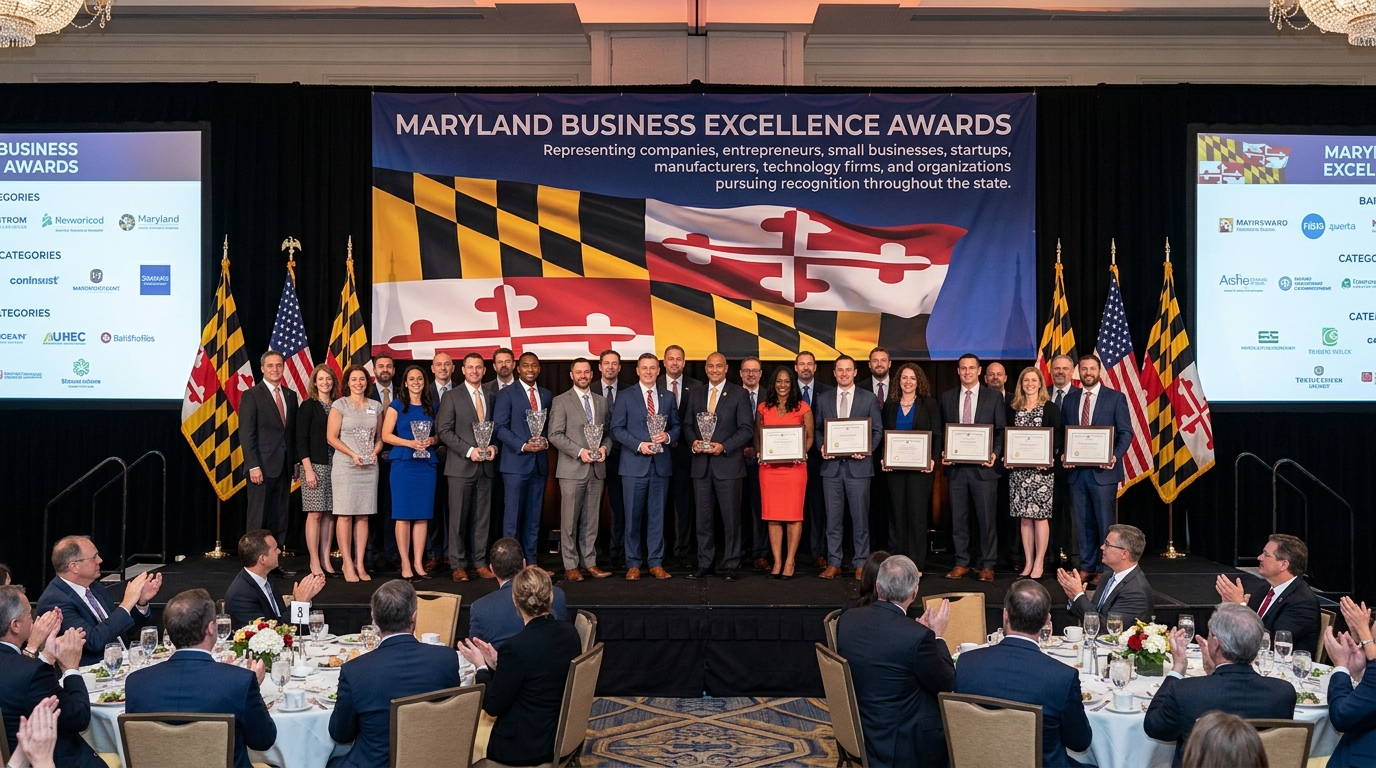
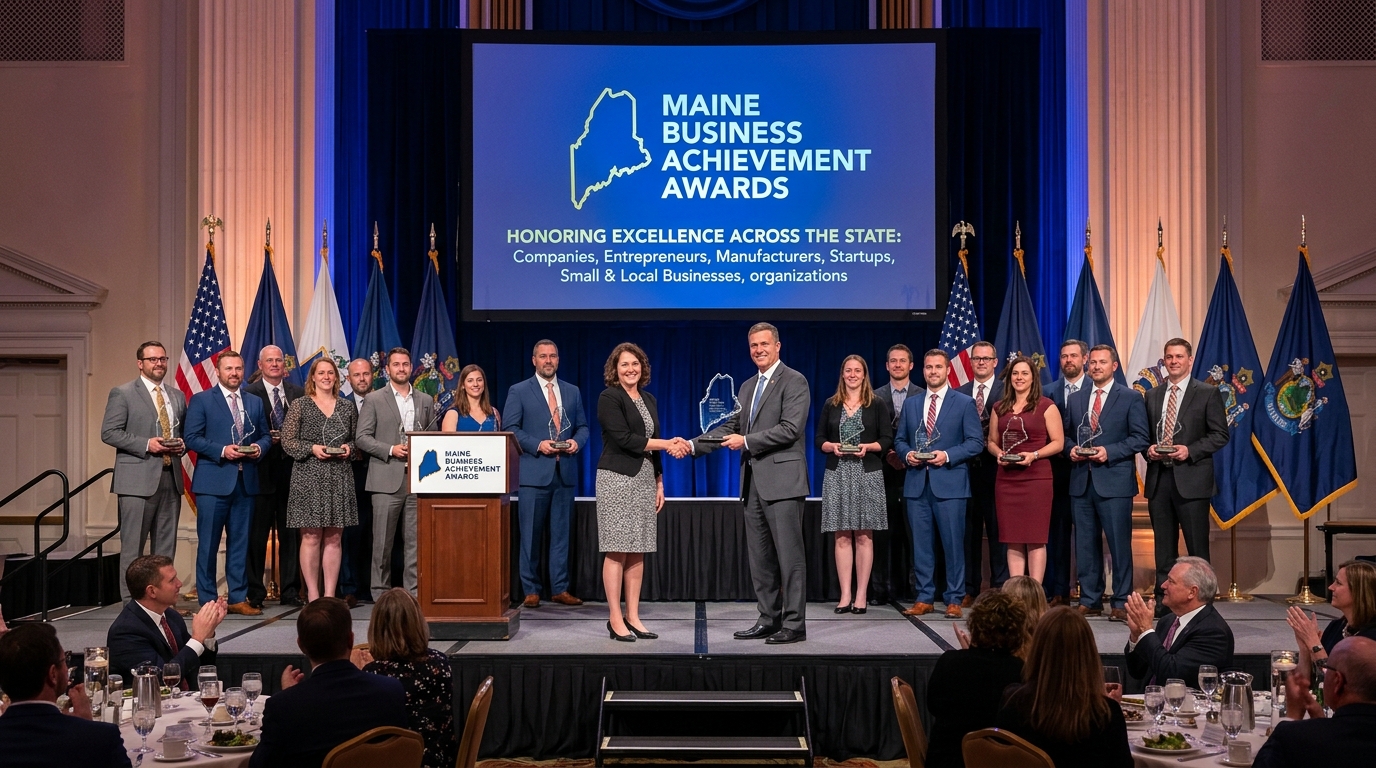
Maine businesses operate in an economy shaped by manufacturing, forestry, agriculture, marine industries, tourism, healthcare, technology, professional services, construction, retail, hospitality and thousands of locally owned companies.
From Portland and South Portland to Presque Isle, Bangor, Lewiston, Auburn, Augusta, Waterville, Rockland, Ellsworth, Biddeford, Saco, Sanford, Brunswick, Bath, Belfast, Calais and hundreds of smaller communities, Maine companies contribute to their communities and to the broader state economy.
For those businesses, Maine business awards can provide an opportunity to tell that story.
Business recognition can take many forms. A company may pursue a statewide business award, a local chamber award, a regional recognition program, an industry-specific award, a small business award, an entrepreneur award, a startup award or recognition based on innovation, leadership, workplace culture, customer service, community impact or business excellence.
The right program depends on the company.
A family-owned manufacturer in Aroostook County may have a very different recognition story from a software company in Cumberland County. A restaurant in York County may be better suited to hospitality or local-business recognition, while a marine company in Hancock, Knox, Lincoln or Sagadahoc County may have opportunities connected to Maine’s longstanding maritime economy.
This guide provides a statewide overview of Maine business awards and Maine business recognition in 2026.
It is intended for large companies, established businesses, small businesses, startups, entrepreneurs, contractors, professional-service firms, manufacturers, technology companies, healthcare organizations, retailers, restaurants, agricultural businesses, marine businesses, family-owned companies and rural businesses.
Businesses interested in pursuing independent business recognition can also explore the International Association for Business Excellence as one option within the broader business-award landscape.
What Are Maine Business Awards?
Maine business awards are recognition programs designed to highlight accomplishments by businesses, entrepreneurs, executives, employees, organizations or business projects.
Depending on the program, recognition may be based on:
- Business growth
- Innovation
- Leadership
- Customer service
- Community involvement
- Workplace culture
- Economic impact
- Job creation
- Entrepreneurship
- Sustainability
- Industry achievement
- Product development
- Operational excellence
- Professional accomplishment
- Longevity
- Regional development
- Rural revitalization
Some awards are statewide. Others are regional or local.
Some are operated by government agencies. Others are administered by chambers of commerce, business publications, professional associations, industry organizations or independent award organizations.
That distinction matters when a business evaluates an award.
A company should understand:
- Who operates the award?
- Who is eligible?
- What is being judged?
- Who selects recipients?
- What does the application require?
- Are there application or participation fees?
- What recognition does a winner actually receive?
- How can the recognition be used afterward?
The goal should not simply be to collect awards.
The goal should be to find recognition that accurately represents the company’s accomplishments.
Businesses can learn more about the International Association for Business Excellence through its About page and determine whether its recognition process fits their goals.
The Maine Business Awards Landscape
Maine’s business-recognition landscape reflects the state’s unusually diverse economy.
The Maine Department of Economic and Community Development identifies manufacturing, clean energy and other key economic sectors while highlighting industries including forest products, marine and aquaculture, food and agriculture, life sciences, outdoor recreation and technology-related activities. Maine’s manufacturing sector alone includes approximately 1,850 businesses employing more than 56,700 workers, according to the state’s economic development agency. Manufacturing contributes more than $6.2 billion to Maine’s GDP, according to DECD.
This diversity matters when businesses search for awards.
A manufacturing company may want recognition for operational performance or innovation.
A technology company may want an entrepreneurship or innovation award.
A restaurant may want local-business or hospitality recognition.
A contractor may want construction or community-impact recognition.
A professional-services company may pursue leadership, growth or customer-service recognition.
An agricultural business may be particularly well suited to recognition connected with Maine’s heritage industries.
Maine’s state-level Governor’s Award for Business Excellence illustrates this diversity. For 2026, the Maine Department of Economic and Community Development announced four categories:
- Heritage Industry Award
- Rural Revitalization Award
- Innovation Award
- Climate Leader Award
The state announced that 2026 applications are being accepted through September 18, 2026.
The categories demonstrate how business recognition can go beyond conventional “company of the year” concepts.
A business may be recognized because of what it manufactures, how it contributes to a rural economy, what it has invented or how it approaches climate-related challenges.
Why Business Recognition Matters in Maine
Recognition can be valuable because businesses constantly need to explain why customers, employees, partners and other stakeholders should pay attention to them.
An award does not replace performance.
Instead, it can provide another way to communicate performance that has already occurred.
Credibility
Third-party recognition may give a business another credibility signal.
For a newer company, recognition can provide context around its work.
For an established company, it can reinforce an existing reputation.
The impact depends heavily on the credibility and relevance of the organization providing the recognition.
Differentiation
Many Maine businesses compete against companies offering similar services.
Consider:
- Roofing contractors
- General contractors
- Accounting firms
- CPA firms
- Law firms
- Marketing agencies
- IT companies
- Healthcare providers
- Restaurants
- Manufacturers
- Real estate companies
- Consulting firms
An award can become one additional point of differentiation.
It should not be presented as proof that a company is automatically superior to every competitor.
Marketing
Recognition can become reusable marketing content.
A company might create:
- An award announcement
- A website award section
- A LinkedIn post
- An email announcement
- A press release
- A blog article
- A sales-presentation slide
- A proposal credential
- An employee announcement
- A recruiting message
Public relations
Awards can create legitimate news hooks.
A company can explain:
- What it accomplished
- What problem it solved
- What the recognition means
- Who selected it
- What results it achieved
This can make for a stronger story than simply announcing that a company “won an award.”
Customer confidence
Customers often have difficulty evaluating service businesses before purchasing.
A recognition credential can provide additional information.
However, businesses should avoid implying that an award guarantees quality, performance or customer satisfaction.
Recruiting
Recognition can also become part of an employer-branding strategy.
Leadership, workplace, growth and community awards may give prospective employees another reason to research the company.
Sales proposals and bids
Awards can be included in proposals when they are relevant.
A contractor, for example, might list recognition alongside licenses, certifications, insurance, project experience and references.
The award should supplement the evidence rather than replace it.
Community visibility
This can be particularly meaningful in Maine’s smaller communities.
A company in a rural town may not receive the same media exposure as a company in Portland.
Local and regional recognition can provide another opportunity to explain the company’s contribution to its community.
Important recognition disclaimer
Business recognition can support credibility, marketing, public relations and storytelling, but winning an award does not guarantee customers, sales, contracts, rankings, revenue, investment, search visibility or business success.
Companies should accurately describe what they received, who presented it and what criteria were used.
Small Business Awards in Maine
Small businesses are a major component of Maine’s economy.
The U.S. Small Business Administration Office of Advocacy’s 2025 Maine Small Business Profile reports 160,215 small businesses, representing 99.2% of Maine businesses.
Those small businesses employed 290,518 people, representing 54.5% of Maine employment.
The SBA profile also reports that between March 2023 and March 2024, Maine had 6,444 establishment openings and 5,717 closings, producing a net increase of 727 establishments. Small businesses accounted for 6,025 openings and 5,248 closings.
Employment dynamics were also substantial.
Opening and expanding Maine establishments added 56,984 jobs while closing and contracting establishments lost 49,848, resulting in a net increase of 7,136 jobs. Small businesses contributed a net increase of 7,026 jobs, or 98.5% of that total.
These numbers help explain why Maine small business awards can matter.
Small businesses are not simply a peripheral part of the state’s economy.
They make up virtually the entire business population by count and represent more than half of employment.
That means recognition opportunities for small businesses can serve a meaningful purpose.
A small company may not have the marketing budget of a national corporation.
Recognition can give the business another asset for telling its story.
Startup and Entrepreneur Awards in Maine
Startup and entrepreneur recognition can be especially useful for businesses that are still establishing their identity.
A startup might be considered for recognition based on:
- Innovation
- Technology
- Product development
- Entrepreneurship
- Market disruption
- Job creation
- Social impact
- Sustainability
- Growth
- Research commercialization
Maine’s technology ecosystem includes organizations such as the Maine Technology Institute, which supports innovation and maintains records of awards and investments across areas including biotechnology, information technology, aquaculture and marine, forestry and agriculture, environmental technology, precision manufacturing and composite materials.
The state’s 2026 award landscape also demonstrates an emphasis on entrepreneurship through the Governor’s Award for Business Excellence Innovation Award.
Entrepreneurs should not assume that being new automatically makes a business award-worthy.
The strongest applications usually explain what the company has accomplished and why the accomplishment matters.
Awards for Established and Growing Companies
Established businesses have different recognition opportunities.
A company with 10, 20, 50 or 100 years of history may have a strong story around:
- Longevity
- Workforce development
- Expansion
- Succession
- Innovation
- Community involvement
- Customer relationships
- Industry leadership
- Economic impact
Maine’s business environment includes many long-running family and heritage businesses.
That history can become a compelling part of an application when it is connected to measurable achievements.
A company should not rely solely on age.
Instead, explain what the business has done with that experience.
Rural and Local Business Recognition
Maine’s geography makes rural business recognition particularly relevant.
Large portions of the state are outside major metropolitan areas.
The Maine Office of Community Affairs identifies regional service centers across the state, including communities such as Auburn, Augusta, Bangor, Bar Harbor, Belfast, Biddeford, Brunswick, Calais, Camden, Caribou, Damariscotta, Eastport, Ellsworth, Farmington, Fort Kent, Hallowell, Houlton, Lewiston, Machias, Patten, Portland, Presque Isle, Skowhegan and Waterville.
The state also has nearly 500 municipalities.
That means Maine business recognition cannot reasonably be limited to Portland.
A company in:
- Houlton
- Madawaska
- Fort Kent
- Millinocket
- Greenville
- Rumford
- Farmington
- Skowhegan
- Machias
- Calais
- Eastport
- Rockland
- Belfast
- Boothbay Harbor
- Sanford
- Kennebunk
may have a business story every bit as meaningful as one in a major metro area.
Why rural recognition matters
Rural companies frequently contribute through:
- Local employment
- Supply chains
- Community sponsorships
- Essential services
- Agricultural production
- Forestry
- Manufacturing
- Transportation
- Tourism
- Hospitality
- Retail
- Construction
- Healthcare
- Professional services
The 2026 Governor’s Award for Business Excellence specifically includes a Rural Revitalization Award, demonstrating that rural economic contribution is a recognized category of business achievement in Maine.
Industry-Specific Business Awards in Maine
Different industries require different measures of success.
A good award application connects the company’s accomplishments to the realities of its industry.
Manufacturing
Manufacturing is one of Maine’s most important business sectors.
DECD reports approximately 1,850 manufacturing businesses employing more than 56,700 Maine workers, with activity spanning military and defense, aerospace, metal, paper, marine and boat building, semiconductors, wood, textiles, aquaculture, biotechnology, medical devices, electronics, plastics and food and beverage manufacturing.
Potential recognition themes include:
- Innovation
- Productivity
- Workforce development
- Export growth
- Sustainability
- New product development
- Advanced manufacturing
- Supply-chain contribution
Construction
Construction companies can build applications around:
- Major projects
- Safety
- Workforce development
- Historic restoration
- Sustainable construction
- Innovation
- Community projects
- Expansion
- Customer service
Roofing
Roofing companies may be appropriate for broader contractor, construction, customer-service, growth or local-business recognition.
A strong roofing award application might discuss:
- Number of completed projects
- Customer retention
- Safety programs
- Training
- Storm-response capacity
- Technology
- Estimating improvements
- Community service
Technology and SaaS
Technology companies can emphasize:
- Product innovation
- Software development
- Customer growth
- Product-market fit
- Intellectual property
- Job creation
- Efficiency
- New technology
Maine’s technology ecosystem includes support from Maine Technology Institute and other organizations involved in innovation and commercialization.
AI companies
Artificial-intelligence businesses can emphasize practical outcomes rather than simply claiming to use AI.
Strong evidence might include:
- A new AI-enabled product
- Measurable workflow improvements
- Cost reductions
- Better customer outcomes
- New capabilities
- Responsible implementation
- Intellectual-property development
Healthcare
Healthcare businesses can emphasize:
- Patient experience
- Access
- Innovation
- Workforce development
- Operational improvement
- Community health
- Technology adoption
Financial services
Banks, financial advisors, insurance companies, accounting firms and related organizations may emphasize:
- Customer service
- Financial education
- Community involvement
- Growth
- Technology
- Employee development
Law firms
Law firms may pursue professional recognition, leadership recognition, community recognition or industry-specific awards.
Applications should focus on documented professional accomplishments rather than vague claims.
Accounting and CPA firms
Accounting businesses can build applications around:
- Client service
- Technology adoption
- Advisory services
- Growth
- Employee development
- Succession planning
- Community involvement
Real estate
Real estate companies can emphasize:
- Development
- Community revitalization
- Client service
- New construction
- Commercial development
- Affordable housing initiatives
- Historic preservation
Agriculture
Agriculture is specifically included within Maine’s Heritage Industry Award category.
Agricultural businesses can tell stories involving:
- Generational ownership
- New farming methods
- Food production
- Sustainability
- Local supply chains
- Employment
- Innovation
Marine and aquaculture
Maine’s marine economy creates opportunities for boat builders, fishermen, aquaculture businesses, marine technology companies, suppliers and related professional-service companies.
Recognition can focus on innovation, heritage, economic contribution and community impact.
Restaurants and food businesses
Restaurants can highlight:
- Customer service
- Local sourcing
- Employment
- Community involvement
- Growth
- Innovation
- Culinary achievement
Food manufacturing can also fit within Maine’s manufacturing and heritage-industry landscape.
Hospitality and tourism
Hospitality businesses can emphasize:
- Guest experience
- Workforce development
- Community contribution
- Sustainability
- Business growth
- Innovation
Retail and e-commerce
Retail companies may emphasize:
- Customer experience
- Local employment
- E-commerce expansion
- Omnichannel operations
- Community involvement
- Product innovation
Logistics and transportation
Transportation companies can focus on:
- Fleet growth
- Safety
- Efficiency
- Job creation
- Rural service
- Supply-chain contribution
The 2025 Governor’s Award for Business Excellence included Falcon Transportation of Presque Isle as the Rural Revitalization Award recipient, illustrating how transportation can be part of Maine’s rural economic story.
Marketing and advertising
Marketing agencies can emphasize:
- Campaign results
- Innovation
- Client growth
- Creative work
- Technology
- Community projects
Consulting
Consulting companies can focus on measurable client outcomes, process improvements, growth and specialized expertise.
Statewide Business Awards
Statewide awards can be appropriate for businesses whose accomplishments have significance beyond one community.
A major current example is the Governor’s Award for Business Excellence.
The 2026 program is administered through the Maine Department of Economic and Community Development.
The four announced categories are:
Heritage Industry Award
Recognizes business excellence in agriculture, forestry, marine and manufacturing sectors.
Rural Revitalization Award
Recognizes business excellence contributing to revitalization and growth in rural or distressed economic regions.
Innovation Award
Recognizes business excellence in innovation and entrepreneurship.
Climate Leader Award
Recognizes leadership, innovation or excellence in mitigating climate risks or developing technologies addressing climate change.
The state announced that applications for the 2026 program are open through September 18, 2026.
Businesses should always verify current deadlines and eligibility directly with the program before applying.
Regional Business Awards
Regional awards can be useful when a company has strong local or regional impact.
Maine’s economic regions are not identical.
A company in Greater Portland operates in a different environment from one in northern Maine, Downeast Maine, western Maine or the Midcoast.
Regional business organizations may recognize:
- Entrepreneurs
- Small businesses
- Business leaders
- Community contributors
- New businesses
- Employers
- Volunteers
Regional recognition can sometimes be easier for a business to contextualize because judges and organizations may understand the local economy.
Local Business Awards
Local business awards can come from chambers, municipalities, economic-development organizations, community groups and local publications.
For a small business, local recognition can be particularly useful.
A local company can demonstrate:
- Community participation
- Local employment
- Customer relationships
- Sponsorships
- Volunteer work
- Economic contribution
The value of local recognition does not require national exposure.
A company that serves a specific community may find local credibility more relevant than a distant national award.
Professional Recognition
Professional recognition can be especially relevant to:
- Lawyers
- CPAs
- Architects
- Engineers
- Consultants
- Financial professionals
- Healthcare professionals
- Technology professionals
- Marketing professionals
Professional recognition should be evaluated carefully.
Businesses should distinguish between recognition based on demonstrated accomplishment and recognition that is primarily promotional.
Review the selection criteria before applying.
Community Impact Recognition
Community-impact awards recognize businesses that contribute outside their ordinary commercial activity.
Examples include:
- Donations
- Volunteer programs
- Scholarships
- Workforce development
- Community redevelopment
- Environmental initiatives
- Local sponsorships
- Disaster response
- Support for nonprofit organizations
The strongest applications quantify the contribution.
Instead of saying:
“Our company gives back to the community.”
Explain:
- How much was contributed
- How many employees participated
- How many people benefited
- How many volunteer hours were provided
- What program was created
- What measurable outcome resulted
Business Excellence Awards
Business excellence awards generally seek to recognize companies that demonstrate strong performance across one or more dimensions.
These may include:
- Leadership
- Customer service
- Innovation
- Growth
- Operations
- Community impact
- Workforce development
- Integrity
The 2026 Governor’s Award for Business Excellence is one statewide example of this broad recognition approach.
Independent organizations can offer another avenue.
The International Association for Business Excellence is one organization businesses can consider when researching business recognition programs.
Companies can apply for business recognition if they want to explore that process.
Customer Service Awards
Customer-service recognition can be useful for companies whose competitive advantage is the customer experience.
Evidence may include:
- Customer retention
- Satisfaction scores
- Testimonials
- Response times
- Repeat business
- Service innovations
- Complaint-resolution systems
Testimonials can help tell the story, but measurable evidence generally makes an application stronger.
Innovation Awards
Innovation does not have to mean inventing a revolutionary technology.
A company can innovate through:
- New processes
- New products
- New software
- Automation
- Manufacturing improvements
- Customer-service systems
- New business models
- Sustainability
- Workforce training
Maine’s 2026 Governor’s Award for Business Excellence includes a specific Innovation Award.
Growth Awards
Growth awards can recognize:
- Revenue expansion
- Employment growth
- Geographic expansion
- New locations
- New products
- Customer growth
- Export growth
Companies should document growth carefully.
Avoid inflated claims.
Workplace Awards
Workplace recognition may focus on:
- Employee development
- Retention
- Training
- Benefits
- Culture
- Leadership
- Safety
- Inclusion
- Career progression
Businesses should provide actual examples instead of generic statements about having a “great culture.”
Leadership Awards
Leadership awards can recognize founders, executives, managers or other professionals.
Strong nominations typically explain:
- What the individual accomplished
- What changed because of their leadership
- How employees or customers benefited
- What measurable results occurred
- How the person contributed to the community or industry
How to Choose a Maine Business Award
Before applying, evaluate the program.
Eligibility
Confirm that your business meets the requirements.
Some programs have geographic requirements.
Others have:
- Revenue requirements
- Employee limits
- Industry restrictions
- Years-in-business requirements
- Membership requirements
- Ownership requirements
Geographic reach
Determine whether the recognition is:
- Local
- County
- Regional
- Statewide
- National
- International
A local company may prefer local recognition.
A company selling nationally may prefer broader recognition.
Industry relevance
Choose categories that make sense.
A manufacturing company should not force itself into a category designed for technology startups merely because it sounds impressive.
Application requirements
Read the questions before committing.
Some applications may require:
- Essays
- Data
- References
- Financial information
- Testimonials
- Company history
- Supporting documents
Cost
Understand the complete cost.
Consider:
- Application fee
- Entry fee
- Winner fee
- Event ticket
- Marketing package
- Plaque or trophy
- Optional promotional services
Do not assume that a fee automatically makes an award illegitimate.
Likewise, do not assume that a free award is automatically credible.
Evaluate the entire program.
Judging criteria
A transparent award program should explain what it is evaluating.
Look for clearly stated criteria.
Reputation
Research:
- Organization history
- Previous recipients
- Judges
- Media coverage
- Industry recognition
- Program transparency
Marketing value
Consider what you actually receive.
Will you receive:
- A certificate?
- A physical award?
- A public announcement?
- A profile?
- Event recognition?
- Digital assets?
- A winner badge?
Know what the recognition means before applying.
How to Write a Strong Business Award Application
A strong award application is not a collection of marketing slogans.
It is a structured explanation of what happened.
One of the simplest frameworks is:
Challenge → Action → Result
Challenge
Explain the problem.
Examples:
- Customer demand changed
- A supply-chain problem emerged
- The business faced labor shortages
- A market opportunity appeared
- Customers needed a better solution
- A rural community lacked a service
- The company needed to modernize
- An old process was inefficient
Be specific.
Action
Explain what the company actually did.
Include:
- New technology
- Hiring
- Training
- New equipment
- New processes
- Product development
- Marketing
- Expansion
- Partnerships
- Customer-service changes
Result
This is where many applications become stronger.
Show the outcome.
Examples include:
- Revenue growth
- Customer growth
- Retention
- Cost savings
- Jobs created
- Efficiency improvements
- New locations
- New products
- Increased production
- Customer satisfaction
- Community impact
Whenever possible, use numbers.
Example of Challenge → Action → Result
Imagine a Maine manufacturer faced increasing production delays.
A weak application might say:
“Our company improved operations and achieved excellent results.”
A stronger application would explain:
Challenge: Production delays were increasing as customer orders grew.
Action: The company redesigned its production workflow, invested in equipment, retrained employees and introduced a new scheduling process.
Result: Average production time fell, capacity increased and the company added employees to support continued growth.
The second version gives a judge something concrete to evaluate.
Evidence Businesses Can Include
Depending on the award, useful evidence may include:
- Revenue growth
- Customer growth
- Retention
- Cost savings
- Jobs created
- Employee retention
- New locations
- Product launches
- Patents
- Certifications
- Partnerships
- Production increases
- Safety improvements
- Customer satisfaction
- Community investment
- Volunteer hours
- Scholarships
- Environmental improvements
Do not provide confidential information unless the award specifically requires it and you are comfortable providing it.
How to Use Business Recognition After Receiving an Award
Winning is only one part of the process.
The next question is:
What will the company do with the recognition?
Website
Create an awards or recognition section.
Include:
- Award name
- Year
- Category
- Awarding organization
- Short explanation
About page
Recognition can be incorporated into the company story.
Email signature
Businesses can sometimes include a concise recognition statement.
Social media
Create several pieces of content rather than posting once.
Possible posts include:
- Winner announcement
- Behind-the-scenes story
- Employee appreciation
- Customer appreciation
- Application story
- Achievement recap
Press release
A press release can explain:
- Who received the award
- What the company does
- Why it was recognized
- Who presented the award
- What results supported the recognition
Sales presentations
Awards can be included in company credentials.
Proposals and bids
Use relevant recognition where appropriate.
Recruiting
Workplace, leadership and growth recognition can become part of recruiting materials.
Executives can discuss the accomplishment personally.
Local media
A local company can pitch the story to newspapers, radio stations, business publications and community media.
Always describe the award accurately.
Do not turn a category-specific award into a claim that the company is “the best business in Maine” unless the awarding organization actually made that determination and the claim is supportable.
Maine Cities and Business Awards
Maine’s statewide business-recognition landscape extends well beyond Portland.
The state government identifies nearly 500 municipalities, while official county information provides city and town listings throughout the state.
The following communities represent important business centers and service centers for purposes of statewide recognition research.
Portland Business Awards
Portland is Maine’s largest urban business center and a major hub for professional services, technology, healthcare, hospitality, food businesses, tourism, finance, real estate and creative industries.
Businesses searching for Portland business awards should examine local chambers, business organizations, industry groups and statewide programs.
South Portland Business Awards
South Portland is an important commercial and employment center with retail, professional services, transportation, maritime activity and other businesses.
Companies can evaluate local and regional recognition in addition to statewide programs.
Westbrook Business Awards
Westbrook’s business community includes manufacturing, professional services, technology, development and other industries.
Lewiston Business Awards
Lewiston is a major regional center in Androscoggin County.
Businesses can explore local, regional and statewide opportunities.
Auburn Business Awards
Auburn serves as another important Androscoggin County business center.
Its business community includes manufacturing, retail, healthcare, construction and professional services.
Bangor Business Awards
Bangor serves as a major commercial and service center for northern and central Maine.
Businesses in the Bangor region can consider local, regional, industry and statewide recognition.
Augusta Business Awards
As Maine’s capital, Augusta has a significant concentration of government-related activity, professional services, healthcare, retail and regional businesses.
Waterville Business Awards
Waterville is an important central Maine service center and business community.
Biddeford Business Awards
Biddeford has developed a diverse business environment including manufacturing, food, professional services, technology and redevelopment activity.
Saco Business Awards
Saco is a regional business center in York County with manufacturing, retail, construction, professional services and other businesses.
Sanford Business Awards
Sanford is an important southern Maine regional center with manufacturing, healthcare, retail and service businesses.
Brunswick Business Awards
Brunswick has connections to education, marine activity, professional services, technology and regional commerce.
Bath Business Awards
Bath and the surrounding Sagadahoc County region have strong marine and manufacturing connections.
Rockland Business Awards
Rockland is a Midcoast business center with marine, hospitality, retail, professional services and tourism-related activity.
Belfast Business Awards
Belfast is an important Waldo County center with small businesses, marine activity, food, retail, hospitality and professional services.
Ellsworth Business Awards
Ellsworth serves as a major Hancock County commercial center.
Bar Harbor Business Awards
Bar Harbor’s business economy includes hospitality, tourism, restaurants, retail, marine activity and professional services.
Presque Isle Business Awards
Presque Isle is a major northern Maine service center.
The city and surrounding Aroostook County economy includes agriculture, transportation, healthcare, retail, education and other services.
Caribou Business Awards
Caribou is another important Aroostook County business center.
Houlton Business Awards
Houlton serves as a regional center for southern Aroostook County.
Calais Business Awards
Calais is an important Washington County service center near the Canadian border.
Eastport Business Awards
Eastport has a distinct maritime and coastal economy and can be considered in regional and statewide recognition searches.
Machias Business Awards
Machias serves as a Downeast regional center with government, healthcare, education, retail, professional services and other businesses.
Farmington Business Awards
Farmington is a western Maine regional center serving Franklin County.
Skowhegan Business Awards
Skowhegan is an important Somerset County service center with manufacturing, retail, agriculture, healthcare and professional services.
Dover-Foxcroft Business Awards
Dover-Foxcroft is a Piscataquis County regional center.
Greenville Business Awards
Greenville has a business economy connected to tourism, outdoor recreation, hospitality and regional services.
Norway and Rumford Business Awards
Norway and Rumford are western Maine business centers with manufacturing, services, healthcare, retail and regional economic activity.
Smaller Maine Communities and Business Recognition
Maine business awards should not be limited to the largest cities.
Businesses in communities such as:
Aroostook County communities including Allagash, Ashland, Fort Fairfield, Fort Kent, Madawaska, Mars Hill, Van Buren, Washburn, Limestone, Mapleton, Houlton and Woodland can explore statewide, regional and local opportunities.
Cumberland County communities including Baldwin, Bridgton, Casco, Cape Elizabeth, Cumberland, Falmouth, Freeport, Gorham, Gray, Harpswell, Harrison, Naples, New Gloucester, North Yarmouth, Pownal, Raymond, Scarborough, Sebago, Standish, Windham and Yarmouth may find opportunities through local and regional organizations.
Franklin County communities including Carrabassett Valley, Eustis, Farmington, Jay, Kingfield, Rangeley, Strong, Wilton and others can look to regional and statewide recognition.
Hancock County communities including Blue Hill, Bucksport, Castine, Deer Isle, Dedham, Gouldsboro, Mount Desert, Orland, Sedgwick, Southwest Harbor, Stonington, Surry, Tremont and Winter Harbor have business economies connected to marine activity, tourism, hospitality, food, retail and professional services.
Kennebec County includes business communities such as Belgrade, China, Clinton, Farmingdale, Gardiner, Hallowell, Manchester, Oakland, Sidney, Vassalboro, Winslow and Winthrop.
Knox County includes Camden, Rockport, Thomaston, Warren, Union, St. George, South Thomaston, Cushing, Friendship and other communities with marine, tourism, manufacturing, retail and professional-service businesses.
Lincoln County includes Boothbay, Boothbay Harbor, Damariscotta, Bristol, Wiscasset, Waldoboro, Newcastle, Nobleboro and other communities.
Oxford County includes Bethel, Fryeburg, Mexico, Norway, Oxford, Paris, Rumford, Newry, Lovell and numerous smaller towns.
Penobscot County includes Bangor, Brewer, Old Town, Orono, Millinocket, Lincoln, Newport, Dexter, Hampden, Hermon, Old Town, East Millinocket and many rural communities.
Piscataquis County includes Dover-Foxcroft, Greenville, Guilford, Milo, Brownville, Monson, Sangerville and surrounding rural communities.
Sagadahoc County includes Bath, Brunswick-area businesses, Topsham, Richmond, Bowdoin, Bowdoinham, Georgetown, Phippsburg, West Bath and Woolwich.
Somerset County includes Skowhegan, Madison, Pittsfield, Fairfield, Bingham, Jackman, Canaan, Norridgewock, Palmyra and numerous rural communities.
Waldo County includes Belfast, Camden-area businesses, Searsport, Stockton Springs, Unity, Winterport, Lincolnville, Northport and other communities.
Washington County includes Calais, Eastport, Machias, Lubec, Milbridge, Jonesport, Baileyville, Machiasport, Cherryfield, Danforth and many rural and coastal communities.
York County includes Biddeford, Saco, Sanford, Kittery, Kennebunk, Wells, York, Ogunquit, Berwick, South Berwick, Eliot and other communities.
These communities illustrate why a statewide business-awards guide must look beyond major population centers.
Maine Counties and Business Recognition
Maine has 16 counties, confirmed by the Maine Legislature and Maine state government.
Androscoggin County
Androscoggin County includes Auburn and Lewiston as its cities, along with communities including Durham, Greene, Leeds, Lisbon, Livermore, Livermore Falls, Mechanic Falls, Minot, Poland, Sabattus, Turner and Wales.
Business recognition opportunities can be relevant to manufacturing, healthcare, retail, construction, professional services and entrepreneurship.
Aroostook County
Aroostook County is geographically extensive and includes Caribou and Presque Isle, along with communities such as Fort Kent, Houlton, Madawaska, Fort Fairfield, Limestone, Van Buren, Mars Hill and many rural towns.
Agriculture, forestry, transportation, healthcare, manufacturing, retail and rural economic development are particularly relevant themes.
Cumberland County
Cumberland County includes Portland, South Portland and Westbrook, as well as Brunswick, Freeport, Scarborough, Falmouth, Gorham, Windham, Yarmouth and numerous other communities.
The county has a diverse economy spanning technology, professional services, healthcare, manufacturing, hospitality, retail and entrepreneurship.
Franklin County
Franklin County includes Farmington and communities such as Jay, Wilton, Rangeley, Kingfield, Strong and Carrabassett Valley.
Businesses may emphasize outdoor recreation, tourism, manufacturing, forestry, professional services, retail and rural development.
Hancock County
Hancock County includes Ellsworth and communities such as Bar Harbor, Blue Hill, Bucksport, Castine, Deer Isle, Southwest Harbor, Stonington, Mount Desert and others.
Marine industries, hospitality, tourism, healthcare, retail and professional services are relevant recognition themes.
Kennebec County
Kennebec County includes Augusta, Gardiner, Hallowell and Waterville, along with communities such as Belgrade, China, Clinton, Oakland, Sidney, Vassalboro and Winthrop.
Government, healthcare, professional services, retail, manufacturing and regional commerce are important areas.
Knox County
Knox County includes Rockland and communities such as Camden, Rockport, Thomaston, Warren, Union, Cushing, Friendship and St. George.
Marine businesses, boatbuilding, tourism, hospitality, retail and professional services can all be relevant.
Lincoln County
Lincoln County includes communities such as Boothbay, Boothbay Harbor, Damariscotta, Bristol, Waldoboro, Wiscasset, Newcastle and Nobleboro.
Marine activity, tourism, agriculture, food, retail and professional services are significant themes.
Oxford County
Oxford County includes Paris, Bethel, Norway, Rumford, Fryeburg, Oxford and many rural communities.
Manufacturing, forestry, tourism, outdoor recreation, healthcare and professional services can provide strong award themes.
Penobscot County
Penobscot County includes Bangor, Brewer and Old Town along with many towns extending across central and northern Maine.
The county has significant healthcare, education, retail, manufacturing, transportation, technology and professional-service activity.
Piscataquis County
Piscataquis County includes Dover-Foxcroft, Greenville, Guilford, Milo, Brownville and other communities.
Rural revitalization, outdoor recreation, tourism, healthcare, forestry and local services are relevant recognition themes.
Sagadahoc County
Sagadahoc County includes Bath and communities such as Topsham, Richmond, Georgetown, Phippsburg, Bowdoin and Woolwich.
Marine and manufacturing activity are particularly relevant.
Somerset County
Somerset County includes Skowhegan and communities such as Pittsfield, Madison, Fairfield, Bingham, Jackman, Canaan, Norridgewock and Palmyra.
Manufacturing, agriculture, forestry, retail, healthcare and rural business development are important themes.
Waldo County
Waldo County includes Belfast and communities such as Searsport, Unity, Winterport, Lincolnville, Northport and Stockton Springs.
Marine businesses, agriculture, food, retail, hospitality and professional services can all fit statewide recognition categories.
Washington County
Washington County includes Calais and Eastport, as well as Machias, Lubec, Jonesport, Milbridge, Baileyville and many other communities.
Marine industries, fisheries, aquaculture, tourism, transportation, healthcare and rural revitalization are relevant themes.
York County
York County includes numerous southern Maine communities, including Biddeford, Saco, Sanford, Kittery, Kennebunk, Wells, York, Ogunquit and South Berwick.
Businesses may pursue recognition connected to construction, hospitality, tourism, healthcare, retail, manufacturing, professional services and entrepreneurship.
Other Maine Business Awards and Recognition Programs
Businesses should not limit their research to one organization.
Maine has multiple avenues for business recognition, and each serves different purposes.
Governor’s Award for Business Excellence
The Governor’s Award for Business Excellence is administered by the Maine Department of Economic and Community Development.
The program dates back to 1991 and recognizes Maine businesses for accomplishments including community and employee commitment and exemplary performance.
The 2026 categories are Heritage Industry, Rural Revitalization, Innovation and Climate Leader. Applications are open through September 18, 2026.
Official information is available through the Maine Department of Economic and Community Development.
Mainebiz business recognition
Mainebiz publishes business-focused recognition programs and annual editorial features.
Its 2026 planning calendar includes Business Leaders of the Year, Outstanding Women in Business, and 40 Under 40, among other business-focused editorial and recognition opportunities.
These programs may be particularly relevant to executives, entrepreneurs, women business leaders and younger professionals.
Businesses should verify current nomination or application information directly through Mainebiz.
Maine Family Business Awards
The Maine Family Business Awards provide recognition specifically oriented toward family businesses.
This can be relevant to multigenerational companies, family-owned manufacturers, retailers, professional-service firms, contractors, agricultural businesses and other family enterprises.
Current 2026 award information is available through the program’s Maine Family Business Awards platform.
Maine Technology Institute
Maine Technology Institute is an important resource for Maine’s innovation ecosystem.
Its published awards information includes organizations receiving grants and loans across sectors such as biotechnology, information technology, aquaculture and marine, forestry and agriculture, environmental technology, precision manufacturing and composite materials.
MTI is particularly relevant for businesses researching innovation, commercialization and technology-development resources.
Official information is available at Maine Technology Institute.
Chambers of commerce
Maine businesses should also research their local and regional chambers.
Chamber recognition may include:
- Business of the Year
- Small Business of the Year
- Entrepreneur awards
- Community awards
- Leadership recognition
- New-business recognition
A chamber award may be particularly meaningful for a company whose customers and workforce are concentrated in one region.
Businesses should check their own chamber’s current calendar rather than relying on an old award announcement.
Industry organizations
Manufacturers, builders, marine companies, technology firms, agricultural companies, healthcare organizations and professional-service firms should also investigate industry associations.
Industry awards may be more technically specific than general business awards.
Special Business Recognition Categories
Women-Owned Businesses
Women-owned companies may find recognition through business publications, chambers, industry organizations and leadership programs.
Mainebiz’s 2026 planning calendar includes an Outstanding Women in Business recognition program.
Businesses should verify the current nomination requirements before submitting.
Veteran-Owned Businesses
Veteran-owned businesses can research recognition through chambers, veteran-business organizations, industry groups and broader small-business programs.
Ownership should be accurately documented where an award requires it.
Family-Owned Businesses
Family-owned businesses can consider programs such as the Maine Family Business Awards.
Family-business recognition may be particularly relevant to companies that have successfully transitioned ownership across generations, expanded while maintaining family ownership, or built significant employment within a community.
Minority-Owned Businesses
Minority-owned businesses can explore recognition through chambers, professional associations, supplier-diversity organizations and community organizations.
Businesses should use the exact eligibility criteria established by each program.
Emerging Entrepreneurs
Entrepreneurs who are early in their careers may find recognition through startup organizations, business publications, chambers, economic-development organizations and innovation programs.
Young Entrepreneurs
Programs such as 40 Under 40-style recognition can provide another avenue for emerging business leaders.
Mainebiz’s 2026 calendar includes a 40 Under 40 recognition program.
Regional Business Recognition Across Maine
Maine can be thought of in several practical business regions.
Southern Maine
Southern Maine includes the Portland metropolitan area and communities throughout Cumberland and York counties.
Industries include:
- Technology
- Healthcare
- Finance
- Professional services
- Construction
- Retail
- Hospitality
- Manufacturing
- Food
- Real estate
Central Maine
Central Maine includes communities around Augusta, Waterville, Skowhegan and surrounding counties.
Government, healthcare, manufacturing, professional services, retail and regional commerce are important.
Midcoast Maine
The Midcoast includes communities around Brunswick, Bath, Rockland, Belfast and surrounding coastal areas.
Marine businesses, manufacturing, tourism, hospitality, food, retail and professional services are important recognition themes.
Western Maine
Western Maine includes communities around Farmington, Rumford, Norway, Bethel and Oxford County.
Manufacturing, forestry, outdoor recreation, tourism, healthcare and rural development are significant.
Northern Maine
Northern Maine includes Aroostook County and portions of Penobscot and Piscataquis counties.
Agriculture, forestry, transportation, manufacturing, healthcare, retail and rural economic development are important.
Downeast Maine
Downeast Maine includes Washington and eastern Hancock counties.
Marine businesses, fisheries, aquaculture, tourism, hospitality, healthcare, transportation and rural entrepreneurship are significant.
How Maine Businesses Can Build an Award Strategy
Instead of applying randomly, businesses can create a recognition strategy.
Step 1: List accomplishments
Start with the last 12 to 36 months.
Identify:
- Major growth
- New products
- New locations
- Hiring
- Community contributions
- Technology improvements
- Customer-service achievements
- Cost reductions
- New markets
Step 2: Identify categories
Match accomplishments to categories.
For example:
Growth → Growth Award
New technology → Innovation Award
Community investment → Community Impact Award
Employee development → Workplace Award
Rural expansion → Rural Revitalization Award
Industry achievement → Industry Award
Step 3: Research programs
Check:
- Eligibility
- Deadlines
- Cost
- Judges
- Criteria
- Recognition format
- Previous recipients
Step 4: Prepare reusable material
Build an internal award file containing:
- Company description
- Founder biography
- Leadership biographies
- Major accomplishments
- Statistics
- Testimonials
- Community impact
- Photos
- Press coverage
- Certifications
This can make future applications much easier.
Applying for Maine Business Awards
Businesses interested in pursuing recognition can explore different programs based on geography, industry and company stage.
The International Association for Business Excellence is one option businesses can consider.
Companies interested in the process can apply for Maine business recognition.
A business can also submit its company for consideration after reviewing the application process.
The goal should be to provide accurate information that explains the company’s accomplishments clearly.
There is no need to exaggerate.
A compelling application can be built around real business results.
Preparing Your Maine Business Award Application
Before submitting an application, gather:
- Legal business name
- Company history
- Location
- Industry
- Ownership information where relevant
- Employee count
- Growth information
- Accomplishments
- Customer information
- Community contributions
- Leadership information
- Supporting documentation
Then identify the strongest story.
Do not attempt to tell every story the company has ever had.
Focus on the accomplishment most closely aligned with the category.
How to Tell a Better Company Story
The best applications usually have a beginning, middle and end.
Beginning
What was the challenge?
Middle
What did the company do?
End
What changed?
This is essentially the Challenge → Action → Result framework.
For example:
A rural Maine manufacturer faced difficulty finding enough skilled workers.
The company developed an internal training program, partnered with local educational resources and invested in employee development.
As a result, the company expanded its workforce, improved retention and increased production capacity.
That is a story.
It is much more powerful than:
“We are a great company that cares about our employees.”
Using Maine Business Awards for Marketing
Recognition can support an integrated marketing strategy.
Website SEO
Create a page explaining:
- Award
- Category
- Year
- Business accomplishment
This creates useful company-specific content.
Content marketing
Turn one award into multiple pieces of content.
For example:
- Winner announcement
- Founder interview
- Achievement article
- Employee spotlight
- Customer story
- Community impact story
Social media
Use the award to celebrate employees and customers.
Email marketing
Notify customers and partners.
Public relations
Pitch the accomplishment to relevant local and industry media.
Business development
Add relevant recognition to:
- Proposals
- Capability statements
- Presentations
- Company profiles
Again, recognition should support the company’s actual credentials.
Accuracy Matters After Winning
Companies should not exaggerate an award.
If the award was:
“2026 Innovation Award”
do not rewrite it as:
“Maine’s Best Company.”
If the recognition was regional, do not describe it as statewide.
If it recognized one executive, do not imply that the entire company won unless that is accurate.
Accurate award language protects credibility.
What Makes Maine Business Recognition Meaningful?
Recognition becomes more useful when there is alignment between:
Company → Achievement → Award → Audience
For example:
A marine manufacturer with an innovation achievement may benefit from a marine or manufacturing award.
A family-owned restaurant may find a family-business or local-business award more relevant.
A technology startup may prefer an innovation or entrepreneurship award.
A rural transportation company may have a compelling rural-development story.
The strongest award is not necessarily the one with the biggest-sounding title.
It is the one that accurately communicates something meaningful about the business.
Frequently Asked Questions (FAQ)
1. What are Maine business awards?
Maine business awards are recognition programs that honor businesses, entrepreneurs, executives, employees or organizations for accomplishments such as growth, innovation, leadership, customer service, community impact and industry achievement.
2. How do Maine business awards work?
Programs establish eligibility and judging criteria, accept applications or nominations, evaluate submissions and select recipients according to their published process.
3. Who can apply for Maine business awards?
Eligibility varies. Programs may accept small businesses, corporations, startups, nonprofits, entrepreneurs, professionals or companies within specific industries or geographic areas.
4. Are small businesses eligible for Maine business awards?
Yes. Many recognition programs specifically include small businesses, and Maine’s economy contains a very large small-business population.
5. Are Maine startups eligible for business awards?
Some programs specifically recognize startups or entrepreneurs, while broader innovation and business awards may also accept newer companies.
6. Are contractors eligible for Maine business awards?
Contractors may qualify for construction, local-business, customer-service, growth, industry or community-impact recognition depending on the program.
7. Are local Maine businesses eligible for awards?
Many local and regional programs are designed specifically for businesses serving a particular community.
8. Are rural Maine businesses eligible?
Yes. Rural businesses can qualify for many general awards, and Maine also has recognition specifically addressing rural economic development.
9. What industries can receive Maine business recognition?
Potential industries include manufacturing, construction, technology, healthcare, agriculture, marine businesses, hospitality, retail, professional services, finance, transportation and many others.
10. How do I apply for a Maine business award?
Start by identifying programs that fit your company, reviewing eligibility and criteria, preparing supporting information and submitting the required application before the deadline.
11. What should I include in a business award application?
Include the company’s relevant accomplishments, the challenge it addressed, actions taken and measurable or meaningful results.
12. How much does a business award application cost?
Costs vary widely. Some programs are free, while others charge application or participation fees.
13. How long does the award process take?
The timeline depends on the program. Some decisions may take weeks, while larger annual programs can take several months.
14. Can companies apply more than once?
Many programs allow businesses to apply in multiple years, although eligibility and rules should be checked for each cycle.
15. Can businesses apply for multiple categories?
Some programs permit multiple submissions while others restrict applicants to one category. Check the specific rules.
16. What makes a strong business award application?
Specific evidence, clear storytelling, measurable results and a close match between the accomplishment and award category generally make an application stronger.
17. How should businesses describe results?
Use specific figures where possible, such as revenue growth, jobs created, customers served, efficiency gains, retention improvements or community investment.
18. Can awards be used in marketing?
Yes. Businesses can often use legitimate recognition in websites, social media, presentations, proposals, press releases and other marketing materials.
19. Can an award help business credibility?
Recognition can provide another credibility signal, particularly when the awarding organization and criteria are clearly communicated.
20. Can an award guarantee customers?
No. An award cannot guarantee customers, sales, contracts, revenue or business success.
21. How should an award appear on a website?
List the exact award name, year, category and awarding organization, along with a concise explanation of why the company received it.
22. Are city awards different from statewide awards?
Yes. City awards generally focus on local contributions, while statewide awards typically consider achievements with broader relevance.
23. Are county awards different from statewide awards?
They can be. County recognition often emphasizes local economic or community impact.
24. What are industry awards?
Industry awards recognize accomplishments within a particular business sector or profession.
25. What are entrepreneur awards?
Entrepreneur awards recognize founders or business leaders for accomplishments such as innovation, growth, leadership or community impact.
26. What are startup awards?
Startup awards generally recognize newer companies for innovation, growth, technology, entrepreneurship or market development.
27. What are small business awards?
Small business awards specifically recognize companies that meet the program’s definition of a small business.
28. What are local business awards?
Local business awards recognize companies for contributions to a particular community or region.
29. What are business excellence awards?
Business excellence awards generally recognize strong performance in areas such as leadership, innovation, operations, customer service or community impact.
30. What should businesses look for in an award program?
Look for clear eligibility requirements, transparent criteria, a credible organization, understandable costs and a recognition format that is genuinely useful.
31. Are government business awards different from private awards?
They can be. Government programs may have specific public-sector eligibility rules and selection processes, while private programs establish their own criteria.
32. Should a company pay to apply for an award?
That depends on the program. A fee alone does not determine whether recognition is worthwhile. Businesses should evaluate the organization, judging, criteria and total cost.
33. What should a company do if an award deadline has passed?
Monitor the program for its next cycle and prepare application materials in advance.
34. Can a Maine business use an award in a proposal?
Generally, relevant recognition can be included as one credential among other evidence of qualifications.
35. Can award recognition help recruiting?
It can support an employer’s story, particularly when recognition relates to workplace culture, leadership, employee development or community impact.
36. Should a business mention an award in a press release?
A press release can be an appropriate way to explain significant recognition, especially when the company describes the accomplishment behind the award.
37. Can a company use an award badge on social media?
If the awarding organization permits it, a business can generally use official recognition graphics according to the organization’s guidelines.
38. What if a company wins an award for only one project?
The company should describe the recognition accurately as applying to that project rather than implying that the entire company was evaluated if that was not the case.
39. Are Maine business awards useful for family-owned companies?
They can be. Family businesses may have strong stories involving longevity, succession, community impact, innovation and employment.
40. Where can Maine businesses start researching recognition opportunities?
Businesses can research state agencies, chambers, professional associations, industry organizations, business publications and independent recognition organizations.
Maine Business Awards Q&A
1. What is the Governor’s Award for Business Excellence?
It is a Maine state business-recognition program administered by the Department of Economic and Community Development that recognizes businesses for excellence and contributions to Maine.
2. What categories are available for the 2026 Governor’s Award for Business Excellence?
The 2026 categories are Heritage Industry, Rural Revitalization, Innovation and Climate Leader.
3. When is the 2026 Governor’s Award application deadline?
The state announced a deadline of 11:59 p.m. Eastern Time on September 18, 2026. Businesses should verify the deadline directly with DECD before submitting.
4. What does Maine’s Heritage Industry Award recognize?
It recognizes business excellence in agriculture, forestry, marine and manufacturing sectors.
5. What does the Rural Revitalization Award recognize?
It recognizes business excellence that contributes to the revitalization and growth of rural or distressed economic regions in Maine.
6. What does the Innovation Award recognize?
The Innovation Award recognizes business excellence involving innovation and entrepreneurship.
7. What does the Climate Leader Award recognize?
It recognizes business leadership, innovation or excellence involving climate-risk mitigation or development of technologies addressing climate change.
8. How many small businesses are in Maine?
The SBA’s 2025 Maine profile reports 160,215 small businesses.
9. What percentage of Maine businesses are small businesses?
The SBA reports that small businesses represent 99.2% of Maine businesses.
10. How many people work for small businesses in Maine?
The 2025 SBA profile reports 290,518 small-business employees in Maine.
11. What percentage of Maine employment comes from small businesses?
The SBA reports that small businesses account for 54.5% of Maine employment.
12. Which Maine industries are particularly relevant to business recognition?
Manufacturing, agriculture, forestry, marine and aquaculture, technology, healthcare, tourism, professional services, construction and food-related businesses are among the important sectors represented in Maine’s economy.
13. Are Maine manufacturing businesses good candidates for business awards?
They can be, particularly for awards involving innovation, manufacturing excellence, workforce development, growth, community impact or heritage industries.
14. Can a Maine transportation company apply for business recognition?
Yes, depending on eligibility. Transportation can also be relevant to rural economic-development stories.
15. Can a Maine family business pursue recognition?
Yes. Family businesses can explore family-business programs as well as general local, statewide and industry awards.
16. Can a company outside Portland win Maine business recognition?
Yes. Statewide programs are not limited to Portland, and Maine’s business community extends across all 16 counties.
17. Can businesses in Aroostook County apply for statewide recognition?
Yes. Businesses in northern Maine can pursue statewide programs when they meet eligibility requirements.
18. Can a business in Washington County pursue business awards?
Yes. Businesses in Calais, Eastport, Machias, Lubec, Jonesport, Milbridge and surrounding communities can research local, regional, industry and statewide programs.
19. Can Maine technology startups pursue recognition?
Yes. Technology startups can research innovation, entrepreneurship, startup and technology-focused recognition programs.
20. Should a Maine business apply for every award it finds?
No. It is generally more productive to choose programs that fit the company’s accomplishments, industry, location, goals, budget and available evidence.
Apply for Maine Business Awards
Businesses throughout Maine have many potential stories to tell.
A company may have grown its workforce in Aroostook County.
A manufacturer may have modernized a facility.
A Portland technology company may have launched a new software platform.
A restaurant may have built a strong local customer base.
A family business may have successfully transitioned into another generation.
A contractor may have completed an important community project.
An agricultural business may have developed a new production method.
A marine company may have created a new product.
A rural company may have helped sustain employment in a small community.
Those accomplishments can provide the foundation for a business-award application.
The key is to match the accomplishment to the appropriate recognition program.
The International Association for Business Excellence is one option businesses can consider when researching business recognition.
Companies interested in exploring the process can start a Maine business award application.
Businesses can also submit a company for award consideration after reviewing the available application information.
For questions about the organization or recognition process, businesses can contact the International Association for Business Excellence.
A Practical Checklist for Maine Businesses
Before submitting an award application, ask:
About the company
- What is our strongest accomplishment?
- What problem did we solve?
- Who benefited?
- What changed?
About the evidence
- Do we have numbers?
- Can we document the results?
- Can we provide customer evidence?
- Can we explain our community impact?
About the award
- Are we eligible?
- Is the category appropriate?
- Is the organization credible?
- Are the judging criteria clear?
- What does the winner receive?
- What is the total cost?
About marketing
- How would we announce this?
- Can we use it on our website?
- Can employees share it?
- Could it support recruiting?
- Could it become a public-relations story?
If the answers make sense, the opportunity may be worth pursuing.
Final Thoughts on Maine Business Recognition
Maine’s business economy is too diverse for one type of award to fit every company.
A Portland technology company, an Aroostook County agricultural business, a Bangor healthcare organization, a Midcoast boatbuilder, a York County contractor, a Washington County retailer and a western Maine manufacturer can all have legitimate but completely different reasons to pursue recognition.
That is why businesses should evaluate awards based on fit rather than title alone.
Look for recognition that:
- Matches your industry
- Matches your geography
- Matches your stage of growth
- Matches your accomplishments
- Uses understandable criteria
- Comes from an organization you can evaluate
- Provides recognition you can accurately communicate
Maine’s statewide business landscape also demonstrates the importance of looking beyond metropolitan areas. The state has nearly 500 municipalities and 16 counties, with businesses operating in coastal communities, rural towns, regional service centers and urban areas.
The 2026 Governor’s Award for Business Excellence further demonstrates the breadth of business recognition in Maine, with categories covering heritage industries, rural revitalization, innovation and climate leadership.
For businesses researching additional recognition options, the International Association for Business Excellence can be considered alongside state programs, chambers, industry organizations, business publications and other legitimate recognition programs.
The most useful award is ultimately one that helps a business tell an accurate story about something it has actually accomplished.
Sources and Further Reading
- U.S. Small Business Administration Office of Advocacy — 2025 Maine Small Business Profile
Provides Maine small-business counts, employment, establishment openings and closings, and other economic information. - U.S. Small Business Administration Office of Advocacy — 2025 State Profiles
Provides state-level small-business economic data and methodology. - U.S. Census Bureau — Maine QuickFacts
Provides current Census business, employment, demographic and economic information. - Maine Department of Economic and Community Development — Key Industries
Provides information about Maine’s manufacturing and other important economic sectors. - Maine Department of Economic and Community Development — 2026 Governor’s Award for Business Excellence
Current 2026 categories and application deadline. - Maine Department of Economic and Community Development — 2025 Governor’s Award for Business Excellence
Provides background on the program and recent recipients. - Maine Secretary of State — Maine Counties
Provides official county and community information. - Maine Legislature — County Delegations
Confirms Maine’s 16-county structure. - Maine Office of Community Affairs — Regional Service Centers
Provides statewide information about Maine’s regional service-center communities. - Maine.gov — Local Government
Provides statewide information about Maine municipalities. - Maine Technology Institute — Awards
Provides information about MTI innovation funding and businesses receiving awards, grants and loans. - Mainebiz — 2026 Planning Calendar
Provides current 2026 information about business-focused editorial features and recognition programs including Business Leaders of the Year, Outstanding Women in Business and 40 Under 40. - Maine Family Business Awards
Current information about Maine family-business recognition. - International Association for Business Excellence
Business recognition information and application resources: https://internationalbusinessexcellence.com/