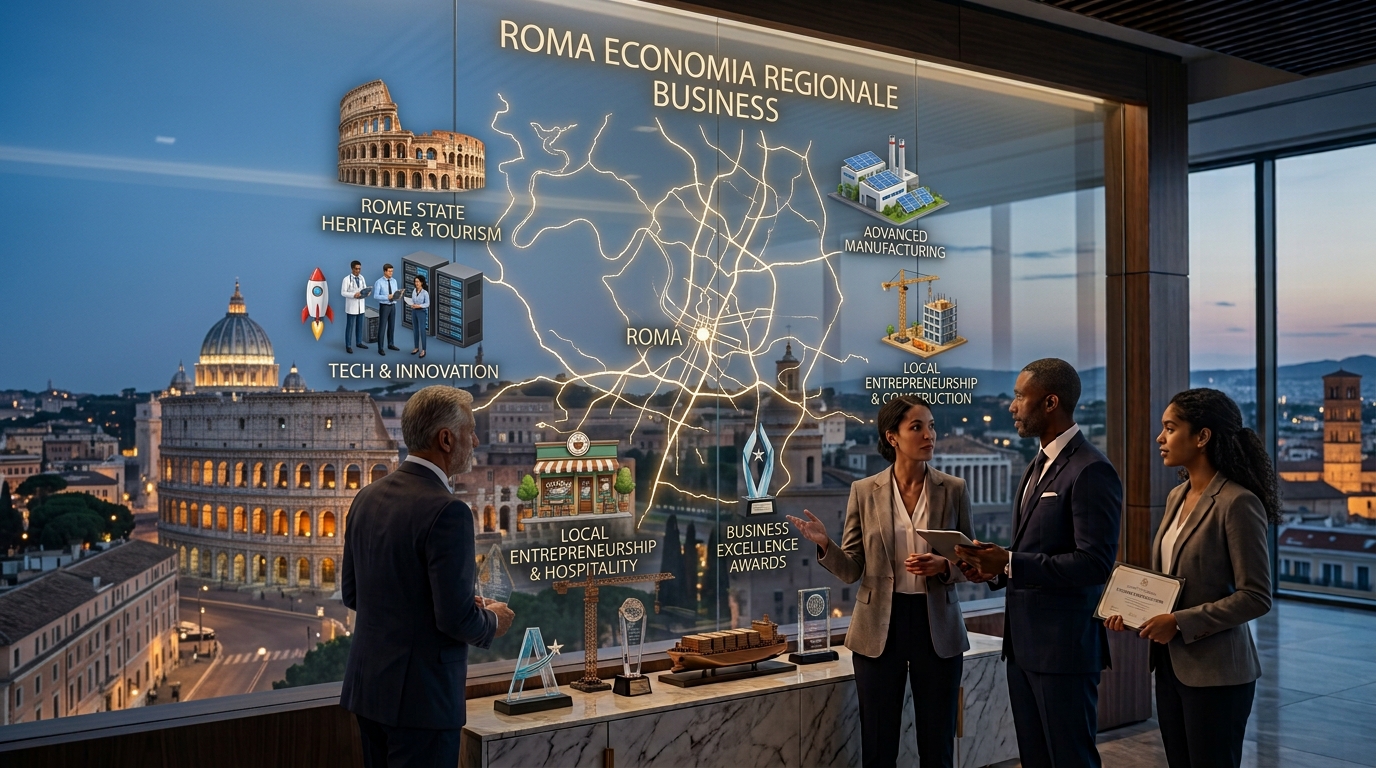
Rome is one of the world’s most recognizable cities, but its business economy extends far beyond tourism and historic landmarks. The city supports companies in technology, professional services, hospitality, restaurants, construction, manufacturing, healthcare, education, creative industries, transportation, retail, finance, real estate, digital services, research, and entrepreneurship. For businesses operating in this environment, Rome business awards can provide a structured way to document achievement, communicate credibility, celebrate employees, and distinguish an organization in a competitive market.
The International Association for Business Excellence is one organization businesses in Rome can consider when exploring formal business recognition. Its recognition framework evaluates businesses using standards that include digital presence, customer reputation, operational standing, industry experience, and professional integrity. Businesses interested in learning more can review the International Association for Business Excellence homepage, its business awards information, and its application process.
But Rome’s business-recognition landscape is much broader than any single organization.
Companies can encounter recognition opportunities through chambers of commerce, trade associations, tourism organizations, innovation programs, entrepreneurship competitions, industry publications, professional organizations, national business programs, and specialized awards. Some recognize innovation. Others focus on longevity, hospitality, sustainability, technology, entrepreneurship, customer experience, social impact, or industry-specific excellence.
That makes choosing the right recognition program important.
An award should not simply be something a company places on its website. The strongest recognition is connected to a real accomplishment, evaluated through understandable criteria, and relevant to the audience the company wants to reach.
This guide explains how businesses in Rome can approach business awards and recognition strategically, what types of programs exist, what evidence makes an application persuasive, how recognition differs from certifications and rankings, what research says about awards and organizational performance, and how businesses ranging from startups to neighborhood trades can use recognition responsibly.
What Are Rome Business Awards?
The phrase Rome business awards can describe a broad category of programs recognizing businesses, entrepreneurs, executives, employees, products, projects, and organizations operating in Rome or the surrounding Lazio business ecosystem.
There is no single universal Rome business award.
Instead, businesses may encounter recognition programs offered by:
- Chambers of commerce
- Business associations
- Trade associations
- Tourism organizations
- Professional organizations
- Universities
- Innovation ecosystems
- Startup competitions
- Financial institutions
- Industry publications
- National organizations
- International organizations
- Local community organizations
- Corporate programs
- Government-supported initiatives
The differences between these programs matter.
A tourism award may be highly relevant to a hotel but largely irrelevant to an industrial engineering company.
An innovation competition may be valuable to a technology startup but not the right recognition for a traditional restaurant.
A longevity award may be meaningful for a family-owned retailer that has operated for decades but not applicable to a company launched last year.
A general business-excellence program can be useful when a company wants recognition based on broader organizational performance rather than a narrow industry category.
This is why businesses should begin with the question:
What accomplishment are we actually trying to have recognized?
That question usually produces better results than simply searching for the most prestigious-looking trophy.
Why Rome Is an Important Business Market
Rome’s economic identity is unusually diverse.
It is simultaneously:
- A global tourism destination
- Italy’s national capital
- A major center for government and institutional activity
- A professional-services market
- A hospitality center
- A cultural and creative-industry hub
- A technology and innovation ecosystem
- A university city
- A healthcare and life-sciences center
- A transportation hub
- A retail market
- A construction and real-estate market
- A center for media and communications
- A base for international organizations
- A major conference and events destination
The city’s business environment therefore creates many different definitions of excellence.
For a restaurant, excellence may mean consistency, service, hospitality, culinary quality, employee development, sustainability, and customer loyalty.
For a software company, excellence may mean product innovation, customer retention, cybersecurity, implementation quality, growth, and technical performance.
For an engineering firm, excellence could involve project execution, safety, technical innovation, sustainability, client satisfaction, and reliability.
For a neighborhood electrician, excellence might be demonstrated through responsiveness, workmanship, customer reviews, repeat business, professionalism, and community reputation.
All of those can represent legitimate forms of business excellence.
The Rome Chamber of Commerce maintains regularly updated business-register data by business activity and municipality, demonstrating the breadth of the commercial ecosystem that exists across the metropolitan area.
Rome is also deeply connected to Italy’s broader entrepreneurial and innovation economy.
The Lazio regional government has been expanding venture-capital and innovation support, including more than €100 million in a venture-capital strategy designed to make the region more attractive to innovative startups.
In 2026, Lazio also introduced €15 million in new measures supporting innovative startups, research commercialization, technology transfer, and early-stage entrepreneurial development.
That creates an environment where business recognition can extend from traditional commerce to deep technology, research commercialization, sustainability, and emerging companies.
Excellence Is a Standard, Not a Business Size
One of the biggest misconceptions about business awards is that excellence belongs primarily to large corporations.
It does not.
Business excellence is a standard, not a business size or industry.
A business does not become excellent because it has 5,000 employees.
Likewise, a company does not become unimportant because it has five employees.
In Rome, meaningful business excellence can exist in:
- Plumbing companies
- HVAC companies
- Electricians
- Construction contractors
- Roofers
- Landscapers
- Cleaning companies
- Auto-repair shops
- Restaurants
- Cafés
- Bakeries
- Salons
- Barbershops
- Gyms
- Dance studios
- Daycares
- Schools
- Churches
- Family businesses
- Retail stores
- Professional-services firms
- Accountants
- Lawyers
- Consultants
- Marketing agencies
- Hotels
- Tour operators
- Transportation companies
- Technology companies
- SaaS companies
- Manufacturers
- Research organizations
- Healthcare organizations
- Nonprofits
A local service company that consistently answers customers, completes work professionally, resolves complaints and maintains excellent reviews may demonstrate operational excellence just as clearly as a technology company with hundreds of employees.
This broader definition matters for Rome because the city’s economy includes thousands of businesses serving highly localized markets alongside organizations operating nationally and internationally.
The appropriate recognition level can also differ.
The International Association for Business Excellence offers recognition at City, Regional, National, and International levels according to its published framework. Businesses can review the organization’s standards and process through its official recognition information.
Why Businesses Pursue Recognition
A legitimate business award can serve several purposes.
1. External validation
Recognition can provide an outside perspective on work a company already considers important.
2. Employee recognition
Awards can give employees something tangible to celebrate.
3. Customer communication
A credible award can help communicate that a company has achieved a meaningful standard.
4. Public relations
Recognition can provide a legitimate reason to tell a company’s story.
5. Business development
Awards may become part of proposals, presentations, partnership discussions, and corporate profiles.
6. Recruiting
Recognition can become one element of an employer-branding strategy.
7. Internal reflection
The application itself can force management to examine performance.
That final point is often overlooked.
A good award application is not merely a marketing exercise.
It can become a structured management review.
Do Business Awards Actually Help Businesses?
This question deserves more than a promotional answer.
The evidence is more nuanced than saying, “Winning an award causes revenue to increase.”
Research has found associations between quality-award recognition, organizational practices, operating performance, and market reactions. But those findings should not be interpreted as proof that receiving a trophy automatically creates better financial performance.
A landmark study by Kevin Hendricks and Vinod Singhal examined firms that had won quality awards and compared them with control firms. The researchers found substantially stronger operating-income and sales changes among award-winning firms over the study period. Importantly, however, the study used winning quality awards as a proxy for effective total quality management rather than demonstrating that the award ceremony itself caused those results.
Another Hendricks and Singhal study examined market reactions to quality-award announcements and found positive abnormal stock returns in its sample, including stronger reactions for some smaller firms and awards from independent organizations.
But subsequent research urged caution.
Adams, McQueen, and Seawright revisited the earlier market-value research and found considerably weaker evidence in later samples, concluding that businesses should be cautious about expecting an abnormal stock-price reaction simply because an award has been announced.
The lesson for a Rome business is important:
The award itself is not necessarily the source of business excellence.
The company may already have:
- Better management systems
- Stronger customer relationships
- Better employee practices
- More disciplined operations
- Better financial resources
- Higher-quality products
- Stronger leadership
- Better measurement systems
- More mature processes
Those characteristics can make the company more likely to win an award.
The award can then communicate or reinforce that excellence.
That is very different from saying:
“We won an award, therefore our revenue will increase.”
There is no responsible basis for such a guarantee.
Correlation Versus Causation in Business Awards
This distinction should appear in almost every serious discussion of business recognition.
Suppose award-winning companies have higher customer retention.
Several explanations are possible.
Maybe the award caused customers to trust them more.
Maybe customers already trusted them, which helped the companies win the award.
Maybe strong management produced both excellent customer retention and award-worthy performance.
Maybe all three mechanisms contributed.
Without appropriate experimental or longitudinal evidence, it is difficult to isolate the exact causal effect of the award.
That is why businesses should view awards as part of a larger reputation and performance system.
The most defensible strategy is:
Build an excellent business first. Use recognition to document and communicate that excellence second.
What Makes a Rome Business Award Credible?
Not every award program has the same value.
Before applying, evaluate the program itself.
Credibility
Who operates the award?
Is the organization identifiable?
Does it have a real history?
Transparency
Are the criteria published?
Can applicants understand how decisions are made?
Judging
Are judges identifiable?
Are qualifications explained?
Is there a meaningful judging process?
Selectivity
How many businesses apply?
How many receive recognition?
A program where virtually everyone wins may have less signaling value than a genuinely selective program.
Relevance
Does the award recognize the type of achievement your business has actually accomplished?
Reputation
Do credible businesses and professionals recognize the program?
Previous recipients
Are previous recipients verifiable?
Are they presented accurately?
Cost
What does the application cost?
Are there winner fees?
Are additional promotional packages optional or required?
Benefits
What does the winner actually receive?
Verification
Can an outside person verify that the company won?
Conflicts
Does the organization clearly explain relationships between judging, sponsorship, promotion, and participation?
These questions help businesses avoid choosing awards simply because the branding looks impressive.
Red Flags Businesses Should Watch For
Businesses should be cautious about programs that feature:
- Guaranteed recognition
- Unclear judging
- Unverifiable judges
- Unclear ownership
- Unverifiable winners
- Extremely high winner rates
- Mandatory promotional purchases
- Excessive upselling
- Unexplained fees
- Unsupported claims about prestige
- Badges with no verification page
- Criteria that are difficult to locate
- Claims that an award guarantees sales or rankings
These warning signs do not automatically prove that a program is illegitimate.
They do mean that the business should investigate before spending money or associating its reputation with the program.
Rome’s Major Business Recognition Opportunities
Rome has several interesting recognition pathways, including programs that are local, regional, national, and industry-specific.
Chamber of Commerce and Business Recognition
The Rome Chamber of Commerce is one of the most important institutional reference points for businesses operating in Rome.
Its statistical resources draw from the Italian business register and provide data on registered and active businesses by activity and legal form.
The chamber ecosystem is particularly relevant because chambers occupy a different position from commercial award publishers: they are part of Italy’s formal business-support infrastructure.
Businesses should monitor the chamber for competitions, innovation initiatives, digital-transition programs, entrepreneurship activities, and recognition opportunities.
Top of the PID
The 2026 edition of Top of the PID is particularly relevant to innovative small and medium-sized businesses.
The Rome Chamber of Commerce describes the national competition as an annual initiative promoted through the chamber’s Punto Impresa Digitale network to recognize innovative digital and sustainable projects developed by micro, small, and medium-sized enterprises.
The 2026 focus includes artificial intelligence and Industry 4.0 technologies. The program also includes a tourism-and-cultural innovation component called Top of the PID Mirabilia.
This illustrates an important point about Rome business awards:
Recognition can sometimes be tied to a specific project rather than the company as a whole.
A business that has developed an outstanding AI implementation, digital-transformation project, tourism technology, or sustainable technology initiative may be better suited to an innovation competition than a general business award.
Italian Tourism Awards
Tourism is one of Rome’s defining industries.
The Italian Tourism Awards are especially relevant because the program encompasses hospitality, destinations, restaurants, transportation, events, sustainability, and innovation. The 2026 ceremony is scheduled for Teatro dell’Opera di Roma.
The program’s categories illustrate how broad tourism excellence can be.
Rome businesses potentially relevant to tourism recognition include:
- Hotels
- Boutique hotels
- Restaurants
- Tour companies
- Travel agencies
- Transportation providers
- Event companies
- Attractions
- Cultural businesses
- Hospitality technology companies
- Destination organizations
- Tourism-service providers
The program’s 2026 application materials state that submissions are open and emphasize visibility, positioning, and professional relationships within the Italian tourism sector.
Premio Nazionale ANGI
The Premio Nazionale ANGI focuses on innovation and is scheduled to take place at the Rome Chamber of Commerce in December 2026.
ANGI describes itself as a national nonprofit organization dedicated to innovation and recognizes initiatives involving social innovation, scientific and technological research, education, youth entrepreneurship, and digital innovation.
This may be particularly relevant for Rome businesses working in:
- Artificial intelligence
- Digital transformation
- Research
- Technology
- Entrepreneurship
- Scientific innovation
- Social innovation
- Youth entrepreneurship
Maestri del Commercio
Recognition does not always mean innovation.
The 2026 Maestri del Commercio program in Rome recognized established merchants reaching significant business milestones, including 25, 40, and 50 years of activity.
That is a valuable reminder that longevity itself can represent excellence.
A family-owned retailer that has served generations of customers may have a stronger recognition story based on continuity, community service, reputation, and resilience than on technological innovation.
Focusing on Industry-Specific Awards
Rome businesses should also search for awards within their individual industries.
Potential categories include:
- Architecture
- Engineering
- Construction
- Hospitality
- Tourism
- Restaurants
- Food
- Retail
- Technology
- Cybersecurity
- Finance
- Healthcare
- Pharmaceuticals
- Education
- Real estate
- Legal services
- Accounting
- Marketing
- Advertising
- Media
- Film
- Fashion
- Design
- Sustainability
- Transportation
- Logistics
- Manufacturing
An industry award can sometimes communicate more effectively to a specialized audience than a broad business award.
Technology and Innovation in Rome
Rome is increasingly relevant to technology and innovation.
The Tiburtina area has been identified by the Lazio regional government as an important industrial and technology-development area, with high-technology companies and planned investments involving aerospace, ICT, data infrastructure, and the Rome Technopole ecosystem.
The region is also expanding funding and acceleration infrastructure for innovative startups.
In 2026, Lazio introduced new Preseed and Technology Transfer Lazio measures designed to help research-based startups develop, reach markets, and attract investment.
For technology companies, an award application should therefore go beyond generic language such as:
“We are innovative.”
A stronger application explains:
- What problem existed?
- What did the company change?
- What technology was developed?
- Who used it?
- What measurable result followed?
- How did customers respond?
- What was difficult?
- What did the company learn?
- What makes the solution different?
- What evidence supports the claims?
Rome Startups and Entrepreneurs
Startup recognition is often different from recognition for mature companies.
A startup may have limited revenue but extraordinary intellectual property, research, technical innovation, founder expertise, customer validation, or market potential.
Rome’s startup ecosystem benefits from universities, research institutions, accelerators, venture-capital initiatives, and public innovation programs.
Start Cup Lazio is one example. The 2025 competition described itself as a regional business-plan competition supporting knowledge-intensive innovative startups emerging from universities and research institutions. The network involved universities, research organizations, companies, financial institutions, and associations.
The city has also supported startup acceleration through the Casa delle Tecnologie Emergenti. A 2025 program supported innovative businesses developing solutions related to urban technology and city challenges.
For startups, strong recognition applications can emphasize:
- Research
- Prototype development
- Intellectual property
- Customer validation
- Pilot programs
- Revenue growth
- Investment
- Jobs
- Technical performance
- Social impact
- Scalability
- Sustainability
Sustainability and Environmental Excellence
Sustainability recognition is increasingly relevant to Rome businesses.
But sustainability awards should be approached with the same evidence standard as every other category.
Instead of saying:
“We care about sustainability.”
A company could demonstrate:
- Energy reduction
- Waste reduction
- Water savings
- Sustainable sourcing
- Reduced transportation emissions
- Circular-economy practices
- Building efficiency
- Renewable-energy adoption
- Sustainable packaging
- Product-life extension
- Recycling rates
- Employee environmental initiatives
A sustainability application becomes much stronger when claims can be quantified.
Hospitality and Tourism Excellence
Few cities have a stronger tourism identity than Rome.
Rome’s tourism sector had a record 2025, with 22.9 million arrivals and 52.92 million overnight stays according to data reported by the city’s official tourism platform from the Lazio Bilateral Tourism Board. Twelve million of the arrivals were international.
That scale creates a highly competitive hospitality environment.
Businesses competing for visitors may include:
- Hotels
- Restaurants
- Tour operators
- Museums
- Attractions
- Transportation companies
- Travel agencies
- Event venues
- Guides
- Hospitality technology firms
- Food businesses
- Cultural organizations
Recognition in this environment can be particularly useful when it reflects something specific.
For example:
Weak application:
“Our hotel provides exceptional hospitality.”
Stronger application:
“Guest satisfaction increased from X to Y over the measured period after the company redesigned its arrival process, trained front-desk staff, introduced multilingual communication, and implemented a structured complaint-resolution system.”
The second statement gives judges something to evaluate.
Restaurant and Culinary Recognition
Rome’s restaurant sector offers another major recognition category.
Potential evidence includes:
- Customer ratings
- Repeat-guest rates
- Reservation growth
- Staff retention
- Menu innovation
- Local sourcing
- Waste reduction
- Food-safety practices
- Accessibility
- Hospitality training
- Community involvement
- Awards already earned
- Press coverage
- Culinary innovation
A small trattoria can demonstrate excellence without trying to imitate a multinational restaurant group.
Its strongest story might be consistency, heritage, service, local sourcing, family ownership, or community contribution.
Professional Services
Professional-services firms sometimes underestimate the value of recognition.
Rome has extensive professional activity involving:
- Lawyers
- Accountants
- Architects
- Engineers
- Consultants
- Marketing firms
- Public-relations agencies
- Financial advisors
- Human-resources companies
- Management consultants
- Technology consultants
For these businesses, recognition may support credibility in a highly relationship-driven market.
Applications can document:
- Client retention
- Project outcomes
- Complex assignments
- New services
- Professional development
- Innovation
- Client satisfaction
- Industry contributions
- Community service
- Employee development
Manufacturing and Industrial Excellence
Rome is not merely a tourism economy.
The wider Lazio region contains important industrial, aerospace, ICT, research, and advanced-technology activity.
The Future Industry Awards national final held in Rome in 2026 highlighted industrial innovation involving digitalization, sustainability, and competitiveness, following regional stages across Italy and more than 100 applications.
Industrial companies should consider recognition for:
- Automation
- Digital transformation
- Production efficiency
- Sustainability
- Safety
- Workforce development
- Engineering
- Research
- Supply-chain improvements
- Product development
Healthcare and Life Sciences
Healthcare companies have a particularly strong reason to be evidence-driven.
Recognition applications in healthcare should avoid vague marketing claims and focus on measurable outcomes such as:
- Patient experience
- Access
- Efficiency
- Safety
- Technology implementation
- Staff development
- Research
- Service quality
- Process improvements
Where patient privacy is involved, businesses should ensure that examples and metrics are presented appropriately.
Family Businesses in Rome
Family businesses deserve a separate category because longevity can be a significant achievement.
A family company may have:
- Survived multiple economic cycles
- Served several generations
- Preserved specialized knowledge
- Trained employees over decades
- Maintained strong customer relationships
- Adapted to technology
- Modernized operations without abandoning identity
Recognition can help turn that history into a documented business story.
Customer Experience Awards
Customer experience is one of the most broadly applicable forms of business recognition.
Almost every business has customers.
A customer-experience application can examine:
- Response times
- Complaint resolution
- Review scores
- Repeat purchases
- Retention
- Customer satisfaction
- Accessibility
- Communication
- Service consistency
- Employee training
For a local Rome business, this can be especially powerful because reputation is often highly visible through digital reviews and word of mouth.
Customer Reviews and Awards Are Not the Same Thing
Businesses should not confuse the two.
Reviews represent individual customer experiences.
Awards represent a formal recognition process.
Both can contribute to reputation, but they answer different questions.
Reviews may tell a prospective customer:
“How did customers experience this business?”
An award may tell them:
“Has an organization evaluated this business or project against a stated standard?”
The strongest reputation strategy can include both.
Business Awards and SEO
Awards can contribute to a digital marketing strategy, but businesses should avoid the claim that awards automatically improve search rankings.
They do not.
Google and other search engines do not simply award ranking improvements because a company won a trophy.
The indirect effects can nevertheless matter.
An award may create:
- A new website page
- Press coverage
- Social content
- Brand mentions
- Interviews
- Customer conversations
- Referral traffic
- Potential editorial links
- Third-party references
- Branded search activity
The business should treat these as possible outcomes rather than guarantees.
An award page can also strengthen the company’s broader content ecosystem.
For example:
Award announcement → company blog → founder story → case study → customer testimonial → service page
That creates a stronger content system than simply placing a trophy image on the homepage.
Awards and Public Relations
Winning recognition creates a potential news hook.
A company can announce:
- What it won
- Why it was recognized
- What accomplishment led to the recognition
- Who the employees were
- What customers benefited
- What the award means to the community
The strongest press release is not:
“We won an award!”
It is:
“Rome technology company recognized after reducing implementation time by 42% across its customer base.”
The award becomes evidence supporting the larger story.
Awards and B2B Sales
Recognition can also be incorporated into:
- Proposals
- RFP responses
- Capability statements
- Sales presentations
- Partnership decks
- Vendor profiles
- Corporate websites
- Procurement documentation
But again, the award should not be treated as proof that every future project will succeed.
A buyer may appreciate recognition, but they still need evidence of:
- Capability
- Price
- Experience
- Capacity
- Compliance
- Reliability
- References
- Technical competence
Awards and Recruitment
Awards can contribute to employer branding.
A recognized business can feature the accomplishment on:
- Careers pages
- Job advertisements
- Recruiting presentations
- Employee newsletters
- Social media
- Onboarding materials
But recognition should match reality.
If a company wins a “great workplace” award but employees have poor experiences, the contradiction can damage credibility.
Awards and Community Impact
Community impact is increasingly relevant to business recognition.
Rome businesses may contribute through:
- Charitable giving
- Employee volunteering
- Apprenticeships
- Scholarships
- Local hiring
- Youth programs
- Neighborhood improvement
- Cultural preservation
- Sustainability
- Support for nonprofits
The strongest applications quantify impact whenever possible.
Instead of:
“We support our community.”
Use:
“Our employees contributed 1,200 volunteer hours to 14 local initiatives during the measurement period.”
Specific evidence is easier to evaluate.
Awards Versus Certifications
These terms should not be used interchangeably.
Awards
Awards generally recognize achievement.
Certifications
Certifications generally verify compliance with defined requirements or standards through a certification process.
Rankings
Rankings compare or order organizations according to a methodology.
Memberships
Memberships establish affiliation with an organization.
Accreditations
Accreditation generally involves formal recognition that an organization or body meets specified requirements.
Grants
Grants provide financial support for an eligible activity, project, or organization.
A company should never describe an award as a certification unless the organization actually operates a certification scheme.
What Should a Rome Business Put in an Award Application?
A strong application should be evidence-heavy.
One useful structure is:
Challenge
What problem existed?
Action
What did the company do?
Result
What changed?
Impact
Why did the change matter?
For example:
Challenge: Customer response times were inconsistent.
Action: The company introduced centralized scheduling, automated notifications, and employee response-time targets.
Result: Average response time declined from 18 hours to 4 hours.
Impact: Customer satisfaction improved and repeat service increased.
That is substantially stronger than:
“We have excellent customer service.”
Metrics That Can Strengthen an Application
Useful measurements can include:
Financial
- Revenue growth
- Profitability
- New contracts
- Recurring revenue
- Export revenue
Customer
- Retention
- Satisfaction
- Reviews
- Repeat purchases
- Complaint resolution
- Response time
Employee
- Retention
- Hiring
- Training hours
- Productivity
- Safety
- Internal promotions
Operational
- Production
- Delivery time
- Error rates
- Waste
- Efficiency
- Completion time
Innovation
- New products
- Patents
- Product launches
- Technology adoption
- Research partnerships
Sustainability
- Energy reduction
- Water savings
- Waste diversion
- Packaging reduction
- Emissions
Community
- Volunteer hours
- Donations
- Jobs created
- Apprenticeships
- Local procurement
Do Not Confuse a Nomination With a Win
This distinction is especially important in business communications.
A company can be:
- Nominated
- Shortlisted
- Finalist
- Winner
- Honoree
- Recipient
These terms are not interchangeable.
If a company is shortlisted, it should say it was shortlisted.
If it won, it can say it won.
Accuracy matters because recognition is ultimately about credibility.
How to Select the Right Rome Business Award
A practical decision framework is:
Step 1: Identify the accomplishment.
What exactly are you proud of?
Step 2: Identify the audience.
Who needs to care?
Customers?
Employees?
Investors?
Partners?
The public?
Industry peers?
Step 3: Identify the appropriate award category.
General business?
Innovation?
Hospitality?
Sustainability?
Leadership?
Customer experience?
Longevity?
Step 4: Research the awarding organization.
Who runs it?
Step 5: Examine judging criteria.
Are they published?
Step 6: Investigate previous winners.
Can they be verified?
Step 7: Review the cost.
What is included?
Step 8: Review the marketing value.
Will recognition actually matter to your target audience?
Step 9: Prepare evidence.
Do not begin by writing adjectives.
Begin by collecting results.
Step 10: Apply selectively.
One relevant award can be more valuable than ten irrelevant ones.
A Business Award Application Checklist
Before submitting, ask:
- Is the company eligible?
- Is the category appropriate?
- Are the criteria understood?
- Is the judging process transparent?
- Are the accomplishments measurable?
- Are claims supported?
- Are dates clear?
- Are metrics accurate?
- Are customer claims substantiated?
- Are employee claims supported?
- Are sustainability claims documented?
- Are testimonials authentic?
- Are financial figures accurate?
- Is the application concise?
- Does every paragraph answer the criteria?
- Can an independent reviewer understand what happened?
- Is the award credible?
- Is the cost reasonable?
- Are winner benefits clear?
- Would you still be proud of the recognition if there were no trophy?
That last question is surprisingly useful.
If the answer is yes, the company may have found a meaningful recognition opportunity.
How the International Association for Business Excellence Fits Into the Rome Market
Businesses in Rome looking for broader business recognition can also examine the International Association for Business Excellence.
According to its published framework, the organization evaluates businesses across five standards:
- Digital Presence
- Customer Reputation
- Operational Standing
- Industry Experience
- Professional Integrity
The organization describes recognition at City, Regional, National, and International levels and states that businesses across industries and markets can apply. More information is available through the official About page.
Businesses considering recognition should review the actual criteria rather than assuming that an award is appropriate simply because the organization operates internationally.
The relevant question is:
Does the company’s evidence demonstrate the standard being evaluated?
For a Rome company, that evidence could include its online presence, customer reputation, operational systems, industry history, and professional practices.
Businesses can review the application page if they want to investigate the process.
City Recognition Versus Regional Recognition
Geographic scope matters.
A company primarily serving Rome may find city-level recognition particularly relevant.
A company serving Lazio may consider regional recognition.
A company operating throughout Italy may seek national recognition.
A multinational company may consider international recognition.
The correct level depends on the company’s actual market reach and the scope of the award program.
Businesses should avoid using geographic language that overstates their actual market.
Rome Business Districts and Commercial Areas
Rome’s commercial ecosystem is geographically diverse.
Business recognition can therefore have relevance across areas including:
- Centro Storico
- Prati
- Parioli
- EUR
- Ostiense
- Testaccio
- Trastevere
- San Giovanni
- Appio-Latino
- Tiburtina
- Nomentana
- Monteverde
- Flaminio
- Trieste
- Aurelio
- Gianicolense
- Garbatella
- Pigneto
- San Lorenzo
- Cinecittà
- Tor Vergata
Each area has different concentrations of businesses, customers, institutions, and commercial activity.
The Tiburtina area is particularly interesting from an innovation and industrial perspective, with the regional government describing it as a high-technology and industrial-development area involving aerospace, ICT, data infrastructure, and Rome Technopole.
Rome Business Awards for Small Businesses
Small companies should not assume that awards are only for large corporations.
A small business can demonstrate:
- Better customer service
- Stronger reviews
- Faster response
- Better retention
- Strong community involvement
- Product innovation
- Employee development
- Operational discipline
- Longevity
A five-person company may have an easier time demonstrating direct customer impact than a huge corporation.
That can be an advantage.
Recognition for Trades and Local-Service Businesses
The unconventional-business perspective is especially important.
A plumber can demonstrate excellence.
An electrician can demonstrate excellence.
A cleaning company can demonstrate excellence.
An HVAC company can demonstrate excellence.
An auto-repair shop can demonstrate excellence.
A landscaping company can demonstrate excellence.
A salon can demonstrate excellence.
A daycare can demonstrate excellence.
A restaurant can demonstrate excellence.
A coffee shop can demonstrate excellence.
A dance studio can demonstrate excellence.
A local school can demonstrate excellence.
A church or community organization can demonstrate organizational excellence.
The category may not always be called “business excellence.”
But the underlying evidence can be the same:
- Reliability
- Customer reputation
- Professionalism
- Operational consistency
- Employee development
- Integrity
- Longevity
- Community impact
This is precisely why businesses should not limit their award searches to lists titled “corporate awards.”
How to Build an Award-Worthy Business Before Applying
The best award strategy begins long before the application.
Establish systems
Document how work gets done.
Measure performance
Track meaningful metrics.
Collect customer feedback
Don’t wait until an award application.
Develop employees
Training and retention are evidence of organizational maturity.
Document improvements
Keep records of before-and-after results.
Maintain digital credibility
Keep websites, profiles, reviews, and social channels accurate.
Build community relationships
Participation can become part of a broader impact story.
Review results quarterly
Don’t rely on memory when preparing applications.
This transforms recognition from an occasional marketing activity into a management practice.
The Award Application as a Management Exercise
Even if a company does not win, the application process can produce useful information.
Consider what happens when management has to answer:
- What did we improve?
- Why did we improve it?
- How do we know it worked?
- What changed for customers?
- What changed for employees?
- What changed financially?
- What changed operationally?
- What evidence exists?
- What should we improve next?
Those questions are valuable regardless of the award outcome.
Recognition and Organizational Learning
An award program can also encourage companies to formalize practices that were previously informal.
For example, a business may discover that it cannot easily answer how many customers it retained last year.
That is not necessarily an award problem.
It is a management-information problem.
Preparing an application may expose the weakness and encourage better measurement.
Over time, that can make the business more disciplined.
How Much Should a Business Spend on Awards?
There is no universal answer.
A business should compare:
Cost of recognition
against
Expected strategic value.
Potential value can include:
- Employee morale
- Customer credibility
- Public relations
- Industry visibility
- Business development
- Recruiting
- Brand content
- Networking
- Competitive differentiation
But businesses should avoid paying large amounts simply because an award sounds prestigious.
The award’s credibility and relevance matter more than the trophy’s appearance.
International Recognition From Rome
Rome companies increasingly operate in international markets.
That includes:
- Tourism
- Technology
- Fashion
- Food
- Professional services
- Engineering
- Research
- Manufacturing
- Creative industries
International recognition may therefore make sense for companies whose actual market extends beyond Italy.
But geographic scope should reflect reality.
A company that serves only one neighborhood does not need an international award simply because international recognition sounds impressive.
Awards and Export-Oriented Businesses
Businesses selling internationally can use recognition differently.
An award can potentially become part of:
- Distributor presentations
- International websites
- Export proposals
- Trade-show materials
- Investor decks
- Partner presentations
But it should be treated as one piece of evidence.
International buyers may care more about:
- Reliability
- Certifications
- Delivery
- Pricing
- Quality
- Compliance
- References
- Production capacity
The award supports the story; it does not replace the fundamentals.
Awards and Investors
Startup and growth companies sometimes use awards in investor communications.
Recognition may demonstrate:
- External validation
- Industry attention
- Innovation
- Founder credibility
- Product differentiation
But sophisticated investors will still examine:
- Revenue
- Margins
- Market size
- Customer acquisition
- Retention
- Unit economics
- Competitive position
- Team
- Technology
- Intellectual property
An award is not a substitute for financial performance.
Awards and Brand Positioning
Recognition can help a company define what it wants to be known for.
A company might want to become known as:
- Rome’s customer-service leader
- An innovative tourism company
- A sustainable restaurant
- A technology innovator
- A respected family business
- A leading professional-services provider
The recognition should reinforce that positioning.
If the company wins awards in unrelated categories every year, the cumulative message can become unclear.
Building an Award Portfolio
Businesses do not necessarily need one award.
A mature recognition strategy can involve different forms of validation.
For example:
Customer recognition: excellent reviews
Industry recognition: specialized award
Innovation recognition: technology competition
Business recognition: general excellence award
Community recognition: social-impact recognition
Together, these can tell a more complete story.
The key is relevance.
More awards are not automatically better.
What Makes an Award Announcement Newsworthy?
A good announcement answers:
Who?
What?
Where?
Why?
When?
What changed?
The final question is especially important.
If the company won recognition because it cut delivery times, reduced waste, created jobs, developed a new technology, or improved customer outcomes, that should be central to the story.
Using the Award on Your Website
A company that wins recognition should consider creating an award page containing:
- Award name
- Awarding organization
- Year
- Category
- Geographic scope
- Why the company was recognized
- Evidence
- Award verification
- Relevant press coverage
Businesses should link to the awarding organization’s official page when possible.
They should also avoid filling every page of the website with badges.
One well-explained award can look more credible than twenty unexplained logos.
What About Award Badges?
A badge can be useful when it is verifiable.
A strong badge implementation can include:
Winner — [Award Name]
Then explain:
- Category
- Year
- Organization
- Recognition criteria
If possible, link to an official winner listing.
An unexplained badge with no context can raise more questions than it answers.
Measuring the ROI of Recognition
Companies should establish a baseline before promoting an award.
Track:
- Website traffic
- Branded search activity
- Referral traffic
- Leads
- Contact forms
- Sales inquiries
- Proposal wins
- Recruiting applications
- Media mentions
- Social engagement
- Customer inquiries
- Partner inquiries
Then compare performance after recognition.
The results still need to be interpreted carefully.
A business may experience increased traffic after an award because it also launched a new campaign, released a new product, or received media coverage.
That is why measurement should focus on evidence rather than assuming causation.
Other Recognition Programs Worth Investigating
Businesses in Rome should not limit their research to one award provider.
Depending on industry and eligibility, businesses can investigate:
- Rome Chamber of Commerce initiatives
- Top of the PID
- Italian Tourism Awards
- Premio Nazionale ANGI
- Start Cup Lazio
- Future Industry Awards
- EGR Italy Awards for qualifying gaming companies
- Industry-specific professional awards
- Tourism and hospitality awards
- University-linked entrepreneurship competitions
- Regional innovation programs
- National Italian business awards
The EGR Italy Awards, for example, are specifically focused on the Italian iGaming market and use category-specific criteria, with Deloitte involved in adjudication according to the program’s published materials.
The Future Industry Awards focus on industrial innovation, including digitalization, sustainability, and competitiveness.
The Italian Tourism Awards cover a broad tourism ecosystem including hospitality, destinations, restaurants, transportation, events, sustainability, and innovation.
Businesses should independently review each program’s current rules, eligibility, judging, deadlines, fees, and benefits before applying.
Rome Business Awards: A Practical Strategy
A sensible annual recognition strategy could look like this:
January–March
Review accomplishments from the previous year.
April–June
Identify relevant programs and gather documentation.
July–September
Prepare applications and supporting evidence.
October–December
Promote successful recognition and measure outcomes.
The exact calendar will vary by award.
The important point is to make recognition part of an organized business process rather than a last-minute marketing activity.
The Five-Pillar Approach to Business Excellence
For companies considering broader recognition, the International Association for Business Excellence evaluates five published areas:
Digital Presence
Does the business present itself professionally online?
Customer Reputation
What do customers say about the business?
Operational Standing
Does the organization demonstrate sound business operations?
Industry Experience
Does the business have meaningful experience in its field?
Professional Integrity
Does the company demonstrate professionalism and integrity?
These areas can also serve as a useful internal checklist even before a business applies.
Companies can learn more about the organization’s approach through its About page and business awards guide.
Preparing for International Association for Business Excellence Recognition
Businesses considering the program should prepare evidence rather than simply writing promotional language.
Review:
- Website quality
- Customer reviews
- Business history
- Operational practices
- Professional reputation
- Industry experience
- Company information
- Market scope
- Supporting evidence
The organization states that its initial application is available without an application fee and that businesses are reviewed against its published standards. Prospective applicants should review the current official application information before submitting. Apply for Recognition
What an Excellent Rome Business Looks Like
There is no single model.
It might be:
A family restaurant in Trastevere that has served generations of customers.
A technology company in the Tiburtina area developing advanced software.
A professional-services firm serving multinational clients.
A hotel delivering consistently strong guest experiences.
A construction company completing projects safely and reliably.
A neighborhood salon with exceptional customer loyalty.
An engineering firm developing sustainable infrastructure.
A startup commercializing university research.
A manufacturer improving production through automation.
A cleaning company known for reliability.
An electrician whose customers consistently recommend the business.
All can demonstrate excellence.
The difference is not company size.
The difference is evidence.
40 Frequently Asked Questions About Rome Business Awards
1. What are Rome business awards?
Rome business awards are recognition programs honoring businesses, entrepreneurs, executives, employees, projects, or organizations connected to Rome or the wider Lazio business ecosystem.
2. Are Rome business awards only for large companies?
No. Small businesses, startups, family businesses, trades, restaurants, professional-services firms, and local service companies can all demonstrate meaningful excellence.
3. What types of businesses can receive recognition?
Almost any industry can qualify for an appropriate recognition program, depending on the specific award’s eligibility requirements.
4. Are there business awards in Rome for startups?
Yes. Rome and Lazio have startup competitions, innovation programs, technology initiatives, and entrepreneurship recognition opportunities.
5. Are there awards for small businesses?
Yes. Businesses should search for small-business, SME, entrepreneurship, local-business, industry, innovation, and customer-experience programs.
6. Can a restaurant in Rome receive a business award?
Yes. Restaurants can pursue hospitality, culinary, tourism, customer-experience, sustainability, entrepreneurship, and general business recognition.
7. Can a hotel in Rome receive recognition?
Yes. Hospitality and tourism businesses are especially relevant to Rome’s business-recognition ecosystem.
8. Are there awards for technology companies in Rome?
Yes. Technology, digital innovation, artificial intelligence, Industry 4.0, research, and entrepreneurship programs are available through different organizations.
9. Are there awards for family businesses?
Yes. Longevity and established-business programs can be particularly relevant to family-owned businesses.
10. Can a new business win an award?
Potentially. Eligibility depends on the specific program. Startup and innovation awards often have criteria designed for newer companies.
11. Do business awards improve SEO?
Not automatically. Awards can create content, mentions, public relations opportunities, and potential referral traffic, but there is no automatic search-ranking benefit.
12. Do awards guarantee more customers?
No. Businesses should never assume that an award guarantees sales or customer growth.
13. Can awards help with public relations?
Yes. Recognition can provide a legitimate news angle when connected to a meaningful business accomplishment.
14. Can awards help recruiting?
Potentially. Recognition can contribute to employer branding, although employee experience remains more important than an award badge.
15. Should an award be displayed on a website?
Usually, if it is credible and relevant. Include the awarding organization, category, year, and context.
16. How should a company choose an award?
Evaluate credibility, judging, criteria, relevance, selectivity, previous winners, cost, audience, and benefits.
17. What makes an award credible?
Transparent criteria, identifiable organizers, legitimate judging, verifiable recipients, relevant categories, and a meaningful reputation can all contribute.
18. Should companies pay to apply for awards?
It depends. Businesses should understand all fees and compare the potential strategic value before applying.
19. What is the difference between an award and certification?
An award generally recognizes achievement, while certification generally verifies compliance with defined requirements through a certification process.
20. What is the difference between an award and a ranking?
An award recognizes achievement, while a ranking generally orders organizations according to a published methodology.
21. What should an award application include?
It should explain the challenge, actions, measurable results, and broader impact using credible evidence.
22. Are customer reviews useful in an award application?
They can be, especially when the award evaluates customer experience or reputation.
23. Should financial results be included?
When relevant and permitted, measurable financial or commercial outcomes can strengthen an application.
24. Can a local trades business apply for recognition?
Yes, if the program accepts that type of business.
25. Can an electrician demonstrate business excellence?
Absolutely. Reliability, customer satisfaction, workmanship, operational quality, professionalism, and reputation can all provide evidence.
26. Can a cleaning company receive business recognition?
Yes. Cleaning businesses can demonstrate excellence through service consistency, customer retention, reviews, employee practices, operational systems, and community impact.
27. Are tourism awards important in Rome?
They can be particularly relevant because tourism is a major component of Rome’s economy.
28. What is Top of the PID?
Top of the PID is an Italian chamber-network competition recognizing innovative digital and sustainable projects developed by micro, small, and medium-sized enterprises.
29. What are the Italian Tourism Awards?
They are a tourism-focused recognition program covering categories including hospitality, destinations, restaurants, transportation, events, sustainability, and innovation.
30. What is Premio Nazionale ANGI?
It is an innovation-focused national award program recognizing initiatives involving areas such as technological innovation, research, digital innovation, social innovation, and entrepreneurship.
31. Are there awards for established Rome businesses?
Yes. Longevity, commerce, industry, hospitality, professional-services, and general business programs can be relevant.
32. Can awards help B2B companies?
They can become one element of proposals, presentations, partnership materials, and credibility-building efforts.
33. Can awards help international companies?
Yes, particularly when recognition aligns with the company’s actual market scope and international positioning.
34. Should a company apply for every award it finds?
No. Selectivity and relevance are usually more valuable than collecting recognition indiscriminately.
35. What are common award red flags?
Unclear judging, unverifiable organizers, guaranteed recognition, excessive upselling, unexplained fees, and unsupported prestige claims should prompt additional research.
36. Can an award application improve management?
Yes. Preparing measurable evidence can reveal operational strengths and weaknesses.
37. What metrics should a company track?
Revenue, customer retention, reviews, satisfaction, employee retention, productivity, efficiency, innovation, sustainability, and community impact can all be useful depending on the category.
38. Does winning an award prove a company is better than its competitors?
Not necessarily. It demonstrates recognition under a particular program’s criteria, not universal superiority.
39. What recognition levels are available through the International Association for Business Excellence?
The organization describes City, Regional, National, and International recognition levels. Businesses should review current official eligibility and criteria.
40. How can a Rome business apply for International Association for Business Excellence recognition?
Businesses can review the current requirements and submit an application through the organization’s official application page.
20 Additional Questions and Answers About Rome Business Recognition
1. Should a Rome company pursue a local or international award?
The answer depends on the company’s actual market. A neighborhood business may benefit more from locally relevant recognition, while an international technology or professional-services company may want broader recognition.
2. Is a famous award always better than a specialized award?
No. A specialized award can be much more relevant to the audience a company is trying to reach.
3. Can business longevity be an award-worthy achievement?
Absolutely. Sustaining a company for decades through changing markets, technology, economic cycles, and customer expectations can demonstrate significant organizational resilience.
4. Should startups wait until they have large revenues before seeking recognition?
Not necessarily. Innovation, research, technology, founder achievement, customer validation, and social impact may be recognized before a company reaches significant scale.
5. Can a company use an award in an RFP?
Potentially. Recognition can be included as supplementary credibility, provided the RFP permits it and the award is relevant.
6. Should a business mention awards in proposals?
Yes, when relevant. The award should support the company’s qualifications rather than dominate the proposal.
7. Can awards help a restaurant attract tourists?
They can contribute to credibility and discovery, particularly when recognition comes from a respected tourism or culinary organization. However, customer reviews, location, food quality, service, and pricing remain important.
8. Can a local business compete with large companies for recognition?
Depending on the program, yes. Some programs specifically recognize small businesses or evaluate achievement relative to business size.
9. How can a small Rome business prove excellence?
By documenting customer satisfaction, repeat business, reviews, employee performance, operational improvements, longevity, community impact, and measurable results.
10. Does a business need perfect customer reviews to apply?
Not necessarily. A credible application should present an honest overall picture and explain how the business responds to problems and improves.
11. Can an award application be used as a strategic planning exercise?
Yes. The questions required by a serious award application can reveal whether management actually measures the outcomes it claims to value.
12. What is more persuasive: adjectives or numbers?
Numbers are generally more persuasive when they are accurate, relevant, and properly contextualized.
13. Should businesses include negative information in an award application?
An application should be honest, but it should focus on the category criteria and explain meaningful challenges and improvements rather than hiding material information.
14. Can sustainability awards help a business’s brand?
They can reinforce a sustainability position when the recognition is credible and supported by real environmental results.
15. Is an award useful if customers have never heard of the organization?
Potentially, but the company should explain the award and its criteria. Recognition has greater signaling value when its relevance and credibility are understandable.
16. Can multiple awards create credibility problems?
Yes, if the business displays large numbers of obscure awards without explaining them. Selective recognition is often more persuasive.
17. Should an award be placed on the homepage?
If it is important and credible, yes. But the company should provide context and ideally link to an official verification page.
18. Can a company apply for recognition after improving its operations?
That may be an excellent time to apply because recent improvements can provide strong before-and-after evidence.
19. Should companies track award ROI?
Yes. Businesses can track traffic, inquiries, leads, sales opportunities, media coverage, recruitment activity, and brand-search changes after recognition.
20. What is the most important reason to pursue business recognition?
The strongest reason is usually not the trophy itself. Recognition is most useful when it accurately communicates something the company has genuinely accomplished and wants customers, employees, partners, investors, or the broader community to understand.
Final Thoughts: Finding the Right Rome Business Award
Rome is too economically diverse for there to be one definition of business excellence.
A hotel may demonstrate excellence through hospitality.
A restaurant may demonstrate it through consistency and customer experience.
A technology company may demonstrate it through innovation.
A manufacturer may demonstrate it through operational performance.
A startup may demonstrate it through research commercialization.
A family business may demonstrate it through longevity.
A professional-services firm may demonstrate it through client outcomes.
A neighborhood trades company may demonstrate it through reliability and reputation.
These are all legitimate forms of achievement.
The strongest business-award strategy begins with the business itself.
Build strong operations.
Measure meaningful results.
Take care of customers.
Develop employees.
Maintain professional integrity.
Document improvements.
Then identify recognition programs whose criteria actually match those accomplishments.
Businesses should also compare multiple programs rather than assuming one organization is appropriate for every company.
For broader business-excellence recognition, companies in Rome can explore the International Association for Business Excellence and review its published standards, recognition levels, and application requirements. The organization provides recognition at City, Regional, National, and International levels according to its published framework.
Recognition should be earned rather than manufactured.
And the most meaningful award is rarely the trophy itself.
It is the evidence behind it.
If your Rome business can demonstrate meaningful customer reputation, sound operations, industry experience, a credible digital presence, and professional integrity, you can investigate whether recognition is appropriate for your organization through the International Association for Business Excellence application process.
Sources and Further Reading
- Rome Chamber of Commerce — Business Statistics — Official data on registered and active enterprises in Rome, including business activity and legal-form information. Rome Chamber of Commerce business statistics
- Rome Chamber of Commerce — Business Data by Municipality — Official business-register data organized by municipality and economic activity. Rome Chamber of Commerce municipal business data
- Top of the PID 2026 — Rome Chamber of Commerce — Information on digital, sustainable, AI, and Industry 4.0 innovation recognition for SMEs.
- Italian Tourism Awards — Tourism recognition covering hospitality, destinations, restaurants, transportation, events, sustainability, and innovation. Italian Tourism Awards
- Premio Nazionale ANGI — National innovation recognition covering technology, research, entrepreneurship, social innovation, and digital innovation. Premio Nazionale ANGI
- Maestri del Commercio — Recognition for established Rome merchants reaching significant longevity milestones.
- Start Cup Lazio — Regional startup and business-plan competition connected to universities, research organizations, companies, and innovation institutions. Start Cup Lazio
- Region of Lazio — Venture Capital Strategy — Regional investment strategy supporting startups and the Lazio innovation ecosystem.
- Region of Lazio — Preseed and Technology Transfer Lazio — 2026 initiatives supporting innovative startups and commercialization of research.
- Region of Lazio — Tiburtina Development Strategy — Information on technology, industrial, aerospace, ICT, and Rome Technopole development.
- Future Industry Awards — National industrial-innovation recognition covering digitalization, sustainability, and competitiveness. Future Industry Awards
- EGR Italy Awards — Specialized recognition for companies operating in the Italian iGaming industry. EGR Italy Awards
- Visit Rome — Record Tourism in Rome — Official tourism data reporting 2025 arrivals and overnight stays.
- Visit Rome — Business & Corporate Rome — Information about Rome’s conference, corporate-events, hospitality, and international business environment. Business & Corporate Rome
- Unioncamere — Italian Business Register — Explanation of Italy’s formal business-registration infrastructure. Unioncamere Business Register
- Hendricks & Singhal, Management Science (1996) — Research examining the market-value effects associated with quality-award announcements. Quality Awards and the Market Value of the Firm
- Hendricks & Singhal, Management Science (1997) — Research comparing operating performance of firms that won quality awards with control firms. Does Implementing an Effective TQM Program Actually Improve Operating Performance?
- Adams, McQueen & Seawright, Omega (1999) — Reassessment of research concerning stock-price responses to quality-award announcements and an important caution against simplistic causal interpretations. Revisiting the Stock Price Impact of Quality Awards
- International Association for Business Excellence — About — Official information about the organization’s recognition framework and standards. International Association for Business Excellence About page
- International Association for Business Excellence — Business Awards — Official information about business recognition and the organization’s evaluation approach. International Association for Business Excellence Business Awards
- International Association for Business Excellence — Apply — Official application information for businesses seeking recognition. Apply for International Association for Business Excellence Recognition
- International Association for Business Excellence — Contact — Official contact information for questions about recognition and applications. International Association for Business Excellence Contact