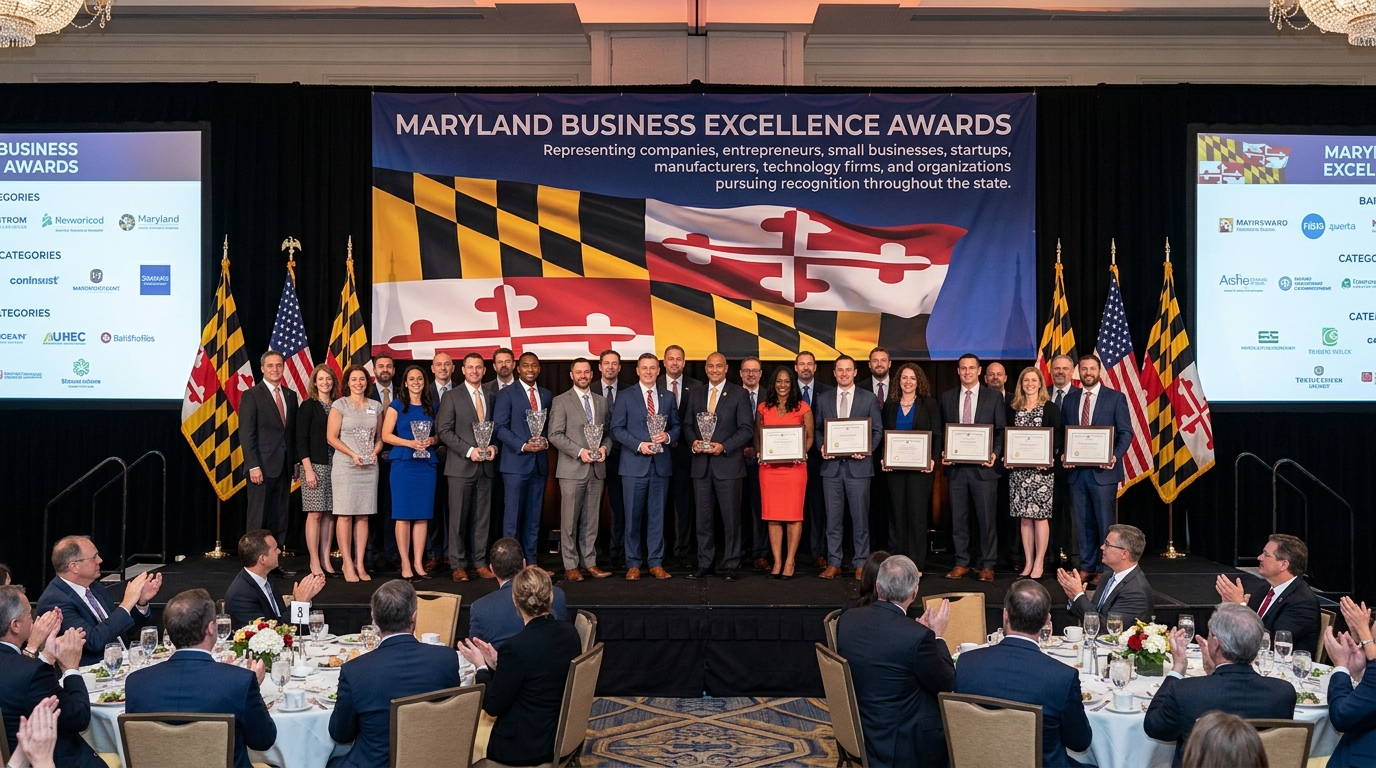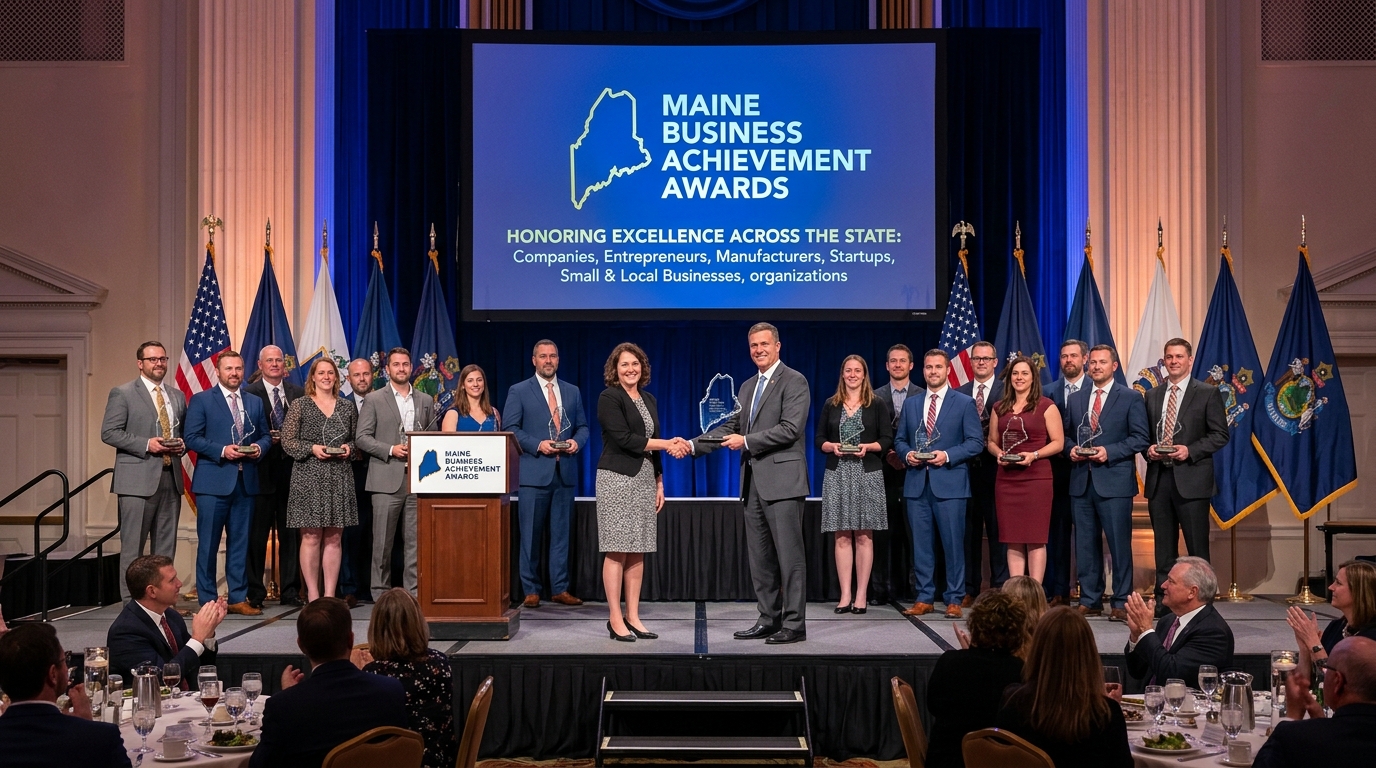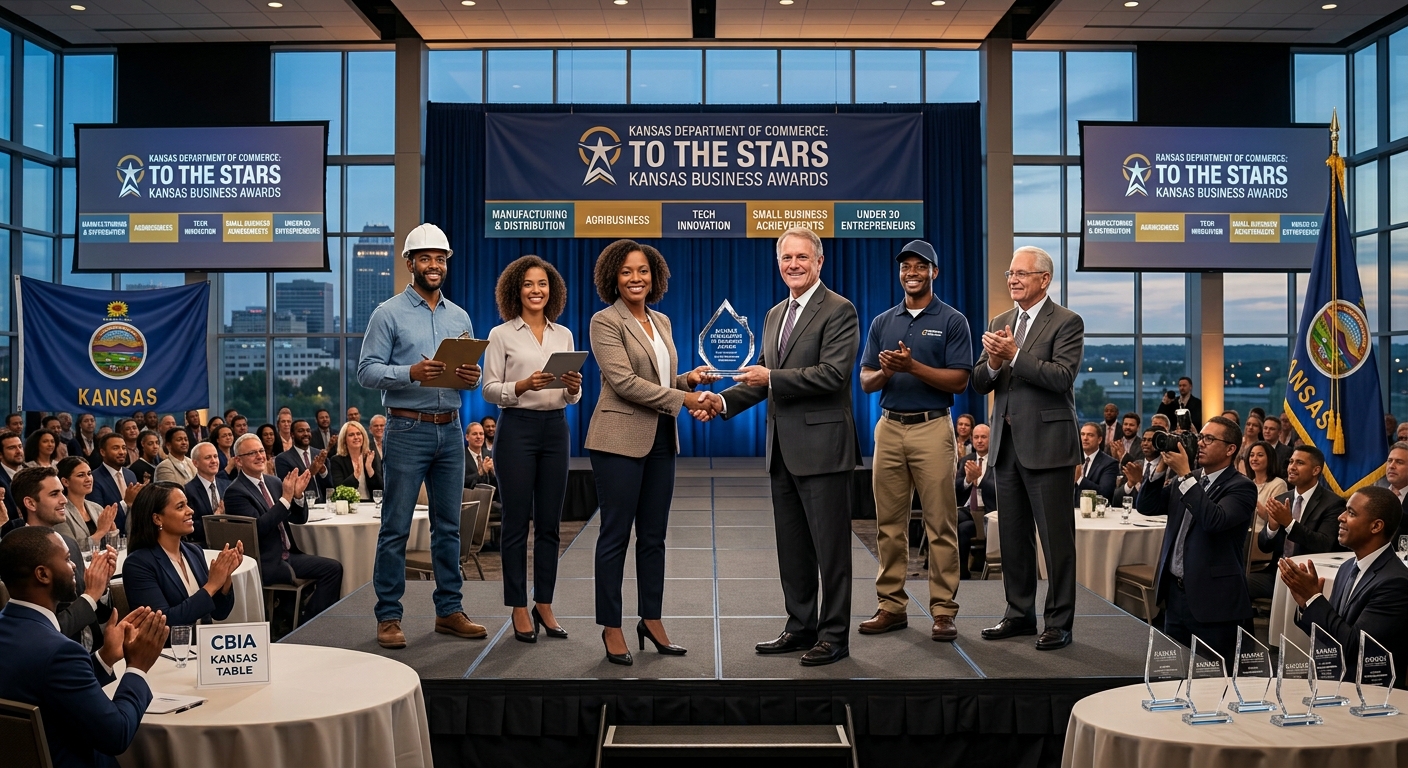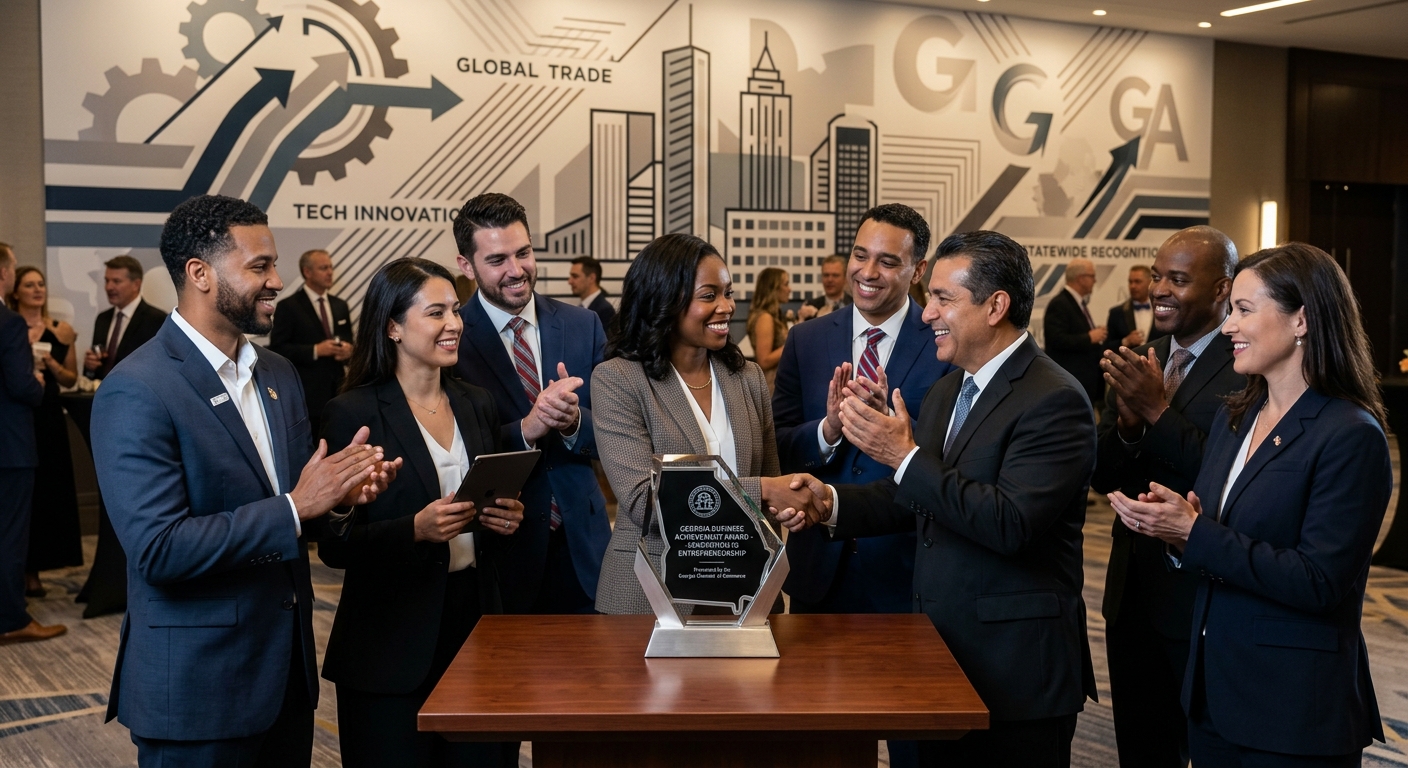
Businesses throughout the Granite State have many reasons to pursue professional recognition. A business award can help a company tell its story, document accomplishments, strengthen credibility, and create additional marketing opportunities. For companies searching for New Hampshire business awards, New Hampshire business recognition, New Hampshire small business awards, or a New Hampshire business award application, the International Association for Business Excellence provides an option for businesses seeking recognition at the city, regional, national, or international level. Businesses can apply for New Hampshire business awards and submit their organization for consideration.
New Hampshire’s business community extends far beyond Manchester, Nashua, Concord, Portsmouth, and the state’s other population centers. The Granite State has 13 cities and 221 towns, creating a business landscape that includes metropolitan companies, manufacturers, technology firms, contractors, farms, restaurants, professional service providers, family-owned businesses, startups, healthcare organizations, retailers, tourism businesses, and companies serving customers across New England and beyond.
According to the U.S. Census Bureau, New Hampshire had an estimated population of 1,415,342 as of July 1, 2025, along with 39,298 employer establishments in 2023. The U.S. Small Business Administration’s 2025 New Hampshire profile reports 145,314 small businesses, representing 99.0% of New Hampshire businesses, and 309,420 small-business employees, representing 50.3% of state employment.
That scale makes business recognition relevant across the entire state.
Whether a company is located in Manchester or Milan, Portsmouth or Pittsburg, Nashua or Newport, Concord or Conway, a thoughtful recognition strategy can help communicate accomplishments to customers, employees, prospective employees, referral partners, and the broader community.
New Hampshire Business Awards in 2026
Searching for New Hampshire business awards can lead to a wide range of recognition programs. Some awards are designed around a particular industry. Others focus on entrepreneurs, company growth, community involvement, leadership, innovation, workplace accomplishments, or regional economic contributions.
The right award depends on what a company wants recognition to communicate.
A manufacturer may want recognition for operational excellence, innovation, product development, workforce development, or growth. A technology company may want to emphasize software development, cybersecurity, artificial intelligence, automation, customer results, or innovation. A contractor may want to highlight project execution, customer service, safety, longevity, or community involvement.
A restaurant may focus on customer experience, local identity, growth, hospitality, or business development.
A professional services company may emphasize expertise, client service, leadership, longevity, or measurable results.
The important point is that business awards are not one-size-fits-all.
A business should evaluate the purpose of a recognition program before applying.
The International Association for Business Excellence evaluates organizations using standards that include digital presence, customer reputation, operational standing, industry experience, and professional integrity. Businesses interested in understanding the organization and its recognition framework can explore the International Association for Business Excellence homepage and its About page.
Businesses that believe they are ready to pursue recognition can submit a New Hampshire business award application for consideration.
What Are New Hampshire Business Awards?
Business awards are formal recognitions given to companies, organizations, entrepreneurs, professionals, or other business entities based on defined criteria.
The criteria vary substantially.
Some awards are based on judges reviewing written applications. Some involve nominations. Some are based on voting. Others use evaluation standards, business information, customer reputation, financial or operational performance, innovation, community contributions, or industry-specific achievements.
That means businesses should not assume every award program works the same way.
A company researching New Hampshire business awards should ask:
- Who operates the award?
- What standards are used?
- Who is eligible?
- Is the judging or evaluation process explained?
- What information is required?
- Is there an application fee?
- Are there additional costs?
- What geographic area does the award cover?
- Is the recognition industry-specific?
- How long does the process take?
- What does the recipient actually receive?
- Can the recognition be used in legitimate marketing?
- Does the award fit the company’s accomplishments?
These questions can help a company separate useful recognition opportunities from programs that may not align with its goals.
Why New Hampshire Businesses Pursue Recognition
Recognition does not replace good products, strong service, effective sales, sound financial management, or customer satisfaction.
Instead, an award can become another piece of a company’s overall reputation and marketing strategy.
Credibility
Customers frequently encounter businesses making positive claims about themselves.
A company might describe itself as experienced, reliable, innovative, customer-focused, or high quality.
Those statements are part of normal marketing.
Third-party recognition can add another layer to that story.
A legitimate award gives a company an opportunity to say that an outside organization recognized specific aspects of its business.
That does not automatically prove every marketing claim the company makes. It simply provides an additional piece of evidence that can be communicated to an audience.
Differentiation
New Hampshire has thousands of businesses competing for customers, employees, referrals, contracts, and attention.
The SBA reports 145,314 small businesses in the state.
For a small company, differentiation can therefore matter.
Recognition can help create a more complete company story:
We provide this service.
We have these accomplishments.
We have these customers.
We have achieved these results.
We were recognized for this aspect of our business.
That story can be more useful than simply saying a company is “great.”
Marketing
An award can become a reusable marketing asset.
A business may incorporate legitimate recognition into:
- Its website
- Homepage
- About page
- Company biography
- Email signature
- Social media
- Press releases
- Newsletters
- Sales presentations
- Proposals
- Recruiting materials
- Company presentations
- Customer communications
- Digital advertising
- Printed marketing materials
The award should always be represented accurately.
Businesses should avoid exaggerating what an award means.
Public Relations
A business award can provide a reason to issue a company announcement.
For example:
New Hampshire technology company recognized for innovation
or:
Manchester business receives 2026 business recognition
A company can explain what it accomplished, who it serves, how it grew, and why the recognition matters.
That creates an opportunity for storytelling rather than simply posting a certificate.
Website Credibility
Recognition can also be incorporated into a company’s digital presence.
A business may create a page explaining:
- The award
- The organization issuing it
- The year
- The recognition level
- Why the company was recognized
- What the company has accomplished
This can create useful content for customers researching the business.
Sales Proposals and Bids
Recognition can sometimes be useful in proposals when presented appropriately.
For example, a contractor bidding on a project may include legitimate professional recognition alongside:
- Company experience
- Relevant projects
- Certifications
- Insurance
- Safety information
- References
- Qualifications
- Project history
- Customer testimonials
The award should be treated as supporting evidence, not as a substitute for actual qualifications.
Recruiting
Employees want to know what kind of organization they are joining.
Recognition can contribute to employer branding by showing accomplishments and milestones.
A company can incorporate recognition into a careers page or recruiting presentation while still emphasizing the factors that matter most to candidates, such as compensation, culture, career development, benefits, flexibility, leadership, and opportunities.
Employee Morale
Recognition can also be meaningful internally.
Employees who contributed to an accomplishment can be included in the announcement.
Instead of treating the award as belonging only to the owner or executive team, companies can explain how employees contributed to the achievement.
Community Visibility
Recognition can also support local business storytelling.
A business in a small New Hampshire town may not receive the same volume of media coverage as a large company in Manchester or Portsmouth.
An award can create an occasion to talk about the company’s history and role in its community.
New Hampshire Small Business Awards
The phrase New Hampshire small business awards is especially relevant because small businesses dominate the state’s business population.
The SBA’s 2025 profile identifies 145,314 small businesses in New Hampshire, accounting for 99.0% of businesses in the state. Those businesses employed 309,420 people, or 50.3% of New Hampshire employees.
The data also shows that small businesses were active in employment growth. Between March 2023 and March 2024, New Hampshire small businesses accounted for 6,479 establishment openings and 5,882 closings. Small businesses gained 47,976 jobs and lost 41,953, for a net increase of 6,023 jobs.
Those numbers illustrate why recognition can be relevant to companies that may not have massive marketing departments or national brand awareness.
A small company can still have an impressive business story.
Small Businesses Come in Many Forms
New Hampshire’s small-business community includes:
- Construction companies
- Roofing companies
- HVAC contractors
- Plumbing companies
- Electrical contractors
- Remodeling companies
- Restaurants
- Retailers
- Technology companies
- SaaS companies
- IT providers
- Cybersecurity firms
- Manufacturers
- Machine shops
- Medical practices
- Dental practices
- Accounting firms
- CPA firms
- Law firms
- Insurance agencies
- Financial businesses
- Marketing agencies
- Consulting firms
- Real estate companies
- Property management companies
- Farms
- Agribusinesses
- Tourism businesses
- Hospitality companies
- Transportation businesses
- Logistics companies
- Family-owned companies
- Professional service firms
A business does not need to be a household name to have a meaningful story.
A company might have spent ten years serving the same community.
Another might have created jobs.
Another might have developed a new product.
Another might have modernized its operations.
Another may have built an excellent reputation among customers.
Those accomplishments can form the basis of a business recognition story.
If your company is researching New Hampshire small business awards, you can apply for business recognition through the International Association for Business Excellence.
New Hampshire Startup Awards and Entrepreneur Recognition
New Hampshire also has an active environment for entrepreneurs and emerging businesses.
The state’s official economic-development resources identify technology, advanced manufacturing, biotechnology and life sciences, healthcare, construction, logistics and transportation, aerospace, and travel and tourism among important sectors.
For startups, recognition can provide an opportunity to explain what makes the company different.
What Startups Can Highlight
A startup applying for recognition might discuss:
Innovation
What problem is the company solving?
Product Development
What has the company created?
Technology
Does the business use software, automation, artificial intelligence, data, robotics, cybersecurity, or another technology?
Customer Development
How has the company demonstrated that customers value its product or service?
Market Traction
Has the business developed recurring customers, partnerships, contracts, or other measurable indicators of market activity?
Leadership
What experience does the founding team bring?
Community Impact
How does the company contribute to its local community or industry?
Business Model Innovation
What makes the company’s approach different?
Startups should not assume they need years of operating history to have an interesting story.
At the same time, they should avoid inflating their accomplishments.
Specific evidence is stronger than hype.
Businesses researching New Hampshire startup awards can start a business award application here.
New Hampshire Entrepreneur Awards
Entrepreneur recognition can focus on the person behind a company as well as the company itself.
An entrepreneur may have:
- Started a business from scratch
- Created employment
- Expanded into new markets
- Built a new product
- Developed a new service
- Acquired another company
- Turned around an existing business
- Built a family business
- Created an innovative business model
- Served a local community
- Developed an emerging technology
The strongest entrepreneur applications generally tell a story.
They explain where the company began, what challenge existed, what the entrepreneur did, and what happened afterward.
A useful structure is:
Challenge → Action → Result
That framework can be used for both entrepreneur recognition and company awards.
Recognition for Established New Hampshire Companies
Business awards are not limited to startups.
Established companies can have equally compelling accomplishments.
A company may have operated for 10, 20, 30, 50, or more years.
Longevity itself may be part of the story, but the application should explain what the company has accomplished during that period.
Examples include:
- Expansion
- New locations
- Workforce growth
- New products
- New services
- Increased customer retention
- Technology investments
- Operational improvements
- Leadership development
- Community involvement
- Industry accomplishments
- Innovation
- New markets
- Succession planning
- Modernization
An established company should avoid treating longevity as the entire application.
Instead, explain how the company has evolved.
A business that has been operating for decades and continues adapting to changing customer expectations may have a strong recognition story.
Companies seeking established-company recognition can submit their business for consideration.
Rural Business Recognition in New Hampshire
New Hampshire business recognition should not be viewed as something reserved for major population centers.
The state’s municipal structure is unusually decentralized. New Hampshire has 13 cities and 221 towns, with many businesses operating in small communities.
That matters for business recognition.
A rural manufacturer can be just as important to its community as a large metropolitan employer.
A contractor in northern New Hampshire may serve customers across multiple towns.
A family-owned farm may have operated for generations.
A restaurant in a small town may become a destination business.
A professional services company may support customers throughout an entire region.
A local retailer may provide products and services that would otherwise require customers to travel.
These businesses have stories worth telling.
Recognition can provide another way to communicate those stories.
New Hampshire Business Awards by Industry
Technology Business Awards
Technology is one of New Hampshire’s important business sectors.
The state’s economic-development resources report more than 5,000 high-tech businesses employing more than 50,000 people.
Technology recognition may be relevant to:
- Software companies
- SaaS companies
- IT providers
- Cybersecurity firms
- AI companies
- Automation companies
- Cloud service providers
- Data companies
- Technology consultants
- Software developers
- Hardware companies
- Technology startups
A technology application should explain the actual accomplishment.
Instead of simply saying “we are innovative,” explain:
- What problem existed
- What the company built
- How it works
- Who uses it
- What changed
- What measurable results followed
Businesses searching for New Hampshire technology awards can apply for business recognition.
New Hampshire Manufacturing Awards
Manufacturing remains an important part of New Hampshire’s economy.
The state’s economic-development organization describes advanced manufacturing as a sector with about 1,700 manufacturers employing more than 67,000 people. It identifies aerospace and defense, electronics, machinery, fabricated metals, pharmaceuticals, medical devices, and biofabrication among relevant subsectors.
Manufacturing companies may have recognition-worthy accomplishments involving:
- Production
- Quality
- Innovation
- Automation
- Workforce development
- Product development
- Expansion
- Operational improvements
- Exporting
- Engineering
- Advanced materials
- Medical devices
- Aerospace
- Electronics
- Precision manufacturing
New Hampshire’s 2025 SBA profile also identifies manufacturing as a significant small-business sector, with 3,564 small businesses across the category as reported from Census data.
A manufacturing company can submit a New Hampshire business award application when seeking recognition.
Aerospace, Defense and Transportation
New Hampshire’s advanced manufacturing ecosystem overlaps with aerospace and defense.
Businesses in these fields can include:
- Aerospace suppliers
- Defense contractors
- Precision manufacturers
- Engineering firms
- Electronics manufacturers
- Transportation companies
- Logistics providers
- Specialized suppliers
Recognition applications should emphasize verifiable accomplishments rather than simply attaching impressive industry labels.
For example:
Challenge: A company needed to increase production capacity.
Action: It implemented new equipment, redesigned workflow, and trained employees.
Result: Production capacity increased by a measurable amount.
That is substantially more informative than saying “we transformed manufacturing.”
Healthcare Business Awards
Healthcare is another significant area of New Hampshire’s economy.
The state’s economic-development resources specifically identify healthcare and life sciences among its important industries.
Healthcare businesses may include:
- Medical practices
- Dental practices
- Home healthcare
- Medical technology
- Laboratories
- Medical device companies
- Healthcare technology
- Specialty clinics
- Healthcare consulting
Potential accomplishments can involve:
- Patient service
- Operational improvement
- Technology adoption
- Expansion
- Staff development
- Accessibility
- Community programs
- Innovation
- Customer experience
Businesses should avoid making unsupported medical claims when using awards in marketing.
Recognition should be presented accurately and separately from clinical claims.
Construction and Contractor Awards in New Hampshire
Construction is particularly relevant to a statewide business-awards strategy because the industry includes thousands of small companies.
The SBA’s New Hampshire profile lists 20,672 small businesses in construction-related data across the reported business categories.
Potential applicants include:
- General contractors
- Roofing companies
- HVAC companies
- Plumbing companies
- Electrical contractors
- Remodelers
- Excavation companies
- Concrete contractors
- Specialty contractors
- Home builders
- Commercial construction firms
- Restoration companies
A strong contractor application might highlight:
- Project execution
- Customer satisfaction
- Company growth
- Safety initiatives
- Employee training
- New capabilities
- Community projects
- Difficult projects completed successfully
- Expansion into new markets
Contractors researching New Hampshire contractor awards or New Hampshire roofing awards can apply for recognition here.
Restaurants and Hospitality Awards
New Hampshire’s travel and tourism sector includes more than 4,500 businesses and more than 70,000 employees, according to the state’s economic-development resources. The state identifies outdoor recreation, hospitality, tourism, skiing, hiking, boating, and related services as important parts of the sector.
Restaurants and hospitality companies may pursue recognition for:
- Customer service
- Business growth
- Longevity
- Community involvement
- Innovation
- Hospitality
- New concepts
- Local sourcing
- Expansion
- Employee development
Relevant businesses include:
- Restaurants
- Hotels
- Inns
- Catering companies
- Hospitality businesses
- Event companies
- Tourism businesses
- Food service companies
- Entertainment businesses
A restaurant should not rely solely on statements such as “best restaurant.”
Instead, an award application can explain its history, customer base, business growth, service model, community involvement, and measurable accomplishments.
Agriculture and Agribusiness Awards
Agriculture remains part of New Hampshire’s business landscape despite the state’s relatively small geographic size.
The USDA’s 2022 Census of Agriculture provides statewide and county-level agricultural data for New Hampshire.
Recognition may be relevant to:
- Farms
- Dairy operations
- Specialty farms
- Agricultural suppliers
- Food producers
- Agribusinesses
- Farm-to-market companies
- Agricultural technology
- Food processing
- Agricultural services
Agricultural businesses can emphasize:
- Longevity
- Innovation
- Product development
- Sustainability initiatives
- Customer relationships
- Local markets
- Expansion
- New production methods
- Community involvement
Businesses researching New Hampshire agriculture awards can submit their company for consideration.
Logistics, Transportation and Distribution
Transportation and logistics businesses can also pursue company recognition.
The New Hampshire Employment Security economic analysis has specifically examined transportation, logistics, and distribution as a statewide sector.
Businesses can include:
- Trucking companies
- Warehouses
- Distribution companies
- Transportation providers
- Freight companies
- Supply-chain consultants
- Logistics technology
- Fleet-management businesses
Applications can highlight:
- Operational improvements
- Customer service
- Expansion
- Efficiency
- Technology
- Workforce development
- New routes
- New facilities
- Safety
Retail and E-Commerce Awards
Retail businesses often compete on customer experience and local reputation.
Recognition may be relevant to:
- Local stores
- Specialty retailers
- E-commerce businesses
- Online brands
- Multi-location retailers
- Consumer product companies
An application could highlight:
- Business growth
- Customer retention
- New product lines
- E-commerce expansion
- Community involvement
- Customer service
- New locations
- Digital transformation
Retailers should explain actual achievements rather than simply listing products.
Real Estate and Property Management Awards
Real estate businesses can have a wide range of recognition-worthy accomplishments.
Potential applicants include:
- Brokerages
- Real estate agents
- Developers
- Property managers
- Commercial real estate firms
- Residential real estate businesses
- Real estate technology companies
Applications may highlight:
- Growth
- New developments
- Customer service
- Community projects
- Technology
- Property management improvements
- Business expansion
- Leadership
Professional Services Awards
Professional services represent a major portion of New Hampshire’s small-business community.
The SBA’s 2025 profile identifies professional, scientific, and technical services as one of the state’s largest small-business categories, with 22,542 businesses in the reported data.
That includes businesses such as:
- Law firms
- Accounting firms
- CPA firms
- Consulting companies
- Marketing agencies
- Advertising agencies
- Public relations firms
- Financial services
- Insurance agencies
- Engineering firms
- Design firms
- Technology consultants
A professional services application should explain expertise through outcomes.
Instead of:
We provide excellent service.
Consider:
We redesigned our client onboarding process, reduced average response times, and expanded the number of clients served without adding the same proportion of administrative overhead.
Specific accomplishments make stronger applications.
Nonprofit Recognition
Nonprofits can also have meaningful organizational stories.
Recognition can highlight:
- Community impact
- Program development
- Fundraising
- Organizational growth
- Volunteer engagement
- Service expansion
- Innovation
- Leadership
- Operational improvements
A nonprofit should explain measurable outcomes whenever possible.
Family-Owned Business Recognition
Family-owned companies represent an important category of business recognition.
A family business may have:
- Multi-generational ownership
- Long-term local relationships
- Employee retention
- Community involvement
- Succession planning
- Expansion
- Innovation
- Customer loyalty
The strongest application will not merely say that the business is family-owned.
It will explain what the company has accomplished because of — or while managing — that long-term ownership structure.
Women-Owned Business Recognition
Women-owned companies may pursue business recognition based on their company accomplishments, leadership, innovation, growth, customer service, community involvement, or industry achievements.
The application should focus on the business and its accomplishments rather than relying solely on ownership status.
Veteran-Owned Business Recognition
Veteran-owned businesses can similarly highlight:
- Leadership
- Business growth
- Customer service
- Industry accomplishments
- Community involvement
- Workforce development
- Innovation
Ownership can provide context, but the strongest applications connect that background to actual business accomplishments.
How to Choose a New Hampshire Business Award
Not every award is right for every company.
Before applying, evaluate the program.
Eligibility
Read the eligibility requirements carefully.
Determine:
- Minimum time in business
- Geographic requirements
- Industry requirements
- Company-size requirements
- Ownership requirements
- Revenue requirements
- Other restrictions
Criteria
Understand what the organization evaluates.
If the award is based on innovation but your application focuses entirely on longevity, there may be a mismatch.
Reputation
Research who operates the award.
Look for:
- Clear organization information
- Published criteria
- Transparent process
- Real contact information
- Prior recipients
- Clear explanation of recognition
Geographic Scope
Recognition may be:
- Local
- City-level
- County-level
- Regional
- Statewide
- National
- International
A local award may be valuable for a local business, while a national award may make more sense for a company serving customers across the country.
Industry Relevance
A specialized award can be particularly useful when the recognition is directly connected to the company’s work.
However, a broad company award may be more useful when a business wants to communicate overall organizational quality.
Application Requirements
Look at the amount of work required.
Some applications require extensive written submissions.
Others may be much shorter.
Cost
Research all costs before applying.
Consider:
- Application fees
- Nomination fees
- Winner fees
- Ceremony fees
- Marketing packages
- Plaques
- Certificates
- Optional services
Timing
A company preparing for a major launch may want a faster process.
Another company may be comfortable with a longer annual awards cycle.
Marketing Usefulness
Ask what the company will actually receive.
Potential assets include:
- Certificate
- Digital badge
- Logo
- Press materials
- Winner announcement
- Recognition page
- Promotional materials
The company should determine whether those assets are useful.
How to Write a Strong New Hampshire Business Award Application
A strong award application does not need to sound like an advertisement.
It should sound like a well-supported business story.
Start With Company History
Explain:
- When the company started
- Why it was created
- Who founded it
- What problem it sought to solve
- How it evolved
Describe the Business
Explain what the company actually does.
Avoid overly complicated language.
A reviewer should understand the business quickly.
Explain Products and Services
Describe the core offering.
If the company provides specialized services, explain why they matter.
Identify the Customers
Who does the company serve?
This could include:
- Consumers
- Businesses
- Government organizations
- Manufacturers
- Healthcare providers
- Homeowners
- Contractors
- Retail customers
- Professional clients
Explain Growth
Growth can involve more than revenue.
Examples include:
- Employees
- Locations
- Customers
- Products
- Services
- Geographic reach
- Capacity
- Partnerships
Explain Leadership
Describe what company leadership has done.
Explain Innovation
Innovation can be technological, operational, customer-facing, or organizational.
A company does not need to have invented artificial intelligence to demonstrate innovation.
A new scheduling system, production process, customer-service system, or business model can also represent innovation.
Include Customer Service
Explain how the company serves customers.
Use actual examples.
Include Industry Accomplishments
Mention certifications, projects, launches, milestones, publications, partnerships, or other relevant achievements.
Include Community Involvement
Explain how the company contributes to the community.
Include Employee Development
Businesses can highlight:
- Training
- Promotions
- Apprenticeships
- Mentorship
- Professional development
- New hiring
- Workforce initiatives
Use Metrics
Numbers can make an application much stronger.
For example:
- Employees increased from X to Y
- Customers increased by X%
- Response time decreased by X%
- Production increased by X%
- The company expanded into X markets
- The company completed X projects
Do not manufacture metrics.
Use numbers you can substantiate.
The Challenge → Action → Result Framework
One of the easiest ways to improve an award application is to structure accomplishments around three questions.
Challenge
What problem existed?
Action
What did the company do?
Result
What happened?
For example:
Challenge: Customers were experiencing long turnaround times.
Action: The company redesigned its scheduling and production workflow.
Result: Average turnaround time fell from 10 days to 6 days.
That tells a much stronger story than:
We improved our operations and provide outstanding service.
Specificity matters.
How to Use a New Hampshire Business Award After Recognition
Receiving recognition is only the beginning.
The company should consider how the recognition fits into its existing marketing strategy.
Website
Add recognition to the homepage when appropriate.
Create a dedicated awards or recognition section.
About Page
Explain the recognition alongside the company’s history and accomplishments.
Press Release
A business can publish an announcement explaining:
- What was recognized
- Who issued the award
- When it occurred
- Why the company received recognition
- What the business has accomplished
Social Media
Create several posts rather than posting the certificate once and forgetting about it.
For example:
- Announcement
- Company history
- Employee recognition
- Customer story
- Behind-the-scenes accomplishment
Email Marketing
Recognition can be included in newsletters and company announcements.
Sales Presentations
Include relevant recognition in company presentations when appropriate.
Proposals
Awards can supplement actual qualifications in proposals.
Recruiting
Recognition can support employer branding.
Newsletters
Use the recognition as part of a broader company update.
The key is to use recognition accurately.
An award does not guarantee customers, contracts, revenue, search rankings, or business success.
It is one component of a broader strategy.
New Hampshire Business Awards by City
New Hampshire’s municipal structure includes 13 incorporated cities. The state also contains 221 towns.
That makes city-level and town-level search coverage important for companies looking for local recognition.
Manchester Business Awards
Manchester is New Hampshire’s largest city and an important business center.
Businesses searching for Manchester business awards may include manufacturers, technology companies, professional services firms, healthcare businesses, restaurants, contractors, retailers, and other companies.
A Manchester company can pursue city-oriented, statewide, regional, national, or industry-specific recognition depending on its goals.
Apply for Manchester business recognition here.
Nashua Business Awards
Nashua is another major New Hampshire business center, with strong connections to technology, professional services, manufacturing, and the broader southern New Hampshire economy.
Businesses searching for Nashua business awards can evaluate recognition based on industry, company size, accomplishments, and geographic scope.
Submit a Nashua business award application here.
Concord Business Awards
As New Hampshire’s capital, Concord has businesses across professional services, healthcare, technology, government-related services, retail, hospitality, construction, and other sectors.
A company researching Concord business awards should consider whether it wants local, regional, statewide, or broader recognition.
Apply for Concord business recognition.
Dover Business Awards
Dover’s business community includes professional services, retail, hospitality, technology, healthcare, manufacturing, and other sectors.
Businesses searching for Dover business awards can consider recognition that aligns with their industry and accomplishments.
Apply for Dover business awards.
Rochester Business Awards
Rochester businesses operate in a range of sectors including manufacturing, services, retail, construction, healthcare, and hospitality.
Businesses researching Rochester business recognition can evaluate programs based on eligibility, criteria, cost, and marketing usefulness.
Submit a Rochester business award application.
Keene Business Awards
Keene serves as an important business center in southwestern New Hampshire.
Companies searching for Keene business awards may include manufacturers, technology businesses, professional services, healthcare organizations, restaurants, retailers, and regional service providers.
Apply for Keene business recognition.
Portsmouth Business Awards
Portsmouth’s economy includes professional services, hospitality, tourism, restaurants, technology, retail, healthcare, and other businesses.
Businesses searching for Portsmouth business awards may benefit from considering recognition that communicates both local presence and broader accomplishments.
Apply for Portsmouth business awards.
Laconia Business Awards
Laconia is a major business center in the Lakes Region.
Businesses searching for Laconia business awards can consider recognition for companies in tourism, hospitality, construction, healthcare, retail, professional services, technology, manufacturing, and other sectors.
Submit a Laconia business award application.
Lebanon Business Awards
Lebanon sits within the Upper Valley business environment and has connections to healthcare, education, technology, professional services, and other industries.
Businesses researching Lebanon business awards can evaluate recognition based on their accomplishments and target audience.
Apply for Lebanon business recognition.
Claremont Business Awards
Claremont serves businesses in the western part of New Hampshire.
Manufacturing, services, retail, construction, healthcare, and professional businesses can all have potential recognition stories.
Apply for Claremont business awards.
Somersworth Business Awards
Somersworth businesses can pursue recognition for growth, customer service, innovation, leadership, community involvement, and other accomplishments.
Submit a Somersworth business award application.
Berlin Business Awards
Berlin’s business community is part of northern New Hampshire.
Recognition can be relevant to manufacturers, contractors, tourism businesses, retailers, service businesses, and other local companies.
Apply for Berlin business recognition.
Franklin Business Awards
Franklin is a smaller New Hampshire city where local businesses can play an important role in the surrounding Lakes Region economy.
Companies searching for Franklin business awards can consider recognition at multiple geographic levels.
Apply for Franklin business awards.
New Hampshire County Business Awards
New Hampshire has 10 counties: Belknap, Carroll, Cheshire, Coös, Grafton, Hillsborough, Merrimack, Rockingham, Strafford, and Sullivan.
Belknap County Business Awards
Belknap County includes businesses across the Lakes Region, including tourism, hospitality, construction, retail, professional services, healthcare, technology, and manufacturing.
Businesses searching for Belknap County business awards can pursue recognition based on their individual accomplishments.
Apply for Belknap County business recognition.
Carroll County Business Awards
Carroll County is home to 18 towns and has a strong tourism and recreation component. The county itself describes tourism and recreation as major industries.
Businesses researching Carroll County business awards can include hospitality companies, restaurants, outdoor recreation businesses, contractors, professional services, retailers, farms, and family-owned companies.
Submit a Carroll County business award application.
Cheshire County Business Awards
Cheshire County includes Keene and a broad network of surrounding towns.
Businesses searching for Cheshire County business awards can include manufacturing companies, technology companies, professional services, healthcare organizations, retailers, restaurants, contractors, and nonprofits.
Cheshire County’s own communications department references its 23 municipalities.
Apply for Cheshire County business recognition.
Coös County Business Awards
Coös County encompasses much of northern New Hampshire.
Businesses may include tourism companies, outdoor recreation businesses, contractors, manufacturers, retailers, restaurants, professional services, farms, and local service providers.
Businesses researching Coös County business awards can submit themselves for consideration.
Apply for Coös County business awards.
Grafton County Business Awards
Grafton County has a broad geography and 39 municipalities according to Grafton Regional Development Corporation.
The county includes the Upper Valley, Lakes Region communities, White Mountain communities, and other distinct business environments.
Businesses searching for Grafton County business awards can include technology, healthcare, education-related services, manufacturing, tourism, hospitality, professional services, construction, agriculture, and retail.
Submit a Grafton County business award application.
Hillsborough County Business Awards
Hillsborough County contains Manchester and Nashua along with many surrounding communities.
It is one of the state’s major population and business centers.
Businesses searching for Hillsborough County business awards may include technology companies, manufacturers, contractors, healthcare organizations, professional service firms, restaurants, retailers, and startups.
Apply for Hillsborough County business recognition.
Merrimack County Business Awards
Merrimack County includes Concord and numerous surrounding towns.
Companies researching Merrimack County business awards can include government-related professional services, healthcare, construction, manufacturing, retail, technology, restaurants, agriculture, and other local businesses.
Apply for Merrimack County business awards.
Rockingham County Business Awards
Rockingham County contains a large number of communities in southeastern New Hampshire and includes Portsmouth.
Regional economic-development planning identifies 37 municipalities in Rockingham County.
Businesses searching for Rockingham County business awards can pursue recognition for accomplishments in technology, manufacturing, professional services, construction, healthcare, hospitality, logistics, retail, and other sectors.
Submit your Rockingham County business award application.
Strafford County Business Awards
Strafford County includes Dover, Rochester, Somersworth, and surrounding towns.
Businesses can pursue recognition for growth, customer service, innovation, operational improvements, community involvement, and industry accomplishments.
Apply for Strafford County business recognition.
Sullivan County Business Awards
Sullivan County includes Claremont and surrounding communities.
Businesses searching for Sullivan County business awards may include manufacturers, professional service providers, contractors, retailers, restaurants, healthcare companies, farms, and family-owned companies.
Apply for Sullivan County business awards.
Complete New Hampshire Municipal Coverage
Because New Hampshire business recognition is not limited to major cities, the following section provides statewide municipal coverage.
New Hampshire officially consists of 13 cities and 221 towns, with additional unincorporated places that are not municipalities.
The municipality list below is organized by county.
Belknap County
The Belknap County municipal area includes:
- Alton
- Barnstead
- Belmont
- Center Harbor
- Gilford
- Gilmanton
- Laconia
- Meredith
- New Hampton
- Sanbornton
- Tilton
Businesses in these communities can pursue Belknap County business awards, Laconia business awards, and broader New Hampshire recognition depending on their goals.
Carroll County
Carroll County includes:
- Albany
- Bartlett
- Brookfield
- Chatham
- Conway
- Eaton
- Effingham
- Freedom
- Hart’s Location
- Jackson
- Madison
- Moultonborough
- Ossipee
- Sandwich
- Tamworth
- Tuftonboro
- Wakefield
- Wolfeboro
Carroll County itself identifies 18 towns and describes tourism and recreation as major industries.
This means local recognition can be relevant to businesses throughout the county, not simply the better-known tourism destinations.
Cheshire County
Cheshire County includes:
- Alstead
- Chesterfield
- Dublin
- Fitzwilliam
- Gilsum
- Harrisville
- Hinsdale
- Jaffrey
- Keene
- Marlborough
- Marlow
- Nelson
- Richmond
- Rindge
- Roxbury
- Stoddard
- Sullivan
- Surry
- Swanzey
- Troy
- Walpole
- Westmoreland
- Winchester
Cheshire County’s official communications information confirms that the county contains 23 municipalities.
Coös County
Coös County includes:
- Berlin
- Carroll
- Clarksville
- Colebrook
- Columbia
- Dalton
- Dummer
- Errol
- Gorham
- Jefferson
- Lancaster
- Milan
- Northumberland
- Pittsburg
- Randolph
- Shelburne
- Stark
- Stewartstown
- Stratford
- Whitefield
Businesses in these communities can pursue Coös County business awards, northern New Hampshire recognition, or broader statewide recognition.
Some of the county’s additional geographic names are unincorporated places rather than municipalities. New Hampshire’s official geographic resources distinguish cities and towns from unincorporated places.
Grafton County
Grafton County includes:
- Alexandria
- Ashland
- Bath
- Benton
- Bethlehem
- Bridgewater
- Bristol
- Campton
- Canaan
- Dorchester
- Easton
- Ellsworth
- Enfield
- Franconia
- Grafton
- Groton
- Hanover
- Haverhill
- Hebron
- Holderness
- Landaff
- Lebanon
- Lincoln
- Lisbon
- Littleton
- Lyman
- Lyme
- Monroe
- Orange
- Orford
- Piermont
- Plymouth
- Rumney
- Sugar Hill
- Thornton
- Warren
- Waterville Valley
- Wentworth
- Woodstock
Grafton County economic-development organizations describe the county as having 39 municipalities.
Hillsborough County
Hillsborough County includes:
- Amherst
- Antrim
- Bedford
- Bennington
- Brookline
- Deering
- Francestown
- Goffstown
- Greenfield
- Greenville
- Hancock
- Hillsborough
- Hollis
- Hudson
- Litchfield
- Lyndeborough
- Manchester
- Mason
- Merrimack
- Milford
- Mont Vernon
- Nashua
- New Boston
- New Ipswich
- Pelham
- Peterborough
- Sharon
- Temple
- Weare
- Wilton
- Windsor
The county contains a particularly broad range of business environments, from the major Manchester-Nashua economy to small rural communities.
Merrimack County
Merrimack County includes:
- Allenstown
- Andover
- Boscawen
- Bow
- Bradford
- Canterbury
- Chichester
- Concord
- Danbury
- Dunbarton
- Epsom
- Franklin
- Henniker
- Hill
- Hooksett
- Hopkinton
- Loudon
- New London
- Newbury
- Northfield
- Pembroke
- Pittsfield
- Salisbury
- Sutton
- Warner
- Webster
- Wilmot
Merrimack County contains 27 municipalities according to regional and state sources.
Rockingham County
Rockingham County includes:
- Atkinson
- Auburn
- Brentwood
- Candia
- Chester
- Danville
- Deerfield
- Derry
- East Kingston
- Epping
- Exeter
- Fremont
- Greenland
- Hampstead
- Hampton
- Hampton Falls
- Kensington
- Kingston
- Londonderry
- New Castle
- Newfields
- Newington
- Newmarket
- Newton
- North Hampton
- Northwood
- Nottingham
- Plaistow
- Portsmouth
- Raymond
- Rye
- Salem
- Sandown
- Seabrook
- South Hampton
- Stratham
- Windham
Rockingham County’s regional economic-development planning recognizes 37 municipalities in the county.
Strafford County
Strafford County includes:
- Barrington
- Dover
- Durham
- Farmington
- Lee
- Madbury
- Middleton
- Milton
- New Durham
- Rochester
- Rollinsford
- Somersworth
- Strafford
Sullivan County
Sullivan County includes:
- Acworth
- Charlestown
- Claremont
- Cornish
- Croydon
- Goshen
- Grantham
- Langdon
- Lempster
- Newport
- Plainfield
- Springfield
- Sunapee
- Unity
- Washington
The county contains 15 municipalities.
Regional New Hampshire Business Recognition
Southern New Hampshire
Southern New Hampshire includes some of the state’s most concentrated business activity.
Manchester, Nashua, Bedford, Merrimack, Milford, Hudson, Londonderry, Derry, Salem, and surrounding communities form interconnected business markets.
Technology, manufacturing, professional services, healthcare, construction, retail, and logistics are particularly relevant sectors.
Seacoast New Hampshire
The Seacoast has a distinctive business environment influenced by tourism, hospitality, technology, professional services, healthcare, retail, manufacturing, and proximity to Maine and Massachusetts.
Portsmouth, Dover, Exeter, Hampton, Hampton Falls, Newmarket, Newington, North Hampton, Rye, Stratham, Greenland, and surrounding communities create a diverse regional market.
Lakes Region
The Lakes Region includes communities around Lake Winnipesaukee and other major recreational areas.
Tourism, hospitality, restaurants, construction, retail, professional services, healthcare, and technology can all contribute to the region’s business environment.
Monadnock Region
The Monadnock area includes Keene and surrounding communities.
Manufacturing, professional services, healthcare, education-related businesses, technology, retail, hospitality, and small local businesses contribute to the region.
Upper Valley
The Upper Valley includes communities around Lebanon, Hanover, and the Connecticut River.
Healthcare, education, technology, professional services, manufacturing, construction, retail, and entrepreneurship are relevant to the regional business environment.
White Mountains and North Country
Northern New Hampshire includes businesses connected to:
- Tourism
- Outdoor recreation
- Hospitality
- Construction
- Retail
- Restaurants
- Transportation
- Professional services
- Manufacturing
- Agriculture
Recognition can be particularly useful for companies whose customers may not realize how much work is performed outside the state’s major cities.
New Hampshire Business Excellence
Business excellence should not be reduced to a trophy.
It is better understood as the collection of practices and accomplishments that demonstrate that an organization is operating effectively.
Examples include:
- Strong customer relationships
- Consistent service
- Professional operations
- Effective leadership
- Employee development
- Innovation
- Responsible growth
- Operational improvement
- Community involvement
- Industry expertise
This is why a New Hampshire business excellence application should tell a complete story.
A company does not become excellent simply because it receives recognition.
Instead, recognition can document accomplishments that already exist.
Cross-State Business Award Resources
Businesses researching New Hampshire recognition may also be interested in how statewide business-award resources are structured in other states.
The International Association for Business Excellence maintains statewide resources for markets including:
- Vermont business awards
- Michigan business awards
- New Mexico business awards
- South Carolina business awards
- Texas business awards
- New York business awards
- North Carolina business awards
These pages illustrate how businesses can approach recognition geographically while still considering broader company accomplishments.
How the International Association for Business Excellence Evaluates Businesses
The International Association for Business Excellence describes five core evaluation standards:
- Digital Presence
- Customer Reputation
- Operational Standing
- Industry Experience
- Professional Integrity
The organization states that applications are reviewed online against publicly available information and that the initial application carries no cost.
Businesses should review the current application and organization information directly before applying because award-program procedures can change.
For companies interested in the process, the business award application provides the appropriate starting point.
Apply for New Hampshire Business Awards
If your business operates in New Hampshire, you do not have to be located in Manchester, Nashua, Concord, or Portsmouth to pursue recognition.
Companies throughout the state can explore recognition based on their accomplishments.
That includes:
- Small businesses
- Startups
- Established companies
- Family businesses
- Contractors
- Manufacturers
- Technology companies
- Restaurants
- Healthcare businesses
- Professional services
- Retailers
- Agricultural businesses
- Logistics companies
- Nonprofits
- Local businesses
- Rural companies
The key is choosing recognition that fits the company.
If you are ready to explore recognition, you can apply for New Hampshire business awards.
Frequently Asked Questions (FAQ)
1. What are the best New Hampshire business awards?
There is no universally best New Hampshire business award. Businesses should compare eligibility, criteria, reputation, geographic scope, cost, transparency, application requirements, timing, and marketing usefulness. The right award is the one that fits the company’s accomplishments and goals.
2. What are New Hampshire business awards?
New Hampshire business awards are formal recognitions given to businesses based on defined criteria. They may focus on company performance, leadership, innovation, customer service, community involvement, industry accomplishments, or other factors.
3. How can a New Hampshire business apply for a business award?
A business should identify an appropriate award, review its requirements, prepare supporting information, and submit the required application. Businesses can apply for business recognition through the International Association for Business Excellence.
4. How do I apply for New Hampshire business awards?
Start by reviewing the award’s eligibility and criteria. Gather company information and accomplishments, then complete the application. You can start a New Hampshire business award application here.
5. Can small businesses apply for New Hampshire business awards?
Yes. Small businesses can be eligible for many business recognition programs. New Hampshire has 145,314 small businesses according to the SBA’s 2025 profile.
6. Can startups apply?
Some awards accept startups, while others require a minimum operating history. Review the specific eligibility rules before applying.
7. Can new businesses apply?
Potentially. Eligibility depends on the award program. New companies should explain their launch, innovation, customers, leadership, and measurable accomplishments.
8. Can businesses in Manchester apply?
Yes. Businesses in Manchester can pursue recognition at the city, regional, statewide, national, or international level depending on eligibility.
9. Can businesses in Hillsborough County apply?
Yes. Businesses throughout Hillsborough County can explore applicable recognition programs.
10. Can contractors apply?
Yes. Contractors can highlight project accomplishments, customer service, growth, innovation, workforce development, and operational improvements.
11. Can roofing companies apply?
Yes. Roofing companies can apply where the award criteria permit contractors or service businesses.
12. Can manufacturers apply?
Yes. Manufacturing companies can highlight production, innovation, quality, workforce development, expansion, and operational accomplishments.
13. Can restaurants apply?
Yes. Restaurants can highlight customer service, growth, hospitality, innovation, community involvement, and business accomplishments.
14. Can technology companies apply?
Yes. Technology companies can highlight software, SaaS, cybersecurity, AI, automation, innovation, customer results, and growth.
15. Can healthcare businesses apply?
Yes, provided the specific program permits them. Healthcare businesses can highlight organizational, operational, customer-service, technological, and business accomplishments.
16. Can law firms apply?
Yes. Law firms can potentially apply for business recognition where professional service companies are eligible.
17. Can accounting firms apply?
Yes. Accounting and CPA firms can highlight client service, growth, operational improvements, expertise, leadership, and other accomplishments.
18. Can real estate companies apply?
Yes. Real estate companies, brokerages, developers, and property-management businesses can apply when eligible.
19. Can marketing agencies apply?
Yes. Marketing agencies can highlight campaign results, business growth, innovation, client outcomes, creative work, and operational accomplishments.
20. Can SaaS companies apply?
Yes. SaaS companies can highlight technology development, customer growth, retention, innovation, product development, and measurable outcomes.
21. Can AI companies apply?
Yes. AI businesses can highlight the problem their technology addresses, product development, customer results, innovation, and business growth.
22. Can family businesses apply?
Yes. Family-owned companies can emphasize longevity, leadership, succession, customer relationships, growth, community involvement, and innovation.
23. Can women-owned businesses apply?
Yes. Eligible women-owned businesses can pursue recognition based on their company accomplishments, leadership, growth, innovation, and community involvement.
24. Can veteran-owned businesses apply?
Yes. Eligible veteran-owned businesses can highlight leadership, growth, customer service, innovation, and community or industry accomplishments.
25. Are business awards good for marketing?
They can be useful marketing assets when represented accurately. An award can provide content for websites, social media, public relations, proposals, newsletters, and company announcements.
26. How can a business use an award?
A business can use legitimate recognition on its website, social media, press releases, email campaigns, presentations, proposals, recruiting materials, newsletters, and other marketing channels.
27. What should I include in an award application?
Include company history, products or services, customers, leadership, accomplishments, growth, innovation, customer service, community involvement, employee development, and measurable results.
28. What makes a strong award application?
A strong application is specific, organized, evidence-based, and directly connected to the award criteria. The Challenge → Action → Result framework can help.
29. Are business awards worth it?
They can be worthwhile when the recognition is credible, relevant, affordable, and useful to the company’s marketing or reputation strategy. Businesses should evaluate each program independently.
30. How do business awards help credibility?
Third-party recognition can provide another form of validation beyond a company’s own marketing claims. It does not prove every claim a company makes, but it can contribute to a stronger reputation story.
31. Can a rural business apply?
Yes. Rural businesses can pursue recognition just like businesses in major cities, subject to the specific award’s eligibility rules.
32. Can a small local company apply?
Yes. A local company can highlight customer service, longevity, community involvement, growth, innovation, and other accomplishments.
33. Can established companies apply?
Yes. Established companies can highlight longevity, expansion, innovation, employee growth, operational improvements, and industry accomplishments.
34. Can companies outside the largest cities apply?
Yes. Businesses do not have to be located in Manchester, Nashua, Concord, or Portsmouth to pursue statewide recognition.
35. Can businesses from any industry apply?
That depends on the award program. Broad business recognition programs may accept businesses across many industries, while specialized awards may limit eligibility.
36. Can growing companies apply for recognition?
Yes. Growth can be an important accomplishment when supported by measurable information such as customers, employees, locations, products, services, or geographic expansion.
37. What accomplishments should a business highlight in an award application?
Highlight accomplishments that directly relate to the award criteria, especially measurable results, innovation, customer outcomes, growth, leadership, operational improvements, and community contributions.
38. How should a company prepare for a business award application?
Gather its company history, major milestones, metrics, customer information, leadership information, accomplishments, testimonials, case studies, and supporting evidence before beginning the application.
39. What should businesses look for when choosing an award?
Businesses should evaluate eligibility, criteria, transparency, reputation, geographic scope, industry relevance, cost, timing, application requirements, and marketing usefulness.
40. Where can businesses apply for recognition in New Hampshire?
Businesses can explore recognition through appropriate award organizations. Companies interested in the International Association for Business Excellence can apply for New Hampshire business recognition here.
New Hampshire Business Awards Q&A
1. Are there business awards in New Hampshire for family-owned companies?
Yes. Family-owned companies can pursue recognition when the program accepts their business type. The strongest applications explain the company’s accomplishments, history, leadership, growth, customer relationships, and community role.
2. Can a New Hampshire nonprofit apply?
Potentially, depending on the program’s eligibility rules. A nonprofit should focus on measurable organizational and community accomplishments.
3. Can a New Hampshire manufacturer apply for a company award?
Yes. Manufacturing companies can highlight production, innovation, quality, workforce development, expansion, and operational improvements.
4. Can a New Hampshire restaurant apply for business recognition?
Yes. Restaurants can highlight customer service, hospitality, growth, innovation, local involvement, and business accomplishments.
5. Can Manchester businesses apply for New Hampshire business awards?
Yes. Manchester companies can pursue statewide recognition in addition to city or regional opportunities.
6. Can Nashua businesses apply for New Hampshire business awards?
Yes. Nashua businesses can submit applications for eligible statewide and broader recognition programs.
7. Can businesses in rural New Hampshire apply?
Yes. Rural location does not automatically prevent a business from pursuing recognition. Eligibility depends on the individual program.
8. Can a business with locations in multiple New Hampshire cities apply?
Yes, depending on the program. The company should clearly explain its locations, geographic reach, ownership structure, and accomplishments.
9. Can a New Hampshire startup apply if it is less than one year old?
Possibly. Some programs accept very young businesses, while others establish minimum operating-history requirements. Review the specific criteria before applying.
10. Do New Hampshire business awards require an in-person ceremony?
Not necessarily. Award programs vary. Some have ceremonies, while others provide digital or physical recognition without requiring attendance.
11. How much does a New Hampshire business award application cost?
The cost varies by program. Businesses should review the current fee structure, including any optional recognition or marketing expenses, before applying. The International Association for Business Excellence currently states that its initial application is free.
12. What evidence should New Hampshire businesses include?
Businesses should include relevant metrics, company history, customer information, case studies, testimonials, growth information, accomplishments, and other evidence that directly supports the application.
13. Can a service business apply?
Yes. Service businesses can be eligible depending on the program. Professional services, contractors, technology providers, healthcare businesses, restaurants, and other service companies can all have meaningful accomplishments.
14. Can professional service firms apply?
Yes. Law firms, accounting firms, CPA firms, consulting firms, marketing agencies, financial services companies, and similar businesses can potentially apply.
15. Can a New Hampshire business apply for an award based on community involvement?
Yes, if community involvement is part of the program’s criteria. Businesses should explain the actual contribution and measurable impact where possible.
16. Can a New Hampshire company use an award in marketing?
Yes. Businesses can generally use legitimate recognition in marketing when they accurately describe the award, organization, year, and recognition received.
17. How long does a New Hampshire business award application take?
The timeframe depends on the award. Some programs use short applications and rapid evaluation, while others use annual cycles with extensive judging.
18. Can a New Hampshire business apply from outside Manchester?
Yes. Statewide recognition should not be limited to the state’s largest city. Businesses throughout New Hampshire can explore eligible recognition.
19. What makes a New Hampshire business award application strong?
A strong application directly answers the criteria, explains the company’s accomplishments clearly, uses measurable evidence, and tells a coherent story rather than relying on vague promotional language.
20. How can I start a New Hampshire business award application?
Review the program, gather your company’s accomplishments and supporting information, and complete the application. Businesses interested in applying through the International Association for Business Excellence can start their New Hampshire business award application here.
Start Your New Hampshire Business Award Application
New Hampshire’s business community is large enough to include nationally connected companies and diverse enough to include thousands of small local businesses.
The SBA reports that 99.0% of New Hampshire businesses are small businesses.
That means business recognition is not simply a subject for large corporations.
It can be relevant to the contractor working from a small town, the manufacturer operating a production facility, the technology startup developing software, the restaurant serving a local community, the family-owned company entering its second generation, the healthcare practice expanding its services, the retailer developing an online operation, or the professional services company building a regional client base.
A good recognition strategy starts with understanding what the business has actually accomplished.
Ask:
What have we done well?
What changed because of our work?
How have customers benefited?
How have we grown?
What have we improved?
What makes our company different?
What evidence supports those accomplishments?
Those answers can form the foundation of an effective business award application.
If you are ready to explore recognition, you can apply for New Hampshire business awards, apply for a New Hampshire business award, or submit your company for business recognition.
Final Thoughts on New Hampshire Business Recognition
Business awards should not be treated as a shortcut to success.
An award cannot guarantee sales.
It cannot guarantee customers.
It cannot guarantee contracts.
It cannot guarantee search rankings.
It cannot guarantee business growth.
What recognition can provide is another way to communicate legitimate accomplishments.
For a company that has invested years into customer service, developed a new product, expanded its workforce, improved its operations, built a strong reputation, supported its community, or created a successful new business, recognition can help tell that story.
New Hampshire’s business community is broad.
From Manchester and Nashua to Concord and Portsmouth, from Keene and Lebanon to Laconia and Berlin, and from the state’s largest towns to its smallest rural communities, companies across the Granite State contribute to the state’s economy.
The opportunity for recognition therefore extends statewide.
Businesses should choose awards carefully, understand the criteria, prepare evidence, and represent recognition honestly after receiving it.
For companies ready to explore the opportunity, the next step is simple:
Apply for New Hampshire business awards.
Apply for a New Hampshire business award.
Apply for business recognition through the International Association for Business Excellence.
Submit your New Hampshire company for consideration.
Start your New Hampshire business award application.
Sources and Further Reading
- U.S. Small Business Administration — 2025 New Hampshire Small Business Profile — small-business counts, employment, openings, closings, industry information, and exports.
- U.S. Small Business Administration — 2025 State Profiles — national and state small-business data resources.
- U.S. Census Bureau — New Hampshire QuickFacts — population and employer-establishment data.
- U.S. Bureau of Labor Statistics — New Hampshire Economy at a Glance — current labor-market and employment information.
- New Hampshire Employment Security — Geographic Areas — cities, towns, unincorporated places, counties, and regional geography.
- State of New Hampshire — County Statute — official list of New Hampshire’s 10 counties.
- New Hampshire Department of Business and Economic Affairs / Choose NH — statewide business resources and key industries.
- Choose NH — Advanced Manufacturing — New Hampshire advanced manufacturing industry information.
- Choose NH — High Tech — New Hampshire technology-sector information.
- Choose NH — Biotech/Life Sciences — biotechnology and life-science industry information.
- Choose NH — Travel & Tourism — tourism and hospitality industry information.
- USDA National Agricultural Statistics Service — 2022 Census of Agriculture — New Hampshire statewide and county agricultural data.
- New Hampshire Employment Security — Transportation, Logistics and Distribution Sector — transportation and logistics information.
- Grafton Regional Development Corporation — Grafton County municipal and economic-development information.
- Rockingham Economic Development Corporation / U.S. Economic Development Administration — regional municipal and economic-development information for southeastern New Hampshire.
- International Association for Business Excellence — organization information, evaluation standards, recognition levels, and application process.